Showing posts with label Jacob. Show all posts

Friday, March 22, 2019

It's All About The Benjamins

A Short History of Israel's Smallest Tribe


As Rachel was dying after the birth of her second son (Jacob's twelfth son), she named him Benoni, "son of my sorrow", but his father Jacob named him Benjamin, "son of my right (hand)". Benjamin is the name he is known by in the Bible. Because Joseph and Benjamin were born to Rachel, they were Jacob's favorite sons, which caused some serious sibling rivalry, at least towards Joseph. Jacob was clearly protective of Benjamin after he thought he had lost Joseph, and the other ten sons of Jacob apparently felt bad about the way they treated Joseph, selling him into slavery, so they became protective of Benjamin as well. 


If you like this (or not), check out my other articles at the
Between The Ears BLOG INDEX, with titles and summaries.

Judah Saves Benjamin


Benjamin and the Goblet
Joseph became powerful in Egypt, and his brothers came to him to buy food, but didn't recognize him. Joseph planted his goblet in Benjamin's pack so Benjamin would look guilty of theft. Judah steps up and offers to trade himself as a slave in Benjamin's place. In spite of Leah and her children (including Judah) being second class citizens in Jacob's eyes, Judah's plea was based on how much sorrow it would cause his father to lose Benjamin. Note in Genesis 44:27 that Judah quotes Jacob who only refers to the two sons of Rachel. The phrase "your servant my father" refers to Jacob. History turned on this speech by Judah, not because he changed Joseph's mind, but because he showed God his own character, willing to sacrifice for Benjamin.

Genesis 44:27 “Your servant my father said to us, ‘You know that my wife bore me two sons; 28 and the one went out from me, and I said, “Surely he is torn in pieces,” and I have not seen him since. 29 ‘If you take this one also from me, and harm befalls him, you will bring my gray hair down to Sheol in sorrow.’ 30 “Now, therefore, when I come to your servant my father, and the lad is not with us, since his life is bound up in the lad’s life, 31 when he sees that the lad is not with us, he will die. 

The next thing we read about Benjamin is that he had sons while in Egypt - Gen 46:21.

"Blessings" Of the Twelve Tribes


The next thing we read about Benjamin is in a prophecy about the twelve sons of Jacob. Jacob introduces the prophecy by saying it is for the last days - "And Jacob called his sons, and said, Gather yourselves together, and I will tell you what will befall you at the end of days." Gen 49:1, Darby Bible Translation. "End of days" is also translated as latter days, last days, days to come, in the future, etc. Historians use these prophecies to locate Israel's tribes throughout history and at the end time. Here is what Jacob said about Benjamin.


Gen 49:27 Benjamin is a ravenous wolf;
In the morning he devours the prey,
And in the evening he divides the spoil.


I find that cryptic. In fact, most of the sons receive a cryptic saying. Some refer to this chapter as the "blessing of the twelve tribes" - Ellicott's Commentary [1], but most of them don't read like blessings to me. Commentaries agree that Benjamin's "blessing" means he would have a warlike character at some point in the future.

Land


Benjamin is between
Ephraim and Judah
Time passes, Israel leaves Egypt, and a census is taken by Moses. The tribe of Benjamin is neither the largest nor the smallest tribe, for examples, Simeon 22,200, Benjamin 45,600, Judah 76,500 - Num 26. More time passes, and the Promised Land is divided among the tribes (except Levi the priestly tribe). Benjamin's territory is just north of Judah, and contains the city of Jerusalem - Josh 18:11-27.


After the land is divided, many of the tribes of Israel (Zebulun, Issachar, Napthali, Gad, Asher, Dan, Rueben, Simeon) fade from the pages of the Bible. Israel's history is mostly told through Ephraim, Manasseh, Judah, Levi, and Benjamin.

Benjamin Becomes the Smallest Tribe


Judges 19-21 tells a very dark story in Benjamin's history. The men of Gibeah, a Benjamite town, acted like the men of Sodom, wanting to have sex with a man who was spending the night in Gibeah. The man, a Levite, gave them his concubine instead, and they raped her to death. The Levite cut her body in twelve pieces and sent the pieces to each tribe. All Israel banded together for justice against the rapists, but Benjamin wouldn't give them up. Civil war ensued, and Benjamin was reduced to 600 men. Since then, Benjamin has been the smallest tribe. The Bible is silent about whether the rapists lived or died in the civil war. Twice the Bible records incidents of men demanding sex with strangers. Each ended in death and destruction. It may have been God's way or purging that evil from Israel.

Despite their few numbers, surprisingly a Benjamite, Saul, is chosen as king over all Israel. Unfortunately, Saul wasn't a righteous king, and the kingdom was taken from him and given to David, a Jew. While David too had his problems, his dynasty was established forever. But alas, the kingdom of Israel was split in two in the days of David's grandson Rehoboam, the northern ten tribes known as the kingdom of Israel ruled by Jeroboam, the southern three tribes known as the kingdom of Judah ruled by Rehoboam. Consider this verse suggesting that Benjamin would side with Rehoboam and the Jews.
(The prophet Ahijah is talking to Jeroboam about Solomon's son Rehoboam)
1 K 11:35 but I will take the kingdom from his son’s (Rehoboam's) hand and give it to you (Jeroboam), even ten tribes. 36 But to his son (Rehoboam) I will give one tribe, that My servant David may have a lamp always before Me in Jerusalem, the city where I have chosen for Myself to put My name.
Since Benjamin was so small, and already considered part of Judah, the "one tribe" could be talking about the tribe of Judah; OR Benjamin could be the "one tribe" added to Judah - Gill's Exposition [2].

However, this obscure prophecy in Jeremiah could mean that Benjamin is to split off from Judah at some point. Some teach that Benjamin did just that after the destruction of the second Temple - The Tribe of Benjamin are the Normans [3].
Jer 6:1 Flee for safety, O sons of Benjamin,
From the midst of Jerusalem!
...
For evil looks down from the north,
And a great destruction.
But that's getting ahead of the story.

Benjamin Saves Judah


Esther appears before the king
The northern ten tribes (known as Israel or Ephraim) are taken captive, and eventually the southern tribes (known as Judah, but includes Benjamin) are also taken captive. During this captivity (478BC) - Introduction to Esther [4], the book of Esther takes place, where Esther, a Benjamite, offers herself to save Judah, that is the ethnic Jews in Persia, repaying what Judah did for Benjamin back in Egypt - Esther Pays An Old Debt [5]. Note that Mordecai and Esther are identified as Jews AND Benjamites - Esther 2:5.

Return To the Land


Meanwhile, King Cyrus agreed to let the Jews rebuild the Temple in Jerusalem. Notice who responded to the call. One might say that Judah saved Benjamin again.
Ezra 1:2 Thus says Cyrus king of Persia, 'The Lord, the God of heaven, has given me all the kingdoms of the earth and He has appointed me to build Him a house in Jerusalem, which is in Judah'.
5 Then the heads of fathers’ households of Judah and Benjamin and the priests and the Levites arose, even everyone whose spirit God had stirred to go up and rebuild the house of the Lord which is in Jerusalem.
Josephus confirms that only Judah and Benjamin came back, but he also refers to the "immense multitude" of the ten tribes that stayed beyond the Euphrates - Antiquities of the Jews  [6].

Benjamin IS Galilee


Judah and Galilee
in Jesus's day

Centuries pass, Judah has taken over Jerusalem, and Benjamin lives north of Judah, in a region called Galilee. This is where Jesus grew up, and where the disciples came from, some teach that 11 of the 12 original disciples were Benjamites, the exception was Judas Iscariot, a Jew, who was replaced by a Benjamite.
"In this land nearly the whole life of Jesus was spent; and it is worthy of note that 11 of His 12 chosen were Galileans" - The Temple Dictionary of the Bible(Galilee) [7]. 


And the Apostle Paul self identified as both a Jew AND a Benjamite.
Acts 21:39 But Paul said, “I am a Jew of Tarsus
Romans 11:1 For I too am an Israelite, a descendant of Abraham, of the tribe of  Benjamin.
If the Apostles were indeed Benjamites, then nearly all the books in the New Testament were written by Benjamites, the exceptions being Jude (Jesus's brother), Luke and Acts written by Luke (a Gentile companion of Paul), and maybe Hebrews (people argue about the authorship of Hebrews). According to some, Benjamin is fulfilling the prophecy of being a "lamp always before Me in Jerusalem" - 1 K 11:35. Through the Apostolic writings (the lamp), Benjamin will again save Judah, save them from the partial blindness that happened to Israel, including Judah - Rom 11:25.

Benjamin Separates From Judah


After the New Testament era, we follow the story of Benjamin through historical sources. Adam Rutherford [11] wrote that Benjamin did indeed split from Judah at the time of the destruction of the Temple 70AD. Eusebius, an early church historian claims that Christians in Jerusalem were supernaturally warned before the siege to flee - Eusebius' Ecclesiastical History , book 3:5:2 , written in 264 A.D [8]. They fled to Pella, a city in northwest Jordan - Did All the Christians Flee to Pella? [9]. From there, they spread into Asia Minor, modern day Turkey. And these early Christians in Pella and Asia Minor were primarily Benjamites - Israel’s Wanderings [10], and many remained there for two centuries - Iceland's Great Inheritance [11].

The Bible can be confusing in its use of the word Jew, as in the case of Esther and Paul, and the rest of the tribe of Benjamin. Since Benjamin was part of Judah, they were also called Jews, but they were aware of their ancestry. Some even refer to Abraham as a Jew, but that is impossible since Judah was Abraham's great-grandson.
During the time that the people of Benjamin were attached to Judah they were often classified as Jews too, but they were not really Jews, because the term "Jews" is simply a contraction of "Judahites", i.e., descendants of Judah, whereas the Benjamites were not descended from Judah at all, but from Benjamin. The Tribe of Benjamin were never called Jews before they were joined to the Tribe of Judah, and they were never so called again after their separation from Judah. And the other ten tribes of Israel were never called Jews at any period of their history, but they were often called Israelites. So, although every Jew was also an Israelite, every Israelite was not a Jew, just as every Scotsman is a Briton, but every Briton is not a Scotsman - Iceland's Great Inheritance [11].

Go West (And North) Young Man


Dacia is Romain, Bulgaria
From Asia Minor, Benjamin traveled north and west to an area called Dacia, Romania and Bulgaria today - British Israel(Benjamin) [3]. Benjamin kept migrating north and west, and today can be found in Norway (Vikings), Normandy, Britain via the Norman Conquest, Iceland, and Quebec. Different authors have different opinions about the whereabouts of modern day Benjamin.  Steve Collins, author of Lost Ten Tribes Found [12] favors Norway - Benjamin: A Wolfpack From the North [13],  Adam Rutherford argues for Iceland - Iceland's Great Inheritance [11], and Peter Salemi includes all the places listed above - British Israel(Benjamin) [3]. All of these authors agree on the Asia Minor, Dacia, and Viking connections. Tracing Benjamin through history is done by looking for Benjamin's identifying characteristics. The historical details can be found in the links above.
  • A small tribe
  • A protected tribe
  • Associated with a wolf
  • Left handed warriors (ironically Benjamin means "Son of my Right Hand")
  • Associated with Judah

I know that some do not believe that the ten tribes of Israel survived to this day. But consider the "blessings" Jacob spoke over his sons in Gen 49. They can't all refer to the Jews in the modern nation of Israel. They refer to nations in the world at the time of the end.

Some say that the lives of the Patriarchs foreshadow events to happen at the end time. So there may be future fulfillments of Judah saving Benjamin, and Benjamin saving Judah. I don’t have any insights into what they may be, but I look forward to watching the future of Benjamin and Judah unfold.

References

1. https://biblehub.com/commentaries/ellicott/genesis/49.htm
2. http://gill%27s%20exposition/
3. http://www.british-israel.ca/Benjamin.htm
4. https://www.esv.org/resources/esv-global-study-bible/introduction-to-esther/
5. https://jlfreeman-1.blogspot.com/2018/02/esther-pays-old-debt.html
6. https://www.biblestudytools.com/history/flavius-josephus/antiquities-jews/book-11/chapter-5.html
7. https://archive.org/details/templedictionary00ewin/page/211
8. https://www.preteristarchive.com/ChurchHistory/0325_eusebius_history.html
9. https://adammaarschalk.com/2017/01/24/did-all-of-the-judean-christians-flee-to-pella
10. http://www.thechristianidentityforum.net/downloads/Israels-Kymry.pdf
11. http://endtimemanna.org/magnusson/Data/Icelands_great_inheritance_Rutherford_1937.pdf
12. https://stevenmcollins.com/
13. https://stevenmcollins.com/articles/the-tribe-of-benjamin-a-wolfpack-from-the-north

Wednesday, January 9, 2019

Wrestling With Strangers

Another Tale Of Two Brothers


I've been puzzling over the story of Jacob wrestling God for a while.  It's a short story, a few verses in Genesis 32.  But it's the way it starts that puzzles me.

Gen 32:24 Then Jacob was left alone, and a man wrestled with him until daybreak.

Jacob wrestles a "man"


How exactly does one start a wrestling match with a stranger?  Who started it? If this were a fight for survival with a stranger, why would Jacob choose wrestling as the best form of combat? The next verses don't help clarify the story


Gen 32:25  When he saw that he had not prevailed against him, he touched the socket of his thigh; so the socket of Jacob’s thigh was dislocated while he wrestled with him.Gen 32:26  Then he said, “Let me go, for the dawn is breaking.” But he said, “I will not let you go unless you bless me.” 


If you like this (or not), check out my other articles at the
Between The Ears BLOG INDEX, with titles and summaries.


One theory to explain this is that Jacob wrestled with himself, which fits with "Jacob was left alone". It could be seen as symbolic for when we wrestle with ourselves. That is, we each have a good side and an evil side, and Christians are supposed to wrestle with our evil thoughts and bring them into subjection. This battle takes place "Between The Ears". As much as I like the symbolism, the problem I see with that theory is that no one can dislocate their own thigh.

Another theory is that Jacob thought the man was Esau, and didn't know otherwise until the sun came up. That explains certain facts too, like why Jacob didn't use weapons. If a stranger came on you at night in the desert, you would be inclined to defend yourself in whatever way necessary. If you thought it was your brother, you would exercise restraint.

The Name Change


Focusing on how the wrestling match got started kept me from writing about a more important point in the story, perhaps the main point of the story. So I shelved this for a while because I didn't have a good explanation of how to start a wrestling match with a stranger. When I came back to it recently, I came up with a theory, but I'll get back to that.

Consider that someone gave Jacob the new name Israel.  If someone in a schizophrenic wrestling match renamed himself, would he choose a name that means "prevailed with God" or "prince of God"?  Note that afterwards, Jacob seems convinced he wrestled with God.

Why was it important for Jacob to get a new name?  That has a clearer answer.  It goes back to his birth with his twin brother Esau. The boys struggled [wrestled] so much in the womb that their mother Rebecca inquired of God.

Sibling Rivalry
Gen 25:23 The Lord said to her, “Two nations are in your womb; And two peoples will be separated from your body; And one people shall be stronger than the other; And the older shall serve the younger.”
24 When her days to be delivered were fulfilled, behold, there were twins in her womb.
25 Now the first came forth red, all over like a hairy garment; and they named him Esau.
26 Afterward his brother came forth with his hand holding on to Esau’s heel, so his name was called Jacob; and Isaac was sixty years old when she gave birth to them.

Rebekah with Esau and Jacob
It's not apparent in translation, but notice that "THEY called his name Esau", then "his name was called Jacob". Hebrew scholars say that should be translated "HE called his name Jacob". In other words, Isaac AND Rebecca named Esau, but only Isaac named Jacob. Rebecca apparently didn't approve.

Jacob was named Heel Catcher, and he probably didn't like his name, though he fulfilled it.  Jacob tricked Esau out of his birthright, and later tricked his father Isaac out of the blessing meant for Esau. Esau's response:


Gen 27:36  And he said, Is not he rightly named Jacob? for he hath supplanted me these two times: he took away my birthright; and, behold, now he hath taken away my blessing.
Jacob tricks Isaac
There are interesting connections with English here.  We use the word heel as a derogatory term, usually male.  Also, a heel is crooked, we use the word crooked to describe a dishonest person.  Jacob was crooked in his dealings with his brother.  One might say Jacob "heeled" Esau these two times.  But Jacob learned his lesson at the hand of his father in law Laban, who tricked him like he tricked Isaac.  And Jacob wasn't crooked any more.  So he needed his name reset to reflect his new nature.

The Blessing


Right before his name change, Jacob insists on a blessing.  Did he receive some blessing other than the name change?  If he did, it's not in the text, here's all it says.
Gen 32:29 Then Jacob asked him and said, “Please tell me your name.” But he said, “Why is it that you ask my name?” And he blessed him there.
But look at the major events in the rest of Jacob's life.
  • Jacob lost his wife Rachel and his father Isaac a short time later.
  • Jacob's daughter Dinah was raped, and his sons took vengeance.
  • Jacob's son Rueben slept with Jacob's concubine Bilhah.
  • He lost Joseph for 14 years, he thought Joseph was dead.
  • He almost lost Benjamin in Egypt.
  • He spends his last years in Egypt, a foreign land.
Indeed, Jacob himself characterized his life like this.
Gen 42:9 So Jacob said to Pharaoh, “The years of my sojourning are one hundred and thirty; few and evil have been the years of my life, nor have they attained the years that my fathers lived during the days of their sojourning.”

Few and evil.

The Name Change Is the Blessing


My assertion is the name change IS the blessing.  It is the central point of the wrestling story.  The wrestling story is a chiasm*, that is, verses arranged in a mirror image like a menorah.  One's attention is drawn to the central verse, meaning, it is the point of the story.  In this story, the central verse, which has no mirror image, is the name change.  No other blessings are mentioned.  Note the highlighted words mirrored around verse 28.

24 Then Jacob was left alone, and a man wrestled with him until daybreak.

25 When he saw that he had not prevailed against him,
he touched the socket of his thigh;
so the socket of Jacob’s thigh was dislocated while he wrestled with him.

    26 Then he said, “Let me go, for the dawn is breaking.”
    But he said, “I will not let you go unless you bless me.”

         27 So he said to him, “What is your name?” And he said, “Jacob.”
         28 He said, “Your name shall no longer be Jacob, 

              but Israel; for you have striven with God and with men and have prevailed.”

        29 Then Jacob asked him and said, “Please tell me your name.”
        But he said, “Why is it that you ask my name?”

    And he blessed him there.

    30 So Jacob named the place Peniel, for he said,
    “I have seen God face to face, yet my life has been preserved.”

31 Now the sun rose upon him just as he crossed over Penuel,
and he was limping on his thigh.

32 Therefore, to this day the sons of Israel do not eat the sinew of the hip
which is on the socket of the thigh,
because he touched the socket of Jacob’s thigh in the sinew of the hip.


I ❤ Chiasms ❤ I


Just to make it more obvious, this chiasm is arranged like this.

A. thigh
      B. bless
           C. name     
                 Jacob becomes Israel
           C'. name
      B'. bless
A'. thigh


Jacob's name change was confirmed in Gen 35:9-16, which is also a chiasm, this time unambiguously by God Himself. Some say Jacob's name was changed twice, but my theory is that chapter 35 is a retelling of chapter 32. Esau  (which means doer - Abarim(Esau)) also had another name, which was Edom (which means red).

Jacob became Israel, he reconciled with Esau, and the story should end there, but strife continued between Esau's descendants and Jacob's descendants, and continues to this day. Apparently, Esau's descendants didn't get the memo about reconciliation.  Relations Of Edom And Israel [1]

Back To Wrestling


Jacob wrestled with God (or an angelic representative), not Esau. I find it plausible that he thought he was wrestling with Esau at first. But why wrestling? I got hung up because I had been thinking of wrestling in modern terms, like Olympic wrestling with very specific rules. Biting and gouging the eyes are forbidden in nearly all types of wrestling, modern and ancient. Many styles don't  allow hitting, some don't even allow holds below the waist wiki(Greco-Roman_wrestling) [2], but it was not always so. In ancient times, wrestling was training for soldiers, and in combat, wrestling would have been a fight to the death. In ancient sport wrestling, submission was the goal. Submission wrestling still exists, one match in the 1912 Olympics lasted six hours without a decision - Britannica(Wrestling) [3]. Ancient wrestling was more akin to what we would call hand to hand combat, or mixed martial arts, where anything goes wiki(Pankration) [4].

The notion that Jacob thought it was Esau explains why he didn't use a knife or a rock to win. God (or angel) matched him move for move. The Hebrew word abaq translated here as wrestle Lexicon-Concordance [5] appears nowhere else in the Bible. It's root means dust.  They got dusty.  They wrestled in the dirt. We have an expression 'dust up', meaning a fight. Jacob's wrestling match appears to be more like submission wrestling, but less than a fight to the death.

I still don't know who started it.


The following is from Gotquestions(chiasm) [6]

*A chiasm (also called a chiasmus) is a literary device in which a sequence of ideas is presented and then repeated in reverse order. The result is a “mirror” effect as the ideas are “reflected” back in a passage. Each idea is connected to its “reflection” by a repeated word, often in a related form. The term chiasm comes from the Greek letter chi, which looks like our letter X. Chiastic pattern is also called “ring structure.”

The structure of a chiasm is usually expressed through a series of letters, each letter representing a new idea. For example, the structure ABBA refers to two ideas (A and B) repeated in reverse order (B and A). Often, a chiasm includes another idea in the middle of the repetition: ABXBA. In this structure, the two ideas (A and B) are repeated in reverse order, but a third idea is inserted before the repetition (X). By virtue of its position, the insertion is emphasized.

Is this a real chiasm?
Chiasmus Exchange [7] lists all known chiasms in the Bible. The list keeps growing, as of Jan 7 2019, they list 1929 chiasms! There are chiasms in every book of the Bible, Old and New Testament. Genesis for example has 92 chiasms. Some are small, some span several chapters. Chiasms are used as a literary device to focus attention on the center verse or phrase. They also can serve as a memory aid. Feel free to read my blog article Rhythm And Rhyme [8] where I discuss the chiastic structure of Psalm 67. The Bible has fantastic depth of structure that we are not always aware of. Chiasms are a surprisingly common type of structure to help us gain meaning beyond the words written. Nearly all the Biblical chiasms are visible in English too, occasionally a chiasm word will be translated two different ways, but rarely, and Chiasmus Exchange has found those as well.


References

1. http://biblehub.com/sermons/auth/tuck/the_relations_of_edom_and_israel.htm
2. https://en.wikipedia.org/wiki/Greco-Roman_wrestling
2. https://www.britannica.com/sports/wrestling
4. https://en.wikipedia.org/wiki/Pankration
5. http://lexiconcordance.com/hebrew/0079.html
6. https://www.gotquestions.org/chiasm-chiastic.html
7. https://www.chiasmusxchange.com/

8. https://jlfreeman-1.blogspot.com/2017/12/rhythm-and-rhyme.html

Tuesday, May 29, 2018

Filthy Rags

Isaiah 64:6 But we are all as an unclean thing, and all our righteousnesses are as filthy rags; and we all do fade as a leaf; and our iniquities, like the wind, have taken us away.

This verse seems to summarize four related stories in the book of Genesis. These four stories don't seem related at first glance, so let me explain.

The first story is that of Jacob and Esau where Jacob tricked his father Isaac into giving him the blessing that Isaac intended for Esau.

The second story is that of Joseph's brothers selling him into slavery in Egypt.

The third story is that of Rachel, who stole her father's idols when Jacob's family left Paddan-Aram, home of her father.

And the fourth story is of Tamar, who disguised herself as a prostitute to seduce Judah.


If you like this (or not), check out my other articles at the
Between The Ears BLOG INDEX, with titles and summaries.


OK, they don't seem related, do they? But there are elements that occur in each and every story, sort of like a theme and variations. Three elements that repeat are deceit, blood, and cloth, admittedly an odd trio. There are other repeating elements, but these three are sufficient to show the stories are related, and they show the tie to Isaiah 64:6.

The story of Jacob and Esau begins with their mother Rebecca, who was given a prophecy before the twin boys were born. 
Gen 25:23 The Lord said to her, “Two nations are in your womb; And two peoples will be separated from your body; And one people shall be stronger than the other; And the older shall serve the younger.”
Jacob Deceives Isaac
Then when their father Isaac is old, he gives Esau directions to hunt some game, and make him a savory dish, so that he can give Esau the birthright blessing. He may or may not have known that Jacob already wrested the birthright away from Esau. He also may not have known he would live another 20 years. Rebecca overhears Isaac and makes a plan of her own. Remember, she knows this prophecy that the older shall serve the younger, she's been holding that memory for decades now. So she tells Jacob to get two goats from the flock, she will make the savory dish, Jacob will bring it to Isaac, and HE will get the blessing. It is not clear from the text whether Rebecca meant for Jacob to deceive Isaac, or whether Jacob ad libbed that part. However, she did provide Jacob with Esau's garment, and goat skin for his arms and neck in case Isaac touched him, which isn't honest and straightforward. Afterward, she disowns her own involvement by telling Jacob to go to her brother Laban till "he [Esau] forgets what YOU did to him", not what WE did to him.

Rebecca and Jacob deceive Isaac.
Two goats are slaughtered for the savory dish.
Jacob wore Esau's garments.


Joseph Sold Into Slavery
Joseph was 17 when his father gave him a special coat. Jacob sent Joseph to check on his older brothers. All of them had different mothers from Joseph, and all of them were keenly aware that Joseph was dad's favorite. Joseph didn't help his cause when he told them of his dream where their sheaves bowed down to his sheaf, or the dream where the sun, moon, and 11 stars bowed down before him. Joseph had 11 brothers, so they all immediately saw the meaning of this dream. 


Gen 37:3 Now Israel loved Joseph more than all his sons, because he was the son of his old age; and he made him a varicolored tunic. 4 His brothers saw that their father loved him more than all his brothers; and so they hated him and could not speak to him on friendly terms. 5 Then Joseph had a dream, and when he told it to his brothers, they hated him even more. 
The brothers hatched a plan to "kill the dreamer", they changed their minds, and sold Joseph for 20 shekels to Midianite traders who brought him to Egypt as a slave. The brothers deceived Jacob into thinking Joseph was dead by putting goat's blood on Joseph's coat.
Gen 37:31 So they took Joseph’s tunic, and slaughtered a male goat and dipped the tunic in the blood; 32 and they sent the varicolored tunic and brought it to their father and said, “We found this; please examine it to see whether it is your son’s tunic or not.”
Jacob was deceived by his sons.
A goat was slaughtered.
The goat's blood was put on Joseph's coat.
Rachel Steals Her Father's Idols

Jacob served his father in law Laban for 20 years, then God told him it was time to go home. He and his family sneaked out while Laban was away. Unknown to Laban and Joseph, Rachel stole Laban's idols. Maybe she thought that Laban used them for divination, and without them, he couldn't find them. But he did find them. He looked everywhere in Jacob's camp, but couldn't find them because Rachel was sitting on them. In effect, she was saying "you don't want to see my bloody rags".


Gen 31:19 When Laban had gone to shear his flock, then Rachel stole the household idols that were her father’s. 20 And Jacob deceived Laban the Aramean by not telling him that he was fleeing. 
34 Now Rachel had taken the household idols and put them in the camel’s saddle, and she sat on them. And Laban felt through all the tent but did not find them. 35 She said to her father, “Let not my lord be angry that I cannot rise before you, for the manner of women is upon me.” So he searched but did not find the household idols.
Jacob and Rachel deceive Laban.
Jacob offered a sacrifice (verse 54), I'm guessing it was a goat.
Cloth was implied.

Tamar's Veil


Tamar was Judah's daughter in law. Judah's son Er, her husband died so it fell to his brother Onan to raise up an offspring for Tamar. He wouldn't, so God took his life. Judah's third son Shelah was young so Judah told Tamar to wait. Alas, Shelah married and Tamar was neglected. She devised her own plan to get offspring by seducing Judah. She got pregnant and had twin boys.


Gen 38:14 So she removed her widow’s garments and covered herself with a veil, and wrapped herself, and sat in the gateway of Enaim, which is on the road to Timnah; for she saw that Shelah had grown up, and she had not been given to him as a wife. 15 When Judah saw her, he thought she was a harlot, for she had covered her face. 16 So he turned aside to her by the road, and said, “Here now, let me come in to you”; for he did not know that she was his daughter-in-law. And she said, “What will you give me, that you may come in to me?” 17 He said, therefore, “I will send you a young goat from the flock.”

Tamar deceived Judah.
The goat made a narrow escape from being slaughtered. There's always a goat.
She removed her widow's garments, and put on a veil.


Connection To Isaiah


Now it's time to dig into Isaiah 64:6 a little deeper. The phrase translated as filthy rags is from "idim beged". Idim actually means menstruation or menstrual blood  - Strong's(idim) [1]. Beged means a covering, translated as apparel, cloth, clothes, garment, raiment, rags - Strong's(beged) [2]. 

Each story mentions clothing, or cloth in some way. The link to Isaiah is that three of them use the word beged, the Rachel story doesn't use the word beged, but euphemistically refers to her bloody rags. The Tamar story does not mention blood, but definitely the clothing.


Genesis 27:15 — Then Rebekah took the best garments [beged] of Esau her elder son, which were with her in the house, and put them on Jacob her younger son.
Genesis 37:29 — Now Reuben returned to the pit, and behold, Joseph was not in the pit; so he tore his garments [beged].
Genesis 38:14 — So she [Tamar] removed her widow’s garments [beged] and covered [herself] with a veil, and wrapped herself, and sat in the gateway of Enaim, which is on the road to Timnah; for she saw that Shelah had grown up, and she had not been given to him as a wife.
Genesis 31:35 - She [Rachel] said to her father, “Let not my lord be angry that I cannot rise before you, for the manner of women [ki derek nashim li] is upon me.” So he searched but did not find the household idols [teraphim].

Injustice


These three elements of deceit, blood, and cloth occur over and over again in these stories of the last half of Genesis. All the characters were trying to solve an injustice. Rebecca knew Jacob was to get the birthright over Esau and helped him get it by deceit. Jacob's sons suffered the favoritism shown to Joseph and set about to even the score. Tamar was being cheated out of offspring and worked out her own way to get them. And Rachel knew her father had cheated Jacob and would cheat him again so she helped him escape. All of them did it their own way.

When Isaiah wrote that our righteousness is as bloody cloths, perhaps he was saying that our means of seeking justice are wrong. In a way, it is equating our righteousness with deceit. The Hebrew word for righteousness tzedek also means justice. It seems fair to say that if our means of achieving justice begins with deceit, or involves deceit, like in these four stories, it won't accomplish God's righteousness. Our justice is going to end with blood and rags.

Is it possible for man to work God's justice, His righteousness? I think so. He gave us the Ten Commandments as a guide how to do it. "For all Your commandments are righteousness" - Ps 119:172. If we follow His rules, His justice will result. His laws are universal, He backs them up. In the end, God did not allow Laban to cheat Jacob, nor allow Joseph to stay in prison. When we do things our own way to get justice, in violation of the Ten Commandments, blood and rags result. However, we know that in this life there is injustice, even for believers. I think we can all recall injustices in our own lives. Even animals can recognize injustice and unfairness - The Story About Dinah Is Not About Dinah* [3]. How do we reconcile the realities we see around us with statements like this, "For I the Lord act with kindness, justice, and equity in the world; for in these I delight - Jer 9:22"? 


White Robes


What would be the picture of God's righteousness? I think the opposite of bloody rags would be white robes. This is what the saints are wearing in Revelation, robes made white by the blood of Jesus Christ. This hearkens back to Joseph, whose coat was dipped in blood to deceive, the difference is that Jesus' blood makes the saint's robes white.


Rev 7:13 Then one of the elders answered, saying to me, “These who are clothed in the white robes, who are they, and where have they come from?” 14 I said to him, “My lord, you know.” And he said to me, “These are the ones who come out of the great tribulation, and they have washed their robes and made them white in the blood of the Lamb.

*Dinah's story is also about injustice, but has no mention of cloth. 

References

1. http://lexiconcordance.com/hebrew/5708.html

2. http://lexiconcordance.com/hebrew/0899.html
3. https://jlfreeman-1.blogspot.com/2017/08/the-story-about-dinah-is-not-about-dinah.html

Sunday, February 18, 2018

Esther Pays An Old Debt


Esther crowned as Queen
I always thought of the Purim story as a Jewish girl who rescued the Jewish nation. One reason that Esther became queen of Persia was apparently to save the Jewish people from destruction by Haman the Agagite. "And who knows whether you have not attained royalty for such a time as this?” - Esther 4:14. And to this day, Jews celebrate the day known as Purim.


If you like this (or not), check out my other articles at the
Between The Ears BLOG INDEX, with titles and summaries.


But, Rabbi David Fohrman AlephBeta [] points out that Esther and Mordecai were not Jews ethnically. They were descended from Benjamin. It's right there in the text, I just never noticed. "Now there was at the citadel in Susa a Jew whose name was Mordecai, the son of Jair, the son of Shimei, the son of Kish, a Benjamite" - Esther 2:5. Well wait, it says Mordecai was a Jew, then it says he was a Benjamite. Which is it? Both actually. The kingdom of Judah, also known as the southern kingdom, was actually three tribes that banded together, Judah, Levi, and Benjamin, Judah being the most prominent and the royal line. The word Jew comes from the name Judah (Yehudi) and meant either an ethnic Judahite OR a resident of the kingdom of Judah. Verse 6 shows Mordecai was taken from Jerusalem into captivity, so he was a resident of Judah and could be called a Jew.

Big deal, so he and Hadasseh (Esther) were Benjamites. So what? There is language used in this story which draws us back to the story of Joseph in Egypt. Esther's story echoes Joseph's story when his brothers sold him to Midianites, and eventually Egypt. Note that this was Judah's idea.

Joseph sold by his brothers
Genesis 37:26  Judah said to his brothers, “What profit is it for us to kill our brother and cover up his blood? “Come and let us sell him to the Ishmaelites and not lay our hands on him, for he is our brother, our own flesh.” And his brothers listened to him.
Esther 7:4 For we have been sold, I and my people, to be destroyed, to be killed and to be annihilated. Now if we had only been sold as slaves, men and women, I would have remained silent, for the trouble would not be commensurate with the annoyance to the king.

Both passages talk about someone being sold for slavery versus sold for destruction. The words "sell" and "sold" are spelled the same in both verses (nmkrnu, Hebrew Torah scrolls are written without vowels).

But that story is about Joseph, not Benjamin. And Esther's rescue of the Jews is not over. When Esther appeared before the king, she succeeded in eliminating Haman, but Haman's decree to kill all the Jews was still in effect, and Esther had to approach the king a second time to ask for the decree to be rescinded. Again, it went well.

Esther pleads for the Jews
Esther 8:3 Then Esther spoke again to the king, fell at his feet, wept and implored him to avert the evil scheme of Haman the Agagite and his plot which he had devised against the Jews. 4 The king extended the golden scepter to Esther. So Esther arose and stood before the king. 5 Then she said, “If it pleases the king and if I have found favor before him and the matter seems proper to the king and I am pleasing in his sight, let it be written to revoke the letters devised by Haman, the son of Hammedatha the Agagite, which he wrote to destroy the Jews who are in all the king’s provinces. 6 “For how can I endure to see the calamity which will befall my people, and how can I endure to see the destruction of my kindred?”

Esther's plea echoes Judah's plea centuries before in Egypt, when he pleaded to trade places with Benjamin. Joseph tricked his brothers into bringing Benjamin to Egypt. Joseph was powerful in Egypt when his brothers came to buy food, but they did not recognize him. When the brothers were going home, Joseph planted his goblet in Benjamin's pack so Benjamin would look guilty of theft. Judah steps up and offers to trade himself as a slave in Benjamin's place. He could have gone back to his father Jacob and said there was nothing he could do, after all, the goblet was in Benjamin's pack. But in spite of Leah and her children (including Judah) being second class citizens in Jacob's eyes (note in the passage below that Jacob only refers to the two sons of Rachel), Judah's plea was based on how much sorrow it would cause his father to lose both sons of Rachel.

Judah pleads for Benjamin
Genesis 44:27 “Your servant my father said to us, ‘You know that my wife bore me two sons; 28 and the one went out from me, and I said, “Surely he is torn in pieces,” and I have not seen him since. 29 ‘If you take this one also from me, and harm befalls him, you will bring my gray hair down to Sheol in sorrow.’ 30 “Now, therefore, when I come to your servant my father, and the lad is not with us, since his life is bound up in the lad’s life, 31 when he sees that the lad is not with us, he will die. Thus your servants will bring the gray hair of your servant our father down to Sheol in sorrow. 32 “For your servant became surety for the lad to my father, saying, ‘If I do not bring him back to you, then let me bear the blame before my father forever.’ 33 “Now, therefore, please let your servant remain instead of the lad a slave to my lord, and let the lad go up with his brothers. 34 “For how shall I go up to my father if the lad is not with me—for fear that I see the evil that would overtake my father?” 

Let me narrow in on Gen 44:34 and Ester 8:6.

Gen 44:34 Lest I see the evil that will come on my father
Esther 8:6 For how can I endure to see the evil that shall come unto my people?

In Hebrew, the phrase "evil that will come on my father/people" differs by one letter.

Gen 44:34 ra asher yim'tza et-aviy (father)
Esther 8:6 ra asher yim'tza et-amiy (people)
Esther used the exact same words as Judah. She must have known her history. Judah offered himself to save Benjamin. Esther, a Benjaminite, offered herself to save Judah, ie. the ethnic Jews in Persia. The family breach that started when the sons of Leah sold Joseph into slavery was restored by Hadasseh (Esther). And both stories have a happy ending for the sons of Jacob.

Judah saved Benjamin

Benjamin saved Judah

Monday, August 7, 2017

The Story About Dinah Is Not About Dinah


The story of Dinah is told in chapter 34 of Genesis. You can read it in just a few minutes. Except for the first verse of the chapter, everything happens to Dinah or around Dinah, but not by Dinah, her only action in the story is to go out to see the daughters of the land. She is raped by Shechem, the prince's son, who offers to marry her. Dinah's father Jacob lets his sons handle the matter. They deceive Shechem and his father. Two sons of Jacob, Simeon and Levi, kill all the inhabitants of the village and plunder it. At this, Jacob is angry.


If you like this (or not), check out my other articles at the
Between The Ears BLOG INDEX, with titles and summaries.


No words of Dinah are recorded. No thoughts or feelings of Dinah are recorded. Indeed, she is silent throughout. This maelstrom of deceit and violence and plunder and anger swirls around Dinah, but it appears no one ever thought to ask her how she felt, or what she thought.

So I submit that the story about Dinah is not about Dinah.

The story of  Dinah has many facets however. As Grant Luton of Beth Tikkun [1] says, if a Bible verse can be taken two ways, do it. Dinah's name means Judged or Vindicated - Abarim Publications [2]. One facet of the story then involves justice for Dinah.

Justice


Many articles I've read focus on blame. Who is responsible for Dinah being raped? Some suggest that it was Dinah's own fault being where she shouldn't be. "That Dinah was responsible for the whole sorry affair is a common take on this event by many Bible commentators, scholars, and preachers. Many people believe that she was a hussy, a disobedient young woman with a taste for the things of the world" - Rape of Dinah [3]. This is called blaming the victim. It still happens. After multiple rapes and assaults New Years Eve 2015 in Cologne Germany, "Mayor Henriette Reker enraged people by focusing on women’s actions instead of the men who carried out the assault" - Women Need Code of Conduct To Prevent Assault [4]. As for Dinah, some blame everyone, Jacob, his sons, Leah, Dinah, Shechem, etc.

Some say it was consensual, and not rape, it is even the plot line of a book called The Red Tent - [5]. Many excuse Shechem because he wanted to marry Dinah, believing it is not the behavior of a rapist, like King David's son Amnon who raped his half sister then hated her after the fact - 2 Samuel 13. The translators of the Bible may have played into this notion by the language they used in Genesis 34:3.
New International Version - His heart was drawn to Dinah daughter of Jacob; he loved the young woman and spoke tenderly to her.
New Living Translation - But then he fell in love with her, and he tried to win her affection with tender words.
New American Standard - He was deeply attracted to Dinah the daughter of Jacob, and he loved the girl and spoke tenderly to her.
King James - And his soul clave unto Dinah the daughter of Jacob, and he loved the damsel, and spake kindly unto the damsel.
But Susanne Scholz [6] makes an argument that verse 3 means something quite different than these translators would have us believe. Here is how she might translate it.

He kept Dinah the daughter of Jacob close (captive), he desired (lusted after) the girl, and he tried to soothe her (hurt feelings).
I didn't find any English translation that spoke ill of Shechem, and I don't know Hebrew well enough to know the intent here. My point is that as far as the text goes, no one asked Dinah what she wanted (she was at Shechem's house till Simeon and Levi killed the men, but we don't know if it was her choice), but they all acted on her behalf. Apparently, no one asked God what He thought either. And lest anyone wishes to blame Dinah, remember her name means Vindicated.

Neither would I argue that murdering the village of Shechem is justice. It goes way beyond "life for life, eye for eye" -  Deut 19:21. They decided themselves what was justice for Dinah. In fact, they did the very same thing, after the men of the village were killed, they plundered the village and took their wives for themselves.
Gen 34:27 Jacob’s sons came upon the slain and looted the city, because they had defiled their sister. 28 They took their flocks and their herds and their donkeys, and that which was in the city and that which was in the field; 29 and they captured and looted all their wealth and all their little ones and their wives, even all that was in the houses.

Promises, Promises


In some ways, Dinah's story seems out of place in the Bible. The chapters before and after chapter 34 detail a history of Jacob. In the middle of Jacob's history is Dinah's story. Why is it there? Why is it important enough to be in the Bible? Another facet is revealed through Dinah's story by linking it to Genesis 17 and Genesis 49. Genesis 17 shows promises made to Abraham and Sarah and their descendants (See all the promises made to Abraham at Abraham's Legacy [7]). Genesis 49 shows the promises being split between Judah and Joseph, specifically the blessings known as the birthright (national blessings) and the scepter (royalty). Note the term birthright in 1 Chronicles, and the term scepter in Gen 49.


1 Chr 5:1 Now the sons of Reuben the firstborn of Israel (for he was the firstborn, but because he defiled his father’s bed, his birthright was given to the sons of Joseph the son of Israel; so that he is not enrolled in the genealogy according to the birthright. 2 Though Judah prevailed over his brothers, and from him came the leader, yet the birthright belonged to Joseph)
Gen 49:10 The scepter shall not depart from Judah, Nor the ruler’s staff from between his feet, Until Shiloh comes, 
In plainer English.
God made these two promises, the birthright and the scepter, unconditionally to Abraham and re-promised to Isaac and Jacob. After Jacob, these two promises became separated. The scepter promise of the kingly line culminating in Christ and of grace through Him was handed on to Jacob's son, Judah, father of the Jews. ... The birthright was handed down through the tribes of Joseph, Ephraim and Manasseh, while the scepter promise descended through Judah. - Sceptre Of The Kingdom [8].

But why Judah? The birthright is meant to pass to the firstborn, which was Reuben. But Reuben disqualified himself by sleeping with his father's concubine Bilhah - Gen 35:22, some describe it as rape of Bilhah. The second and third born sons were Simeon and Levi, disqualifying themselves by killing the men of Shechem and taking their wives. Without the story of Dinah, we would not understand why Simeon and Levi were skipped over. The birthright (scepter) then falls to Judah, the next son in line. Judah showed some flaws in his early life, but redeemed himself in the matter of Joseph - Genesis 44. After Jacob took the birthright and blessing that Isaac had intended for his brother Esau, he seemed to take care that he pass them to worthwhile sons. Here is what Jacob said about his first four sons in Genesis 49.
2 Gather together and hear, O sons of Jacob; And listen to Israel your father.
3 “Reuben, you are my firstborn; My might and the beginning of my strength, Preeminent in dignity and preeminent in power.
4 “Uncontrolled as water, you shall not have preeminence, Because you went up to your father’s bed; Then you defiled it—he went up to my couch.
5 “Simeon and Levi are brothers; Their swords are implements of violence.
6 “Let my soul not enter into their council; Let not my glory be united with their assembly; Because in their anger they slew men, And in their self-will they lamed oxen.
7 “Cursed be their anger, for it is fierce; And their wrath, for it is cruel.  I will disperse them in Jacob, And scatter them in Israel.
8 “Judah, your brothers shall praise you; Your hand shall be on the neck of your enemies; Your father’s sons shall bow down to you.
9 “Judah is a lion’s whelp; From the prey, my son, you have gone up.  He couches, he lies down as a lion, And as a lion, who dares rouse him up?
10 “The scepter shall not depart from Judah, Nor the ruler’s staff from between his feet, Until Shiloh comes, And to him shall be the obedience of the peoples.
Here is Joseph's blessing, also Gen 49.
22 “Joseph is a fruitful bough, A fruitful bough by a spring; Its branches run over a wall.
23 “The archers bitterly attacked him, And shot at him and harassed him;
24 But his bow remained firm, And his arms were agile, From the hands of the Mighty One of Jacob (From there is the Shepherd, the Stone of Israel),
25 From the God of your father who helps you, And by the Almighty who blesses you With blessings of heaven above, Blessings of the deep that lies beneath, Blessings of the breasts and of the womb.
26 “The blessings of your father Have surpassed the blessings of my ancestors Up to the utmost bound of the everlasting hills; May they be on the head of Joseph, And on the crown of the head of the one distinguished among his brothers.
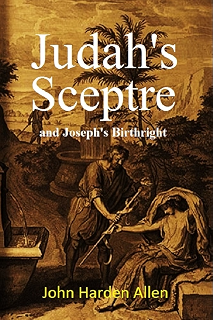
Judah's scepter and Joseph's birthright is a huge subject, involving the lost ten tribes of Israel. For more information see 


Family Feuds


Mom Always Liked You Best
Another facet is revealed when we look at Jacob's family history. Jacob's reaction when he learns of Dinah's rape is silence, no thoughts or feelings recorded. Instead, he waits till his sons come in from the field. Dinah's brothers are clearly angry, but no reading on Jacob. The brothers deal deceitfully with Shechem and Hamor. Sadly, they learned this behavior from their father Jacob, who deceived Isaac for the blessing. Jacob and his mother Rebecca took matters into their own hands because Esau was Isaac's favorite, and Jacob was Rebecca's favorite. Jacob may have learned his lesson about deceit during the 20 years he worked for his uncle Laban, but he never got over playing favorites. Jacob loved Rachel more than Leah, which shows up several times in their history, with every son Leah named in Genesis 29:31-35, she hoped it would make Jacob love her. Some suggest that since Jacob didn't love Leah, he didn't love Dinah, and was indifferent to her plight. "Moses could be hinting that she was not one of Jacob's favorites, since her mother was Leah, not Rachel. After all, favoritism was a great sin Jacob dealt with much of his adult life." - Rape of Dinah [3]. The sons of Leah however felt the unfairness of favoritism, and they overcompensated. Contrast Jacob's reaction a few years later when his sons deceive him into thinking Joseph, his favorite son, was killed by a wild animal. Jacob is utterly inconsolable - Gen 37.

See how often the "wrong" son got the birthright.
  • Abraham - the promises went to Isaac, not Ishmael the firstborn.
  • Isaac - the blessings went to Jacob, not Esau the firstborn.
  • Jacob - the birthright went to Joseph the eleventh born, and the scepter went to Judah the fourth born.
  • Joseph - Jacob blesses Ephraim and Manasseh, crossing his hands so the younger gets the larger blessing, also adopting them as his own sons, making them full fledged tribes of Israel.

These missed birthrights have led to family feuds between nations. Many Arabs are descended from Ishmael, their hatred of Jews is obvious. Muslims claim that Ishmael was the rightful heir of Abraham - Wikipedia(Ishmael) [13]. Some scholars believe Esau's descendants are the nation of Turkey - Studies In the Word [14], nation-level feuding with Israel. Again, see the material on Judah's scepter and Joseph's birthright.

Dinah was born to the unloved wife. All Leah's offspring would have felt the unfairness of favoritism. Unfairness is universally understood, even by animals. In experiments, researchers gave chimps a cucumber or a grape as a reward for a task. A chimp who received the cuke, after seeing his fellow chimp get a grape, became upset and flung the cuke at the researcher - Monkey Fairness [15], see footage of the experiment at Frans de Waal, TED talk [16] starting around 12:30. This and similar experiments have shown other animals have a sense of fairness as well - Animals Can Tell Right From Wrong [17], even crows - No Fair Crows Say [18] . It doesn't take a sophisticated system of right and wrong to recognize unfairness. If animals can feel the sting of unfairness, Leah and her sons would have been acutely sensitive to it.

Lessons From the Story of Dinah


The Bible doesn't tell us what happened later to Dinah, there is speculation she had a daughter, and it seems she went to Egypt with the family - Gen 46:15, but nothing about Dinah herself. We see many lessons, big themes, in the story of Dinah, like deceit,  justice, birthright, favoritism, and fairness. In one sense it is a part of Jacob's history, in another sense it is a microcosm of that history. We see these many facets to the story, but we know very little about Dinah herself. The story of Dinah is not about Dinah.


Discussion Questions


Shechem means ‘shoulder’ or ‘saddle’, the shape of mountains encircling ancient Shechem. How does the meaning of his name affect Dinah's story?

What would have been justice for Dinah?
How should justice have been done?
Could Jacob have prevented the bloodshed? How?

How have you handled unfairness in your life?


References

1. http://bethtikkun.com/
2. http://www.abarim-publications.com/Meaning/Dinah.html
3. http://www.cgg.org/index.cfm/fuseaction/Library.sr/CT/RA/k/1566/Rape-Dinah.htm
4. http://www.independent.co.uk/news/world/europe/mayor-of-cologne-says-women-should-have-code-of-conduct-to-prevent-future-assault-a6798186.html
5. http://anitadiamant.com/books/the-red-tent/overview/
6. http://www.lectio.unibe.ch/01_2/s.htm
7. http://abrahams-legacy.org/promises-made.html
8. http://www.cgg.org/index.cfm/fuseaction/Library.CGGWeekly/ID/654/Scepter-of-Kingdom-God-Part-One.htm
9. https://en.wikipedia.org/wiki/J._H._Allen
10. http://reluctant-messenger.com/judahs_sceptre_josephs_birthright.htm
11. http://www.churchathome.org/pdf/America-and-Britain.pdf
12. http://www.stevenmcollins.com/books/
13. https://en.wikipedia.org/wiki/Ishmael
14. http://www.studiesintheword.org/Turkey.htm
15. http://news.nationalgeographic.com/news/2003/09/0917_030917_monkeyfairness.html
16. https://www.youtube.com/watch?v=GcJxRqTs5nk
17. http://www.telegraph.co.uk/news/earth/wildlife/5373379/Animals-can-tell-right-from-wrong.html
18. http://www.popsci.com/science/article/2013-02/no-fair-crows-say