Thursday, January 29, 2015

What Is Truth?

Facts? Feelings? Faith?


 We fall in love with our own ideas. People often merely reinforce their existing beliefs, in other words “our beliefs can dictate the facts we chose to accept” . “Researchers at the University of Michigan found that when misinformed people, particularly political partisans, were exposed to corrected facts in news stories, they rarely changed their minds" How Facts Backfire [1].

I would characterize this as pride of knowledge. And it manifests in all sorts of places, not just politics, religion sadly being one as in “my doctrine’s better than yours”. But not all ideas are right even though we strongly believe our own ideas are. Computers can be good for teaching us that our own ideas aren’t always right. I have what I think are great ideas that don’t actually work on the computer.

Follow Your Heart?


Well if I can’t trust my brain, how about my heart? Feelings just “are”, they aren’t right or wrong, or are they? Consider these well known sayings and songs.

“If it feels good, do it.”

“Search your feelings Luke, You know it to be true.” – Star Wars

“It Can’t Be Wrong When It Feels So Right!” - Debbie Boone.  

“Hooked on a Feeling” - Mark James and B. J. Thomas

 Popular culture appeals to feelings as a source of truth.  We have expressions like “gut feeling” or “trust your gut”. And research shows “Americans Are Most Likely to Base Truth on Feelings” [2] (the title says it all).

But it doesn’t always feel good to do the right thing. A righteous man swears to his own hurt (Ps 15:4). Feelings are real, sometimes very intense, but they may not be true. Sometimes you should listen to your feelings, not my strong suit. Read Blink [3] by Malcolm Gladwell for a fascinating look at how people make decisions.

No matter what issue you pick (abortion, free speech, immigration, terrorism, health care, global warming, GMOs) and within the church (nature of God, calendars, pre-existence of Jesus, Sabbath or Sunday), there are people on both sides, people with strong opinions and strong feelings on both sides. I submit that both sides can’t be right. Yet each side has their facts and “searched their feelings” and is certain they are right.

Here’s how I came to think about these things. I had a stroke in 2011 that hit the pons region of my brain. After that, I suffered from pseudo bulbar affect (PBA), a fancy term for excessive laughing and crying. It’s not unemotional crying, but deep feelings welling up into tears. In the hospital I felt grief with my whole being. It got better, but lasted for months and months, music being a big trigger. Finally, I started medication, and it stopped that day, which isn’t the way it’s supposed to work. I’ve tried to stop the meds and the PBA comes back. I wanted to stop the meds because I thought somehow that the unmedicated me was the real me, that those were my true feelings. And remember feelings are always right. But I have feelings whether I take the meds or not. Which ones are real?

What brought it to focus was when I visited a stroke patient who asked “what about the feelings?” I saw that he was going through what I went through, and I told him it wasn’t real. But I decided later that’s not true. I think it would be more accurate to say the feelings are real, but they’re not true. Just like an idea or thought can be false, so can a feeling. Those of you with high emotional intelligence would probably say I’m stating the obvious, but I’m better with numbers than feelings.

So I can’t trust my thoughts and can’t trust my feelings, where does that leave me? (I overstate my case for effect.) I have to step into the spiritual realm. It’s simple enough to say trust God. But let’s get more specific, in what am I trusting?

Misplaced Faith

Let me share more of my own story. Before I started the meds, I struggled at times with depression. I remember a low point the night I felt God had forsaken me. My feelings bore witness that God had forsaken me. I knew the Bible says “I will never leave you or forsake you”, my feelings told me otherwise. Looking back, I would guess that God was nearer than ever (near to the broken hearted). I just didn’t believe He would do this to me. BTW, God does take responsibility for evil, He doesn’t hide behind statements like “God allowed it”. Concerning Satan’s attack on Job “although thou didst move Me against him, to destroy him without cause” Job 2:3.

So I believed something that wasn’t true, misplaced faith if you will. I used to believe in Santa Claus too. What else do I believe that’s wrong?  What do you believe that’s wrong? With a nod to Jeff Foxworthy:

If you think you’re better than others because you have special knowledge, you might have misplaced faith.

If a loved one died waiting for divine healing instead of seeing a doctor, you might have misplaced faith.

If you believe Sunday is the Sabbath, you might have misplaced faith.

If you think it’s OK to kill infidels, you definitely have misplaced faith.

If you think [insert name here] is a prophet, you might have misplaced faith.

If you believe a trial will be lifted as soon as you learn some certain lesson, you might have misplaced faith.

If you believe a corporation is the church of God, you might have misplaced faith.

If you think you’re one of the two witnesses, you might have misplaced faith.

You get the idea.

 Trust the Bible, Right?


Let me take a shortcut and just state that I believe God exists, the Bible is His word, and it is true. So it should be simple to say just believe what the Bible says. But look at all the different opinions about what the Bible says. How do I determine which interpretation to believe? There’s the rub, we’re stuck when it comes to understanding the Bible. We are influenced by our environment – our parents, our education, our language, our friends, books, TV, ministers, etc. It’s like the Ethiopian eunuch said “How can I [understand], unless someone guides me?” Acts 8:31, that is to say, “reading and understanding Scripture are not the same thing” Philip and the Ethiopian Eunuch [4]. Someone has to guide us (especially at first, to give us the milk of the word). We have to believe someone. Well who?

That’s a topic for another day. I sympathize with Pontius Pilate’s question, “what is truth?” Christ had just told Pilate “Everyone who is of the truth hears My voice” Jn 18:38.  I want to listen to His voice, not my own. I need to compare my beliefs to the light of the Word like the Bereans, “searching the Scriptures daily to see if these things are so” Acts 17:11. I'm trying to root out my misplaced faith. I look at my beliefs differently now, some I’m pretty sure of, others not so much. And I’m trying to shed my own ideas of faith.

I Know the Truth When I Hear It...


But that seems a bit academic. Believe the Bible, absolutely, but that leaves no room for inspiration, insight, revelation even. I believe the Bible was written by men moved by inspiration of God, but what about today? I would be suspicious of anyone who said he got a revelation from God. At one time, God spoke to people face to face, but that ended with Moses. We sing a hymn "God Speaks To Us". How does He speak with us now?  He leads us with His Spirit. In order to understand the truths of the Bible, at some point, God has to open one’s mind, give us inspiration or insight if you will. How does that work? Ideas come from somewhere - other people, books, TV, our own minds, God’s mind, even Satan’s mind. We have all had the experience of sudden insight when the solution to a problem just comes to you. I think when God works with our minds, it is like that, as a still small voice, as if it were our own thought, making it hard to recognize as inspiration.

In New testament times, revelation was accepted in the church “How is it then, brethren? when ye come together, every one of you hath a psalm, hath a doctrine, hath a tongue, hath a revelation, hath an interpretation. Let all things be done unto edifying”. 1Co14:26

In the end times or “latter days”, old men will dream dreams and young men will see visions Joel 2:28. Again, I’d be suspicious, but it is going to happen sometime. Here is the test for those who claim revelations, “To the law and to the testimony: if they speak not according to this word, it is because there is no light in them.” Is 8:20. In order to apply this test, we’d better know what is in this word. We can’t figure it out on our own, but God will guide us, He promised, “He is a rewarder of those who diligently seek Him” Heb 11:6. 'You will seek Me and find Me when you search for Me with all your heart. Jer 29:13.

There’s that heart again, I guess I’ll have to trust it sometime.

References

1. http://www.boston.com/bostonglobe/ideas/articles/2010/07/11/how_facts_backfire
2. https://www.barna.org/barna-update/article/5-barna-update/67-americans-are-most-likely-to-base-truth-on-feelings
3. http://gladwell.com/blink/
4. https://www.biblegateway.com/resources/commentaries/IVP-NT/Acts/Philip-Ethiopian-Eunuch

Thursday, January 1, 2015

26


[Reconstruction of a speech I gave to our church men's club in 2012. My hard drive crashed, and I didn’t save a paper copy of the text. I also made minor changes to take advantage of the printed word.]

Numbers are my friends. People make good friends too, but numbers you can count on…


Let me introduce you to my friend 26, a very interesting number. I picked 26 because God’s name is associated with it. His name is not associated with more popular numbers like seven or 12, but 26. Why 26? Proverbs 25:2 says It is the glory of God to conceal a thing: but the honour of kings is to search out a matter.  Can we search out this matter?


First, let’s see why God’s name YHVH (יהוה) is associated with 26. In ancient Hebrew there are no separate symbols for numbers, they reused the letters. So every word in the Old Testament takes on a numerical meaning. It’s a simple substitution code - here are the first 10 letters.

א ב ג ד ה ו ז ח ט י
1 2 3 4 5 6 7 8 9 10


 Mapping letters to numbers is known as Gematria, the full table of letter/number mappings can be seen at wikipedia [1] or hebrew4christians.com [2]. By the way, this also works in English for the word “God” – again a simple substitution A = 1, B = 2, C = 3, D = 4, … G = 7, …O = 15 makes GOD = 26. I won’t defend Gematria too hard, it has its uses and limits. For example, there are alternate letter/number mappings, are any of these mappings “sacred”? You can’t use Gematria to establish doctrine, that must come from the plain text, but I think it’s possible to unconver hidden connections in Scripture. Consider this – “Six hundred sixty-six is called the "number of the beast" in (most manuscripts of) chapter 13 of the Book of Revelation, of the New Testament, and thus also in popular culture.” Wikipedia 666 [3]. So there is at least one example of Gematria in the Bible. Incidentally, I learned that the fear of 666 is called hexakosioihexekontahexaphobia [4].

Anyway YHVH = 26 is well known. Let’s see where it leads. Is there anything special about 26? There is no number that’s not interesting, and there is a simple proof. Let N be the first uninteresting number. Isn’t that interesting? 


Here is an interesting mathematical fact about 26.


26 is the only integer that is one greater than a square (25 = 52) and one less than a cube (27 = 33). Full proof (not for the feint of heart) at www.normalesup.org [5].


Big deal. All that shows is that 26 actually is an interesting number. Some want to say that by being between a square and a cube, 26 is a bridge between physical and spiritual, I think that’s a stretch. But I do believe it shows God’s humility because 26 is not an obvious choice like 7. It invites us to dig a little deeper to get to know Him.


While everything in nature reflects God in some way, in His word He reveals Himself and His plan through 26. Consider these examples.


·        Gen 1:26 - Then God said, "Let Us make man in Our image, according to Our likeness; …”
·        Ps 136 is 26 verses, each verse has the phrase “for He is good, and His mercy endures forever”. “ki tov ki l’olam kasdo”
·        The Greek Strongs number G26 is Agape which means Love, an attribute of God
·        According to Jewish chronology, God gave the Torah to Moses in the 26th generation since Adam
·        You can read many more interesting facts about 26 at amazingword.blogspot.com [6]


Let’s consider some more math, (maths to the Brits). A 3 x 3 x 3 cube, think
Rubik’s cube, has 26 visible cubes, and one invisible cube in the center. We may not be able to see it, but we know where it is and how big it is. The invisible is known by the visible. Rom 1:20 “For since the creation of the world His invisible attributes, His eternal power and divine nature, have been clearly seen, being understood through what has been made, so that they are without excuse.”


But wait, there’s more.


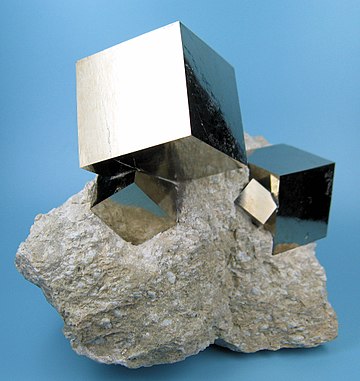
Iron Pyrite Crystals
We have seen that 26 and 27 are connected to cubes. I have only been able to find two cubes in nature – salt and iron pyrite a.k.a. fool’s gold, wombat scat [7] notwithstanding. God’s people are called the salt of the earth. He chose salt, not fool’s gold. Salt is essential for life, fool’s gold is shiny and would no doubt be most people’s choice, it has commercial uses, but is not valuable like real gold. 


Natural Salt Crystals from the Dead Sea
Salt is readily available nowadays, but in times past, it was precious. “It is commonly believed that Roman soldiers were at certain times paid with salt. (They say the soldiers who did their job well were "worth their salt.") The word 'salary' derives from the Latin word salārium, possibly referring to money given to soldiers so they could buy salt.” Wikipedia "History of Salt" [8].


The cube area in back is the Holy of Holies [9].
The only cubes found in the Bible are the Holy of Holies of both the tabernacle and later the temple, and the city of New Jerusalem, described in Rev 21, which some interpret it as a cube, a square, or a pyramid. Nonetheless, all three are places where God dwells. More precisely, the tabernacle and temple are where God placed his name YHVH, ie 26.


1 Kings 9:3 The Lord (YHVH) said to him, “I have heard your prayer and your supplication, which you have made before Me; I have consecrated this house which you have built by putting My name there forever, and My eyes and My heart will be there perpetually.

God dwells in cubes, we are salt, and God dwells in us.

1 Corinthians 3:16 Do you not know that you are a temple of God and that the Spirit of God dwells in you?


What a beautiful picture, and all of this is pictured by my friend, number 26.


References

1. http://en.wikipedia.org/wiki/Gematria
2.http://www.hebrew4christians.com/Grammar/Unit_Eight/Hebrew_Gematria/hebrew_gematria.html
3. http://en.wikipedia.org/wiki/666_%28number%29
4. http://en.wikipedia.org/wiki/Hexakosioihexekontahexaphobia
5. http://www.normalesup.org/~baglio/maths/26number.pdf
6. http://amazingword.blogspot.com/2010/03/about-26-number-for-godliterally-both.html
7. http://io9.com/5872472/the-wombats-cubic-poop-is-one-of-natures-weirdest-superpowers
8. http://en.wikipedia.org/wiki/History_of_salt
9. https://servinghandskc.wordpress.com/2015/10/19/transporting-the-walls-of-the-tabernacle/

Friday, December 12, 2014

The Koran Points to Jesus Christ


I am not an expert on Islam or the Koran. I have not read the Koran. Until very recently, I had not read any of the Koran. Now I can say I have read a few verses. So why would I say that the Koran points to Jesus? Because it's not my idea, I got it from a former imam (Muslim priest) whose Western name is Mario Joseph. 
Mario gave an interview on Spanish TV which is available on Youtube [1]. A written transcript is available at CBCG.org [2]. He described his background -  his childhood, his family, and that he studied for ten years to become an imam. When someone asked him "who is Jesus?", he began to study the question. What he found from the pages of the Koran led him to the Bible. He has converted to Christianity.

What did he find in the Koran?


Let me present a summary of Mario's arguments.


Some background. The Koran, Islam's holy book, has 114 chapters, 6666 verses. Interestingly, Mohammed's name is found in only four places, but Jesus' name is found 25 places. No women's names are mentioned anywhere in the Koran, except Maryam, that is Mary, the mother of Jesus. She actually gets two whole chapters, chapter 3 "Family of Maryam" and chapter 19 "Maryam". The Koran asserts that Mary was sinless.


http://quran.com/3/42 [3]And [mention] when the angels said, "O Mary, indeed Allah has chosen you and purified you and chosen you above the women of the worlds
And some Muslims believe in the Assumption of Mary, that is, they believe she went directly to heaven Wikipedia 'Mary In Islam' [4]. Mario lists ten points about Jesus based on Ch:3 45-55.


  • Jesus is the "Word of God" 
  • Jesus is the "Spirit of God"
  • Jesus spoke at 2 days old
  • Jesus made live bird from mud
  • Jesus cured a man born blind
  • Jesus cured a leper
  • Jesus gave life to dead people
  • Jesus went to heaven
  • Jesus is still alive
  • Jesus will come again
Quoting just two verses here.
http://quran.com/3/45 [5] [And mention] when the angels said, "O Mary, indeed Allah gives you good tidings of a word from Him, whose name will be the Messiah, Jesus, the son of Mary - distinguished in this world and the Hereafter and among those brought near [to Allah ]. 
http://quran.com/3/55 [5] [Mention] when Allah said, "O Jesus, indeed I will take you and raise you to Myself and purify you from those who disbelieve and make those who follow you [in submission to Allah alone] superior to those who disbelieve until the Day of Resurrection. Then to Me is your return, and I will judge between you concerning that in which you used to differ.

Then Mario says that Mohammed is not "Word of God" or the "Spirit of God". Mohammed is not alive and will not come back. So he asked his his teacher, "Teacher, how did God create the universe?" The teacher answered that he created the universe through the Word.

So then he asked his teacher, "Is the Word Creator or creation?" If the Word is creator, then Jesus is creator, then the Muslims must become Christian. If the Word is creation, how did God create the Word? Mario was confused and prayed for understanding. He believes this was his answer from the Koran, in his words, "If you have any doubt in this Koran, go read the Bible, or ask the people who read the Bible." 


http://quran.com/10/94 [6] So if you are in doubt, [O Muhammad], about that which We have revealed to you, then ask those who have been reading the Scripture before you. The truth has certainly come to you from your Lord, so never be among the doubters.

The Bible also says Jesus is the Word of God, John 1:1. It also says Jesus gave them power to become children of God, John 1:12. But the Koran teaches people are slaves and Allah is master. The Koran says to fight with non believers in 18 places. It says to kill the one who rejects Islam. Mario concludes "To have eternal life, you need Jesus".


I applaud Mario for his courage in converting from Islam to Christianity, and for his wisdom in seeing through the Koran to the Bible. 

I don't agree with all his statements or theology. For example, the Koran may claim that Jesus spoke at two days old, but it is not recorded in the Bible. Likewise, making a live bird from mud, it's an interesting story. The other eight assertions are Biblical however, so maybe...

Later in the interview, he insists that Catholicism is the true form of Christianity. I think he may have gravitated to it because it had something familiar from Islam that he could retain, that is the veneration of Mary.  I would say that Mario has gone from worshiping the wrong God to worshiping God wrongly, a big step in the right direction. But we are all at different points on our journey.


His interview is worth watching, there is obviously more than I included here. You can also gauge his sincerity and conviction, especially when he speaks about miraculous events in his own life.
I found other Mario Joseph references on the Net like dangerous-road-from-imam-to-catholic-preacher [7]. 

According to Al-jazeerah [8], six million Muslims convert to Christianity every year, however CNN [9] says "little data is available on conversion, but what little there is suggests Islam loses as many adherents via conversion as it gains". David Garrison, author of "A Wind in the House of Islam" 

windinthehouse.org [10] said in an interview with World Magazine [11] that between 2 and 7 million Muslims have converted to Christianity in the last two decades. Whatever the exact number, many many Muslims are converting, some like Mario at great risk.

Most of this is happening in the Middle East and Africa, after all that's where most of the Muslims are. But someday you might be seated next to a former Muslim. Or you may be challenged to "give an answer for the hope that is in you" if a Muslim should ask "who is Jesus?"


Sunday, November 16, 2014

Audition For Battle

[I had to rewrite a section based on comments from John Wheeler. I am grateful to him, and I'm glad that it is more accurate and less speculative.]

Imagine this. You’re the king, but three armies are bearing down on you. You can’t withstand one of them, much less three. What do you do? Surrender? Call your generals? Fight to the last man? Hide? Or maybe like Jehosaphat of ancient Israel, you audition a choir. That’s right, audition a choir. 
2 Chronicles 20:1. It came to pass after this also, that the children of Moab, and the children of Ammon, and with them other beside the Ammonites, came against Jehoshaphat to battle. 
  ...Skipping to vs 21...
21. And when he had consulted with the people, he appointed singers unto the LORD, and that should praise the beauty of holiness, as they went out before the army, and to say, Praise the LORD; for his mercy endureth for ever.

 It is easy to read over that and not get the impact of what Jehosaphat actually did here. I have never led an army but I have directed choirs, so when it says he appointed singers, that sounds like an audition to me. I see two choices – take soldiers and see if they can sing or take singers and see if they will go into battle, note that it says the singers went before the army. That would perhaps be more of an interview than an audition. It appears Jehosaphat chose the latter, that is, take singers, and sent them into battle. Teaching soldiers to sing would take more than the 24 hours they had. Verse 19 actually tells us it was the temple singers "And the Levites, of the children of the Kohathites, and of the children of the Korhites, stood up to praise the LORD God of Israel with a loud voice on high".  (1 Chr 6:31-38 tells that David set Kohathite and Korhites over the song service of the temple.) The temple singers were already on the scene participating. 

I told the story out of order to emphasize the “audition”, but actually Jehosaphat did all the right things even before that. He sought the Lord, proclaimed a fast, prayed with the tribe of Judah, got an answer from a prophet (and believed it), consulted with the people, THEN he auditioned his singers. This isn't my idea - I got it from Hebrew Word Study: A Hebrew Teacher's Search for the Heart of God [1] by Chaim Bentorah. His words:


Now try to imagine this. Jehoshaphat has twenty-four hours to prepare for war against an overwhelming army, and how does he prepare? He sets up auditions and organizes a choir! And this choir is taught one song and one song only: “Praise the Lord. His mercies endure forever.” 

Jehosaphat was the king and probably didn't handle the auditions himself, he would have delegated.  According to the Pulpit Commentary [2], 


he possibly simply "conferred with" those who were over the singers, as to who should be the most prominent in leading the service of praise, or as to what should be the words sung and other like matters of detail; or more probably, considering the exact form of language used
[I was going to stop here, then this idea popped into my head...]

What did it sound like? 


We may have an idea of what it sounded like. The Old Testanment Hebrew text is notated with “cantillation marks”, which are directions on how the text is to be chanted or sung. The exact meaning of these cantillation marks had been lost for over 1000 years, but the late Suzanne Haik Vantoura claimed to have deciphered the marks. Her book "The Music of the Bible Revealed [3]" explains the research, but has its critics.  The cantillation marks are above and below the Hebrew text. Her insight was that the marks below the text were notes of the scale, and she worked out which marks were which notes. The marks above the text were ornamentation like mordents.

Jamieson-Fausset-Brown [4] states that they sang Ps 136, which by the way repeats the refrain "His mercy endures forever" 26 times. Hmmm, 26, a very interesting number. So 2Chr 20:21 only lists the refrain, like the title of a well known psalm. For example, we would refer to "The Lord's My Shepherd" for Ps 23. This is what Ps 136:1 looks like.  The darker section "SIGNS BELOW"  is directly from Haik Vantoura's book, p 38. In this passage, there are no signs above the text. The Hebrew text is from Mechon Mamre [5]. The other markings not highlighted are vowel sounds. Some people object to using God's name YHVH and substitute Adonai instead. I left it in because that's what the text says. 


THE BIG IFS 

How can we even know what music sounded like 3000 years ago? We can be certain the scale was the same because it's a math and physics thing, not something of arbitrary human invention. Even birds use the same scale (Birds found using human musical scales for the first time [6]). And archaeology has uncovered ancient musical instruments which show the notes in use. How do we know if Haik Vantoura was right? That's harder to know.  I've read the book, but don't follow everything in it. The deciphering method itself is logical and consistent. It does create melodies, singable melodies. Any doubts I have stem from not understanding the research well enough.

And how do I know I deciphered her system correctly? I don't have to guess - thanks to John Wheeler [7], we have Vantoura's own deciphering of Ps 136 to go by. Yes, it's hand written. It is the same as mine.


According to Haik Vantoura, this is the melody they sang when they marched into battle  that day.  I added bar lines to highlight the march characteristic. Click here to hear, please forgive the poor quality of the built in microphone.


Ps 136:1 Transliterated with Modern Music Notation [8]


What did that look like?

What did it look like, this army and these Levites marching to battle? This takes a little more imagination. Consider that soldiers have been marching to music for millenia. "Music has been an integral part of warfare and the soldier's life since the dawn of history" (historynet [9]).  The Peloponnesians had their flute players "meant to make them advance evenly, stepping in time, without breaking their order, as large armies are apt to do in the moment of engaging." (Peloponesian-war [10]) We are familiar with the sight of armies marching, how would this have been any different?

Verse 21 says the singers should "should praise the beauty of holiness", which according to Barnes' Notes [11] means "in rich apparel and ornaments suitable to a holy occasion". In other words, they were dressed in Temple clothes1


There is also a clue in the word for praise "hodu". It's not the normal word translated praise that we are all familiar with - "halleluia". Hodu is derived from the word for hand "yod", so taking linguistic license, "Lift up your hands to Jehovah, who is merciful forever". See Ps 63:4. Maybe the Levitical singers, dressed in holy garments, did just that, lifted up their hands in praise to God while they marched.

I've never done well at this, but one possible lesson from 2 Chr 20 could be - 

When life gives you a trial, Come out singing.


References

1. http://www.amazon.com/gp/product/B0083IS526?btkr=1
2. http://biblehub.com/commentaries/2_chronicles/20-21.htm
3. http://www.amazon.com/The-Music-Bible-Revealed-Deciphering/dp/094103710X
4. http://biblehub.com/commentaries/jfb/2_chronicles/20.htm
5. http://www.mechon-mamre.org/c/ct/c25b20.htm
6. http://news.sciencemag.org/biology/2014/11/birds-found-using-human-musical-scales-first-time
7. http://musicofthebiblerevealed.wordpress.com/2012/07/26/suzanne-haik-vantoura-1912-2000/
8. http://youtu.be/4NFgRl10JEs
9. http://www.historynet.com/the-music-of-war.htm
10. http://history.eserver.org/peloponesian-war.txt
11. http://biblehub.com/commentaries/barnes/2_chronicles/20.htm

Monday, October 20, 2014

Four Faces of the Gospel

“Four. There’s nothing special about four in the Bible, is there?”

Well, there is no number that’s not special or interesting. Suppose N is the first uninteresting number, isn't that interesting?

Anyway, someone did say that to me last winter. And in one of life’s non-coincidences, I had learned about the four faces of the Gospel just that month. There are plenty of other “fours” in the Bible (Google [1]) that you can read about, but I was surprised to learn that the four Gospels parallel the four “living beings” of Revelation 4, and also parallel ancient Israel. The four living beings have four different faces - lion, ox, man, and eagle. The banners or flags that ancient Israel camped by had the same four faces.

The Israelites were instructed to camp around the Tabernacle by tribe, Levites nearest to the Tabernacle, and 
the other tribes camped around the Levites  in a specific order.  According to Jewish tradition (Keil Commentary on the Old Testament [2]) it was believed that the banners of the tribes were as follows (I couldn't find clipart that matched the Keil text exactly, this was the closest I could find).

The Four Banners [3]

Judah - East (Lion of gold with a scarlet background).

Reuben - South (Man on gold background).

Ephraim - West (Ox of black on gold background).

Dan - North (Eagle of gold on a blue background).


It’s not clear whether the tribes camped in rings outward from the temple or in spokes.

Jesuswalk.com [5]
A History of Israel [4]


Either way, all the depictions seem to be inaccurate because they don’t account for the large number of people and tents and livestock. See Google Image Search [6] for a variety of opinions of how they camped around the Tabernacle, I assert that all of them are wrong, a topic for another day.

What has this got to do with the gospel? Well, there is the obvious fact that there are four animals, four faces, four gospels. Is there a connection? Early church writers taught so. And it makes sense. The only problem is that these early writers don’t agree on which Gospel writer is represented by which face. Consider this chart from  http://catholic-resources.org/Art/Evangelists_Symbols.htm  [7]. There is good agreement here that Matthew is the Human (Rueben) and John is the Eagle (Dan), but there are at least four opinions. Apparently, almost every combination has been suggested (24 permutations).

Early Christian Author
Human/Angel
Lion
Ox
Eagle
Matthew
John
Luke
Mark
Mark
Matthew
Luke
John
Matthew
Luke
Mark
John
Matthew
Mark
Luke
John

Matthew, Mark, and Luke are known as the synoptic Gospels, that is they “form a general summary”.  John’s Gospel is different from the other three.  So I wanted to say “one of these animals is not like the others” to fit the Gospel of John.  But I can find ways in which each is different – there is only one human, the ox is the head of tame animals, the eagle is the only bird, the lion the head of wild animals. John may be considered as loftier than the others, a bird’s eye view so to speak. 

While the early Church writers may not have agreed on which face went with which gospel, they were unanimous that the symbolism existed, and it pictured four different faces or aspects of Christ’s ministry. Spiritandtruth.org [8] tells us:

The unanimity of the early church regarding acceptance of some combination of such symbolism is remarkable

Notwithstanding the careful chart above, I think the weight of evidence goes to Jamieson-Fausset-Brown Bible Commentary [9]:

the lion expressing royalty, as Matthew gives prominence to this feature of Christ; the ox, laborious endurance, Christ's prominent characteristic in Mark; man, brotherly sympathy with the whole race of man, Christ's prominent feature in Luke; the eagle, soaring majesty, prominent in John's description of Christ as the Divine Word.

Again from JFB:

(1)   kingly righteousness with hatred of evil and judicial equity, answering to the "lion";
(2)   laborious diligence in every duty, the "ox";
(3)   human sympathy, the "man";
(4)   the contemplation of heavenly truth, the "eagle."

Spiritandtruth.org [8] agrees with JFB, adding this

There is objective evidence found within Scripture itself which reliably establishes the intended emphasis of each gospel. This evidence is found in the genealogies of Christ which establish the line of Jesus from Abraham (Matthew), Adam (Luke), and eternity (John). Thus we know with some certainty that Matthew presents Jesus as King of the Jews, Luke as the Son of Man, and John as the Son of God. The only remaining question is that of the presentation of Mark. There being no genealogy in Mark, it seems plain that the emphasis of servant fits his gospel.

In other words, none of the combinations in the chart above.

Gospel
Face
Matthew
Lion
Mark
Ox
Luke
Man
John
Eagle

The number four also suggests the whole world is involved, as in these common expressions, “four points of the compass”, “to the four winds”, “the four corners of the earth”.  As far as I know, the four horsemen of the Apocalypse bear no relation to the four living creatures except they are worldwide.  The Gospel is to go to all the world. Many verses in the Old Testament point out that Israel (not just the Jews) were chosen to be a light to the world, that salvation would go to all the world through them.  Sadly, they did not fulfill this role
Ex 19:6  and ye shall be unto me a kingdom of priests

Dt 7:6 For you are a people holy to the Lord your God; the Lord your God has chosen you to be a people for his own possession

Is 42:6 I am the Lord, I have called you in righteousness, I have taken you by the hand and kept you; I have given you as a covenant to the people, a light to the nations, to open the eyes that are blind

Isaiah 49:6. It is too light a thing that you should be my servant to raise up the tribes of Jacob and to restore the preserved of Israel; I will give you as a light to the nations, that my salvation may reach to the end of the earth.

Spiritandtruth.org [8] has much more detail there than I give here.  However, it suggests that the one “face” of Christ represented by Mark focused on the Romans, and the face represented by John focused on the Greeks.  I think that is skipping over the notion above that Israel was to be the light to the nations, the Gospel was to go to Israel first. Mt 10:6 & 15:24 “But go rather to the lost sheep of the house of Israel.”

Since the Tabernacle is a shadow of the heavenly throne (Heb 8:5), consider this - the four living beings surround the throne, while the four banners surround the Tabernacle. And Christ is surrounded by the four Gospels, which go out to the whole world.


There is something quite special about four in the Bible, it's a shorthand way of saying Christ's Gospel has four aspects, came from heaven, and is going to Israel and the world.


References

1. https://www.google.com/search?q=biblical+four
2. http://www.amazon.com/gp/search/ref=sr_adv_b/?search-alias=stripbooks&unfiltered=1&field-title=Commentary%20on%20the%20Old%20Testament
3. http://seekianseng.blogspot.com/
4. http://www.israel-a-history-of.com/zebulun.html#gallery[pageGallery]/4/
5. http://www.jesuswalk.com/moses/7_tabernacle.htm
6. https://www.google.com/search?q=images&q=israel+camping+around+the+tabernacle
7. http://catholic-resources.org/Art/Evangelists_Symbols.htm
8. http://www.spiritandtruth.org/teaching/Book_of_Revelation/commentary/htm/topics/four_gospels.html
9. http://biblehub.com/commentaries/jfb/revelation/4.htm