Wednesday, July 12, 2017

The Other Ark of Moses

Two different Hebrew words are translated ark in English, tevah and aron. At their simplest, they both mean box. Tevah is used to describe two things in the Bible, Noah's ark, and the basket the infant Moses floated down the Nile River in. You might say that Moses was the new Noah. See The Ark Of Moses [1] for more details on tevah. Aron is used to describe the ark of the covenant in the Tabernacle, called Aron HaBrit, sometimes ark of testimony Aron HaEdut, sometimes simply holy ark Aron Kodesh.


If you like this (or not), check out my other articles at the
Between The Ears BLOG INDEX, with titles and summaries.


Ark of the Covenant with Kapporet
After insisting that two different words are used, you're probably wondering what the ark of the covenant has to do with Noah's ark. Noah's ark was covered inside and out with pitch, in Hebrew it reads "to kafar it with kofer" - Gen 6:14, where kafar (or kippur) means cover, many translations say "pitch it with pitch". And it turns out the ark of the covenant had a cover called the kapporet, the same root Hebrew word as kafar or kippur. Kapporet is only used to describe the cover of the ark. In English, the kapporet is called the mercy seat, but "Jewish translations traditionally avoid the translation 'mercy seat' " - Wikipedia (mercy seat) [2], so I will stick with kapporet. This covering (kapporet) appears to have a slightly different function than the other coverings described by kafar - Day Of Coverings [3].


Noah's ark / Moses' ark

Depiction of Noah's Ark


Let's examine some of the similarities and differences between kafar and kapporet, and between Noah's ark and ark of the covenant.


Noah's ark was a (large) wooden box covered inside and out with pitch.
The ark of the covenant was a wooden box covered inside and out with gold.

In Noah's ark, the pitch (kofer)  covered wood.

The kapporet was pure gold, with two cherubim outstretched over it. It rested on top of the ark of the covenant, literally a cover.

The ark of the covenant contained things.

Noah's ark contained people and animals.

The ark of the covenant contained the Ten Commandment tablets of stone, Aaron's rod that budded, and a jar of manna, though at the time of Solomon's temple, Aaron's rod and the manna are not mentioned - 2 Chron 5:7-10.

Noah's ark held eight people, and two of air breathing animals.

The people were inside Noah's ark and couldn't go out.

The people were outside the ark of the covenant and couldn't go in.

The kapporet was sprinkled with blood.

Noah's ark was smeared with pitch, that is, covered completely.

The ark of the covenant was carried with two poles, which were never removed.

Noah's ark traveled by floating on the water.

The ark of the covenant was NEVER to be opened, it was only seen once a year by the high priest, and maybe by the priests that carried it. Three items were placed there by Moses, and there is no provision or ceremony to open it EVER.

People and animals left Noah's ark.

We don't know where Noah's ark is.

We don't know where the ark of the covenant is.

Noah is a savior and deliverer, that is, a type of Christ.

Moses is a savior and deliverer, that is, a type of Christ.

Blood sprinkled on the ark of the covenant and kapporet cleansed the nation of Israel from sin year after year on Yom HaKippurim. There's the kapporet covering sin.

Noah's ark cleansed Noah's family (all mankind at the time) once. Some say the flood cleansed the earth of mankind.

Noah's ark and Moses' first ark (tevah) were temporary, used once.
The ark of the covenant (aron) is permanent.


Cover My Ark


This other ark of Moses, its cover (kapporet), and its contents are rich with symbolism. For example, w
hen the Old Covenant was ratified, Moses sprinkled blood on the people . On Yom HaKippurim, the High Priest sprinkled blood on the kapporet of the ark, which contained the Ten Commandments tablets. Note the strong connection between the Ten Commandments and the Old Covenant, "And he (Moses) wrote on the tablets the words of the covenant, the Ten Commandments - Exodus 34:28. See Ten Little Known Facts About the Ten Commandments [4]. 


Everything about the ark of the covenant points to Jesus Christ in some way - Ark of the Covenant: An Earthly Symbol [5]. He is symbolized by both the High Priest and the sacrifice, and even the furniture of the Tabernacle. 
Heb 9:11 But when Christ appeared as a high priest of the good things to come, He entered through the greater and more perfect tabernacle, not made with hands, that is to say, not of this creation; 12 and not through the blood of goats and calves, but through His own blood, He entered the holy place once for all, having obtained eternal redemption.
The ark of the covenant, wood covered in gold, pictures a human Jesus covered with the divine. The kapporet pictures His work of cleansing through the sprinkling of blood. "Just as the blood on the mercy seat, the blood of Christ stands between the Law of God and the Presence of God." -  The Symbolism of the Ark of the Covenant [6]. The location of the ark is in the Holy of Holies, the innermost part of the Tabernacle. The original tablets of stone engraved with the Ten Commandments symbolize Jesus, the Lawgiver and Law keeper. Aaron's rod pictures His resurrection, a dead stick brought to life and bearing fruit. The manna was called the bread from heaven, but Jesus is the true bread from heaven.

But the ark of the covenant also pictures each believer. The apostle Paul referred to his own body as an earthly tabernacle. The innermost part of a man is his heart and mind. "If we are a type of a Beit HaMikdash (Holy Temple) for Adonai, than it stands to reason that we also contain an Aron Kodesh (Holy Ark). This ark is our heart." - The Glory Of The Ark [7]. Ezek 36:26 says "I will remove the heart of stone from your flesh and give you a heart of flesh." As the Old Covenant was written on tablets of stone, the New Covenant is written in our hearts and in our minds, Jer 31:31. 


Aaron's rod that budded
Continuing the analogy, the rod, a walking stick, pictures us "walking in the newness of life" - Rom 6:4. We were dead in sin (Ephesians 2:1, Colossians 2:13), given a new life at baptism, and expected to bear much fruit (John 15:8). And one day resurrected to eternal life. It also pictures the authority of God's chosen - Useful Bible [8]. 


And the manna, the bread from heaven. John 6:51 "I am the living bread that came down out of heaven; if anyone eats of this bread, he will live forever; and the bread also which I will give for the life of the world is My flesh.” The Feast of Unleavened Bread teaches us to take in "the unleavened bread of sincerity and truth" (1 Cor 5:8) for a lifetime. This is how we actually write the law of God in our inward parts, in other words, we have a part to play internalizing the word of God. It is also expressed simply as "give us this day our daily bread" Matt 6:11. But it's not about physical bread, "man does not live by bread alone, but man lives by everything that proceeds out of the mouth of the LORD" - Deut 8:3, Matt 4:4.


A Place To Meet The Divine


But what is the point of the ark of the covenant? Is it to hide God's word and our new life, never to be seen by anyone ever again? NO. The purpose of the ark and the kapporet was not to hide things, but  to communicate with God Himself. In Exodus 25:8, God tells Moses to build a holy place for Him, "Let them construct a sanctuary (literally, a holy place) for Me, that I may dwell among them. And Exodus 25:22 "There I will meet with you; and from above the mercy seat (kapporet), from between the two cherubim which are upon the ark of the testimony, I will speak to you about all that I will give you in commandment for the sons of Israel."


Shekinah Glory Between the Cherubim


God's glory, known to some as the shekinah, came down from heaven to rest between the cherubim, and He would talk to Moses there. Just as Moses made a holy place in the innermost part of the Tabernacle, we are to make a holy place for God in the innermost part of ourselves (the heart and mind) where He can dwell.


Discussion Questions

Why were those three items placed in the ark of the covenant? What do they have in common? 

Why would the rod and manna be removed from the ark? By whom?

Why is blood sprinkled on the kapporet, but pitch is smeared on Noah's ark?

How do the carrying poles of the ark of the covenant picture Jesus?

Why were the poles never removed?


References

1. http://jlfreeman-1.blogspot.com/2017/06/the-ark-of-moses.html
2. https://en.wikipedia.org/wiki/Mercy_seat
3. http://jlfreeman-1.blogspot.com/2017/06/day-of-coverings.html
4. http://jlfreeman-1.blogspot.com/2015/12/ten-little-known-facts-about-ten.html
5. http://www.lamblion.us/2010/03/ark-of-covenant-earthly-symbol.html
6. http://feedingonchrist.com/the-symbolism-of-the-ark-of-the-covenant/
7. http://www.synagoguechm.com/messages.html
8. http://www.usefulbible.com/hebrews/what-was-in-ark-of-covenant.htm

Monday, June 19, 2017

Day Of Coverings


High Priest in Holy Of Holies
Many consider Yom Kippur to be the holiest day of the year, because it was the only day the High Priest could enter the Holy of Holies of the Tabernacle. In English, we call Yom Kippur the Day of Atonement. However, it seems the word atonement has lost any real meaning - Yom HaKippurim [1]. Some people talk about being "at one" with God, but the Hebrew word kippur doesn't mean "at one", though that may be the ultimate result. "It is obvious that the English word 'atonement'  does not correspond etymologically with any Hebrew or Greek word which it translates." 
- Bible Study Tools (Atonement)  [2]. The Bible doesn't even call the day Yom Kippur, it calls it Yom HaKippurim or Yom Kippurim, plural not singular kippur, whatever kippur means, which we will get to later. It would be better to say Day of Atonements. If you have achieved at-one-ment with God, how do you achieve more than one at-one-ment? Are you at one twice?


If you like this (or not), check out my other articles at the
Between The Ears BLOG INDEX, article titles and summaries.


Now I know what you're thinking - what's this got to do with Noah's ark? Well, the word kippur is used in describing the construction of the ark. This is also the first occurrence of kippur in the Bible, the first occurrence of a word often gives a word's root meaning. See Gen 6:14

"Make for yourself an ark of gopher wood; you shall make the ark with rooms, and shall cover it inside and out with pitch.


Modern Replica of Noah's Ark
Both the word "cover" and the word "pitch" are kippur. A number of translations say to "pitch in inside and out with pitch", ie. pitch it with pitch. In Hebrew, it reads to kafar it with kofer (In Hebrew, vowels don't matter, p and f are the same). Cover is the root meaning for kafar, though it has other meanings we will see later. "In fact, the English word "cover" can most likely be traced back etymologically to the Hebrew word kafar" - Yom HaKippurim [1]. That would make it "cover it with covering" - Ridiculous KJV Bible Corrections [3]. One meaning then of Yom HaKippurim is Day Of (The) Coverings.


Cover What?


To the Door Posts and Lintel

What is to be covered? The first answer is "cover our sins". The pitch of Noah's ark symbolizes the blood of Jesus which covers our sins. Note the similarity to the Passover Lamb's blood on the doorposts. Pitch is smeared on the ark, lamb's blood is smeared on the posts and lintel of the door frame, and Jesus' blood was smeared on the cross - all three made of wood. This is important - the covering is blood, and it cleanses us from sin.


Lev 16:30 for it is on this day that atonement (kafar) shall be made for you to cleanse you; you will be clean from all your sins before the LORD.
Lev 17:11 For the life of the flesh is in the blood, and I have given it to you on the altar to make atonement (kafar) for your souls; for it is the blood by reason of the life that makes atonement (kafar).
Heb 2:17 (CJB) This is why he had to become like his brothers in every respect - so that he might become a merciful and faithful cohen gadol (high priest) in the service of God, making a kapparah for the sins of the people.
1 John 4:10 (CJB) Here is what love is: not that we have loved God, but that he loved us and sent his Son to be the kapparah for our sins.
Here is how Dr John Hinton of the Bible Restoration Ministry [4] put it, "As kopher was used to cover the ship that provided for the salvation of the righteous, which amounted to God's forgiveness of mankind whom he would otherwise have destroyed completely, so those who accept Christ's offer are forgiven by being covered by his blood." - Ridiculous KJV Bible Corrections [3]. 


Second Covering


But remember Noah's ark was covered inside and outside with pitch - two coverings. And it is the Day of (the) Coverings. The first covering is to make us clean before the LORD, as it says in Lev 16:30. The second covering is to make us right with our fellow man.


The meaning (of Kippurim) has two connotations to it: One, that a person repents for his sins that he has committed against HaShem (God) and asks HaShem for His forgiveness, and the other is to ask for repentance from your fellow man for the sins that you have committed against him - Betemunah [5]. 

Cover What?


Cherubim Covering the Ark
Cover has another meaning that fits here. When we ask God for forgiveness, in a sense we are asking Him to cover His eyes, as if He didn't see sin happen. "The covering over of another's eyes to make it as if he didn't see certain events that happened in the past, specifically negative events. This 'covering' is usually accomplished by the giving of some kind of monetary reward or gift to the person in order to 'help' him forget." -  The Day of Getting Yehowah to Cover His Eyes And Forget [6]. A monetary gift would not work to buy God's forgiveness, but our fellow man may accept a payment in place of vengeance. This is my understanding of the real meaning of "an eye for an eye", payment instead of reciprocal injury. Covering the eyes works in a negative sense too, "for a bribe blinds the eyes of the wise" - Exodus 23:8.


Kippurim


I mentioned above that kafar has other meanings, several in fact. Each meaning of kafar adds layers of meaning to Yom Ha Kippurim. According to Betemunah [5], kafar can mean  "to appease, make atonement, cleanse, disannul, forgive, be merciful, pacify, pardon, purge away, put off, and make reconciliation". And just as kafar has multiple meanings, so does Yom Ha Kippurim. Whether you believe that atonement is cover, or ransom, or substitution, or all three, the day and its rituals are full of symbolism.


References

1. https://karaiteinsights.com/article/kippurim.html
2. http://www.biblestudytools.com/dictionary/atonement/
3. http://av1611.com/kjbp/ridiculous-kjv-bible-corrections/The-Pitch-of-Noahs-Ark.html
4. http://www.kjv-asia.com/bible-believing-ministries-dr-john-hinton/
5. http://www.betemunah.org/kippur.html
6. https://karaiteinsights.com/article/kippurim.html

Thursday, June 1, 2017

The Ark Of Moses

Lifesize Noah's ark -Ark of Noah [1]
An old joke goes like this.

Q. How many animals did Moses take onto the ark?
A. None, it was Noah who built the ark.


If a person answered anything else, you could Bible shame them. Ah, good times.

Ark of the Covenant
Some people might try to save face by pointing out that is was Moses who built the ark of the covenant, but the problem is that only works in English. In Biblical Hebrew, the ark of the covenant is the word "aron", the word for Noah's ark is "tevah". They both mean box, so close.


If you like this (or not), check out my other articles at the
Between The Ears BLOG INDEX, with titles and summaries.


The word tevah is only used in two stories in the Bible, Noah's ark, and Moses' ark. Yes, Moses had an ark. Remember the story of baby Moses in Exodus 2?
1 Now a man from the house of Levi went and married a daughter of Levi. 2 The woman conceived and bore a son; and when she saw that he was beautiful, she hid him for three months. 3 But when she could hide him no longer, she got him a wicker basket and covered it over with tar and pitch. Then she put the child into it and set it among the reeds by the bank of the Nile. 4 His sister stood at a distance to find out what would happen to him.
That "wicker basket" was a tevah, that is, an ark.


Moses being "drawn out" of his ark - JW [2]

A Bible study principle that I learned from Grant Luton of Beth Tikkun [3] is to look for words, names, places that only occur twice. The idea is that the two passages are related somehow. And each helps to explain the other. As this example shows, you wouldn't guess that the ark and the wicker basket were both tevah, nor that Noah's ark and the ark of the covenant weren't the same word unless you examined the Hebrew.

What can we learn by comparing and contrasting these two uses of tevah? How are Noah and Moses alike? different? And what theme connects the two?


Similarities


They both saved the occupants from a watery death.

They were both covered with waterproofing, "pitch" in English.

They were both boxes.

Both carried saviors.

Neither ark had propulsion or steering.

Mankind was given 120 years to repent before Noah's ark, Moses lived 120 years after his ark. "He was allowing even the most evil people of Noah’s time 120 years to repent of their sin before he would judge them with a global flood" - Longevity or Countdown [4].

Differences


Noah saved all who had the "breath of life", man and animals, Moses saved Israel (and eventually all mankind).

Noah’s ark was “a huge, rectangular box, with a roof" - Westermann,  LDS [5], it had three levels and rooms (nests), Moses' ark was a small basket that fit one baby.

Noah's ark was made of wood, probably cyprus, Moses' ark was made of papyrus.

While both arks were covered with pitch, the words used are different. Noah's ark was covered inside and out with "kopher",meaning cover or ransom - If I Could Teach the Bible [6], the same word as in Yom Kippur. Moses' ark was covered outside with "chemar", which the King James calls slime. The only other place chemar is used is the story of the tower of Babylon. Another double. What is the connection between Moses' ark and the tower?

Noah and family were in the ark over a year, Moses less than a day.

Noah and perhaps his sons built his ark, Moses' mother Jochebed built his ark, Miriam followed it, and the Egyptian princess and her maidens drew him out of the water. Four men versus three women.

Noah was a very old man (600 years), Jochebed was a young mother, and Moses was three months old.

Noah's ark floated during a worldwide flood, Moses' ark floated down a river.

Specific dimensions are given for Noah's ark, not for Moses' ark, we don't even know if it had a cover.

Noah knew what was coming, Jochebed did not, but she gave up her son to God in a very literal way, without knowing the outcome. I wonder how she came up with this plan, which did fulfill the literal word of Pharoah's decree to cast the Hebrew baby boys into the Nile.

So What?


The similarities and differences help us to see what characteristics of arks do and don't matter. The builder, size, dimensions, materials, and length of stay don't seem to matter. A tevah could be described as a waterproof box for people.

Water is obviously important in both stories. Normally water is associated with life, but here water means death. Note that the flood waters were bloody from the men that drowned, and the Nile was bloody from the Israelite boys Pharoah ordered drowned. God's first plague on Pharoah and Egypt was to turn the Nile to blood.  "From the first, then, the waters of Egypt are the waters of death; the Nile is a river of blood long before Yahweh makes this visible in the first plague." - Exegetica [7]. And Pharoah himself drowned in the Red Sea pursuing Israel (not the same Pharoah who ordered the boys be drowned however).


Moses strikes the rock

Speaking of water, Moses' name (Moshe) means drawn out, so named because the princess drew him out of the river. Moses later draws water out of a well for seven sisters in Midian, one of which, Zipporah, became his wife. Later still, Moses draws water out of a rock in the wilderness. And he drew Israel out of Egypt, by passing them through the Red Sea.


The arks (tevah) picture Jesus Christ. He is the one that saves from the watery death. Noah and Moses picture Jesus as well inasmuch as they are both saviors of mankind, but they also picture all of us. We need saving from the waters of death, just like Noah, Moses, and Israel. We need to be inside Jesus.


The Third Tevah


When Israel left Egypt, they were hemmed in by mountains and the Red Sea. God opened a completely new way for them through the Red Sea. Here is the description from Exodus 14

22 The sons of Israel went through the midst of the sea on the dry land, and the waters were like a wall to them on their right hand and on their left.

Dry land beneath them, walls to the right and left. To me, that sounds like a box, a tevah if you will. It protected them from a watery death like Noah's tevah and Moses' tevah. All Israel passed through the Red Sea via a tevah to the wilderness. The Bible doesn't call the opening in the Red Sea a tevah, but it served the same purpose.


The Fourth Tevah


Tevah has two other meanings. It can mean "word". Since a tevah pictures Jesus, and Jesus IS the Word, it is very fitting. If you're in Jesus, you're safe, if you're outside Jesus, you're not.

The Hebrew word tevah not only means “ark,” but it also means “word.” Thus a student of the Torah is prompted to “go into the word,” the sacred task of discovering hidden meanings enfolded into each tevah. - Worlds Within Words - [8].
Tevah can also mean "coffin" - Noah Had a Tevah [9]. Here the symbolism is reversed, coffins normally carry the dead, but in these cases, the coffin (tevah) carries the living, the dead are the ones outside the tevah. For an individual believer, the coffin carries us across the waters of death to the kingdom of God.


A New Life


People enter a tevah, people exit a tevah. And they exit to a new life. Noah entered the ark from one world, and exited to build a new world. Moses entered as a Hebrew baby, and exited an Egyptian prince. Israel entered the Red Sea as slaves, and exited as free men. At baptism, we enter as slaves to sin, and exit as slaves to God, which is freedom. And we enter the coffin at death, and exit in a whole new world. We all pass through the waters of death to a new life.

It's all about deliverance.

Tuesday, May 16, 2017

The Evolution Of Matzoh

Commercial Matzoh
Those of us that keep Passover expect to eat square crackers called matzoh at the service, matzoh probably made by Mannishevitz. In nearly four decades of Passover observance, I don't recall anything but these matzohs. Some people love them, most just tolerate them, and some liken them to cardboard without all the flavor. I lose interest in matzohs after the Days of Unleavened Bread are over. The point is that when most of us think of matzoh, this is what we picture.


Between The Ears BLOG INDEX, with titles and summaries.


Rise of the Matzoh Machine


Matzoh Machine circa 1855
I'm told there are 512 perforations per square of matzoh, I leave that as an exercise for the reader. I was surprised to learn that these matzohs are a relatively recent invention, the machine for rolling the dough was invented in 1838 by a French Jew named Isaac Singer . And by 1903, Behr Manishevitz had automated the process with three machines to knead, roll, stretch, perforate, and cut the dough - Yesterdish, matzoh balls [1]. In 3500 years of Passover Matzohs, perforated, square matzoh boxed by Manishevitz has only been around for 100 years. Yet for decades, I thought this WAS matzoh, that there was unleavened bread, and there was Matzoh. But matzoh is simply the Hebrew word for unleavened bread, "From the evening of the fourteenth day of the first month until the evening of the twenty-first day, you are to eat matzo." - Exodus 12:18 - Wikipedia(Matzoh) [2]. And the word matzoh means sweet (bread), as opposed to sourdough (bread). In other words, all unleavened bread is matzoh.

Homemade


Homemade Matzoh

Before Singer and Manishevitz, matzohs were made by hand, usually round and irregularly shaped. So You Think You Know Matzo [3]. Singer's machine was no doubt useful for keeping within the 18 minute time limit that flour could be in contact with water before spontaneous leavening occurred.  The 18 minute rule is from the Code of Jewish Law (Shulhan Aruch chapter 459  [4]), NOT the Bible. This requirement puzzles me, because ancient Israel took their unleavened dough with them when they left Egypt, while plundering the Egyptians for gold and silver, and walking to Succot took all day - Exodus 12:34-39, clearly more than 18 minutes. "The matzah our forefathers ate on their flight from Egypt would not be certified as 'Kosher for Passover' today." - Nazarene Israel [5]. Nevertheless, machine-made matzoh went from a controversial novelty to the default Passover matzoh in less than 100 years. Why were they changed from round to square? Manishevitz. "He made the matzoh square, rather than the circles it had always traditionally been." - Yesterdish, matzoh balls [1], Jonthan Sarna [6]. At first, Singer and Manishevitz faced resistance from Jewish rabbis for their machine-made matzoh, but they eventually won out -

There are many many recipes for unleavened breads, but according to the rabbis, most are not suitable for Passover use. However, even among the Jews, there is not universal agreement on what is appropriate for Passover use. Many believe that the matzoh eaten during the Days of Unleavened Bread (the seven days after Passover) need not follow the strict rules of Passover matzoh. In other words, it can be soft, thick, and have flavor. Sometimes the Days of Unleavened Bread are called Passover in some texts, as in this quote.

At the Passover seder, simple matzo made of flour and water is mandatory. Sephardic tradition additionally permits the inclusion of eggs in the recipe. The flour must be ground from one of the five grains specified in Jewish law for Passover matzo: wheat, barley, spelt, rye or oat. Matzo made with wine, fruit juice, onion, garlic, etc., is not acceptable for use at any time during the Passover festival. Wikipepdia(Matzo)  [2]
I have been unable to find a source that explains why matzoh must be only flour and water, the only justification I can think of is that it is called the bread of affliction. Some argue that Passover matzoh should also contain salt and olive oil, because that's the recipe for unleavened bread used in Tabernacle offerings, specifically the grain offering described in Leviticus 2. "Biblical matzo was made with flour, water, salt and olive oil" - Temple Sacrifices [7]. It is not clear to me why these rules should apply to the Passover offering, it was not a grain offering at the Tabernacle.

Shmurah Matzoh


Shmurah Matzoh
Dan Barber [8] describes a type of handmade matzoh called shmurah acceptable to Orthodox Jews, shmurah means guarded or watched. And it is watched from field to harvest to milling to baking. The Orthodox rules for shmurah are complex - only one of the five grains may be used, dried in the field to 14% moisture, rabbi inspected harvest, no wild garlic, no sprouting grains, then mixed, rolled, and baked by hand within 18 minutes. If you would like to try making it yourself, read Matzah Baking [9]. Shmurah matzoh and square matzoh are made from flour and water, nothing more. 
It appears that machine-made matzoh became popular so fast because the rules for making shmurah matzoh at home are simply too difficult. And thanks to Behr Manshevitz, store bought matzoh became affordable to even the poor. But I can't find Scriptural justification for the complexity. Or the ingredients for that matter. From the time of Israel leaving Egypt until Singer and Manishevitz, matzoh was made by hand. Now, machine-made matzoh is the default, especially at the Passover service.

But Wait, There's More


Nowadays, we assume matzoh to be a thin cracker. But according to Ari Zivotofsky [10], it was not always so.
What can be concluded is that until the middle rishonim (late Middle Ages) all matzot were thick and baked daily so its eaters could enjoy it warm and soft on the holiday. ... The Torah therefore was not only permitting, but mandating to bake and eat fresh “bread” each day of Pesaḥ (Passover festival).
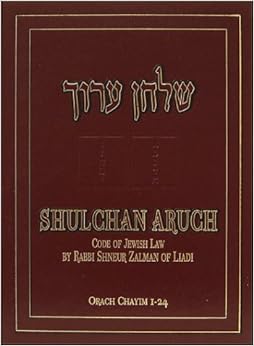
Code of Jewish Law
known as Shulchan Aruch
Rather, it seems that the final stage in the evolution of the cracker thin matzah was because of another halakhik* ḥumra**: the concern that with thick matzah it is more difficult to prevent and to ascertain chimutz***. As seen above, the Ashkenazik authorities in the 17th–19th centuries were concerned about thick matzah becoming chametz and made a concerted effort to produce thinner and thinner matzah from drier and drier batter.  This became easier to do thanks to the powered machines that could knead very dry batter. ... The development of the modern thin, hard matzah thus seems to have been driven solely by halakhik concerns rather than sociological or practical issues.
* Jewish law
** obligation
*** leaven, also spelled chametz
What does that mean? Rabbis were concerned that the middle of thick matzoh might become leavened before the dough was fully cooked - that is, it might take more than the 18 minutes allowed by Jewish law to knead and bake. It is more difficult to "prevent and ascertain" leaven in thicker matzoh. So the rabbis pushed for thinner matzoh made with drier dough. This is where Isaac Singer's machine comes in - it made handling the drier dough possible. With a thin dry cracker, it is obvious no leaven got a foothold in the matzoh.
 
Why are modern matzohs thin crackers? Because the rabbis wanted to eliminate ANY chance of leavening. Isaac Singer invented key technology to help make that happen. It was simpler to buy Passover-ready matzoh than to follow all the rules to make it at home. And the end product could be mass marketed.

 I invite discussion on the following questions.
  • Why is Passover matzoh made with only flour and water?
  • Are other types of matzoh acceptable at Passover? (oil, salt, egg, ...)
  • Have you eaten hand made matzoh at Passover?
  • Have you made matzoh for Passover?
  • Does Passover matzoh have to be a hard cracker? Can it be soft unleavened bread?

References

1. http://www.yesterdish.com/2013/07/24/matzoh-balls/
2. https://en.wikipedia.org/wiki/Matzo
3. http://content.time.com/time/nation/article/0,8599,1890268,00.html
4. https://en.wikisource.org/wiki/Translation:Shulchan_Aruch/Orach_Chaim/459
5. http://www.nazareneisrael.org/articles/calendar/unleavened-bread-recipes/
6. http://www.brandeis.edu/now/2017/April/matzo-passover-sarna.html
7. http://richardwaynegarganta.com/Feasts%20and%20Sacrifices.htm
8. https://www.nytimes.com/2016/04/17/opinion/sunday/why-is-this-matzo-different-from-all-other-matzos.html
9. http://www.myjewishlearning.com/recipe/matzah-baking-an-18-minute-project/
10. http://www.hakirah.org/Vol17Zivotofsky.pdf

Tuesday, April 18, 2017

Why Write A Blog?


In particular, why do I write this blog? I was prompted to ask myself this question after watching a TED talk called Start With Why [1] by Simon Sinek, recommend by Eryn Defoort [2]. I was poised over my keyboard and ready to answer that with a fairly short statement, and I thought "why do other people write blogs?" So I went off on an internet search, and realized there is more than one answer. 15 Reasons here [3], 9 Reasons there [4]. Top Ten Reasons here [5]. And more personal reasons there [6]. So now I have to research more - read what everyone else wrote, and decide what applies to me. Although somewhat painful, this is much easier and far more complete than figuring everything out for myself. In reading these, I realized my reasons have changed over time, and I could identify some unintended consequences of blogging, fame and fortune not among the consequences however.


Between The Ears BLOG INDEX, with titles and summaries.


Circa 1985 [8]
In 2011, I had a stroke which paralyzed my right side. Over time, I have regained a lot of movement, but I still have deficits. While I was in hospital for rehab, I blogged daily about my stroke and my rehab, first on Facebook and email, and eventually on CaringBridge [7], I was a little compulsive about it for a while. I was definitely hoping for a full recovery, but that hasn't happened yet. One thing I miss a great deal is playing piano. I think I was pretty good at it, see for yourself [8]. Playing piano kind of defined my role in my church too, I played for hymns, accompanied and directed choir for a few years, stuff like that. I was a musician. After my stroke, I felt like I had no role anymore.

Later that year, the minister started a speech club, which I normally wouldn't have signed up for, but I thought that this was something I could do to contribute again, and maybe God was opening a new door. But after a couple seasons, I grew tired of it, plus it didn't seem I had any more of a place than I did before club. So you will see that my earliest blog articles are transcripts of speeches I gave in club. It still took a while to start blogging though.

So why would I think my speeches would be worth listening to? In 2003, I began to study Hebrew. I'm not fluent at it, but I see interesting Biblical insights only available in the original language, no filters due to translation. I also began to study Hebrew commentaries, and learned there is a wealth of information out there that Christians don't ever hear because of a bias against anything Jewish and a bias against the Old Testament. It wasn't academic Old Testament stuff that I was learning - with the growing Messianic movement, I was learning more about Jesus Christ. I felt like I had a gold mine of interesting Bible info to share. You know that feeling when you learn something that you think is so cool, and you just want to tell people about it? Even if they don't want to hear it...

And books. I get interesting ideas from books.

Psalm 23 decoded by Haik-Vantoura,
and handwritten by her
Well, why did I decide to study Hebrew? Christians don't really need a reason to study Bible languages, but here's my story. This too goes back to music. I read a book called Music of the Bible Revealed [9] by Suzanne Haik-Vantoura. She claims the cantillation marks in the Hebrew can be decoded into melodies. As choir director, I took Haik-Vantoura's melodies of Psalms 23 and 150, and wrote them out for a choir, a fragment of Psalm 23 is at right. It was a challenge for everyone, but we did perform them. And for the first time, I was going through verses word by word in Hebrew. I was struck with the brevity of Hebrew. For example, "the Lord is my shepherd" is translated from "YHVH ROI", (יְהוָה רֹעִי).

Work didn't set me free either
After my stroke, it was really important to me to return to work, to prove my worth. I think everyone wants to feel important, well at least feel useful. In the long run, I may have done better treating rehab like a full time job instead of working at an actual full time job. But I did derive satisfaction, if not importance, at my job. For instance, I am coauthor on a few scientific papers - NEJM [10] for one, and I wanted to be first author on one of my own. I wrote a couple articles, but they never left the building. So, I'm a frustrated author with something to prove.

So I started writing this blog. Some of the reasons I still write have changed over the years. And the way I write has evolved. I do more research than at first, and I include references, mostly online references so the reader can click and read the quote or research for themselves, somewhat like writing a scientific paper, but you can't click on paper. I also have a few friends review articles before I publish them, the opposite of Andrew Sullivan's approach to blogging which is "We blog now—as news reaches us, as facts emerge." Why I Blog [6].


Should have read this [11]


I went through the 35 reasons listed in the articles I referenced above where other people advocate blogging. Some don't apply to me, laughably so. For instance, two articles mentioned making money. What? From blogging? For another instance, "become comfortable being known". Most of my articles get about 70 viewers, and none of them are throwing cash at me.


But there are some actual benefits in these 35 reasons I can relate to, here's a few.

Become a better writer/thinker, also expressed as turning messy ideas into neat ones - I read stuff and think "isn't that interesting?" But the process of writing it down so others can enjoy it too helps me to understand it better. Sometimes, you can't figure something out till you write it down, and maybe rewrite it a couple times. It becomes a way of doing Bible study.

Inspire others - If it inspired me, maybe it will inspire others. "Freely you have received, freely give" - Matt 10:8.

You’ll develop an eye for meaningful things - Now, when I hear or read something Biblical, I'm evaluating it for blog worthiness. There are topics I never would have studied into unless I had the intent to write about it. I'm discovering that I like Old Testament typology, where a character or a story or a place has Messianic symbolism, my favorite being the Tabernacle. I like finding things that make more sense in Hebrew, sometimes different from my previous understanding. I like seeing how interconnected the Bible is, written over many centuries, yet woven together. "Show me wonders in Your Torah" - Psalms 119:18.

One benefit not mentioned in these 35 reasons is simply to preach the gospel in some way (yes I know much of what I write gets a bit academic). Whether or not one believes in the priesthood of all believers - 1Peter 2:9, I think we all have a duty to do "what we can with what we've got, where we are" - Squire Bill Widener (NOT Teddy Roosevelt) [12]. In other words, it's something I can do. I am fond of the saying, "preach a good sermon, use words if you have to" - NOT Francis Assisi [13].

Oh, and the blog title "Between The Ears". I had to choose a title when I first set up this blog, and it's what came to mind. "The biggest battle a Christian will ever face will occur between your ears – in your mind" - Rodney Burton [14]. I learned there is another blog named Between The Ears [15] out there, go figure. If I started this blog today, I might choose the title "New Beginning", or maybe "Learning Things I Didn't Want To Know". The stroke forced me to start over in some ways, like a vine getting pruned. I don't know if I'm a better person, but I'm a different person.


References

1. https://www.youtube.com/watch?v=sioZd3AxmnE&app=desktop
2. http://eryndefoort.com/
3. http://www.becomingminimalist.com/15-reasons-i-think-you-should-blog/
4. https://www.forbes.com/sites/danreich/2011/10/15/9-reasons-you-should-blog/#4d8d16057b83
5. https://www.lifewire.com/top-reasons-to-start-blog-3476742
6. https://www.theatlantic.com/magazine/archive/2008/11/why-i-blog/307060/
7. https://www.caringbridge.org/visit/jlfreeman/journal
8. https://www.youtube.com/watch?v=iWmzRerYSfk
9. http://musicofthebiblerevealed.blogspot.com/
10. http://www.nejm.org/doi/full/10.1056/NEJMsa1311707
11. https://www.amazon.com/Blogging-Dummies-Amy-Lupold-Bair/dp/1118712099
12. https://suebrewton.com/tag/do-what-you-can-with-what-youve-got-where-you-are/
13. http://www.christianpost.com/news/preach-the-gospel-and-since-its-necessary-use-words-77231/
14. https://www.sermoncentral.com/sermons/fighting-between-the-ears-rodney-burton-sermon-on-youth-131589#
15. https://betweentheearsblog.wordpress.com/