Monday, April 6, 2020

The Paradigm: A Pattern For America

Many stories in the Bible serve as patterns of events to come later. These aren't prophecies as we normally think of them, that is prediction -> fulfillment, but rather as types. In the story of Abraham almost sacrificing Isaac, Isaac pictures Jesus. Isaac is the type, Jesus is the antitype, the fulfillment.

Jezebel and Ahab
1 Kings 16:31 to 2 Kings 10:34 records the reign of King Ahab and his wife Jezebel over the northern kingdom of ancient Israel. The characters and events of their rise and fall are a type for characters and events occurring right now in America, impossible as that seems. Again, it is not a prophesy in terms of prediction, but a type, a pattern or paradigm of things to happen "in the latter day". It is the premise of the book The Paradigm: The Ancient Blueprint That Holds the Mystery of Our Times [1] by Jonathan Cahn. For a quick intro, see a review of his book at Conservative Firing Line [2].

This article is a summary of Cahn's book. The main characters and events are summarized in tables. This can serve as a reference to anyone who has read the book, or as an introduction to the prophetic types of ancient Israel being played out in modern America.


If you like this (or not), check out my other articles at the
Between The Ears BLOG INDEX, with titles and summaries.


A Brief History of Ahab and Jezebel's Reign
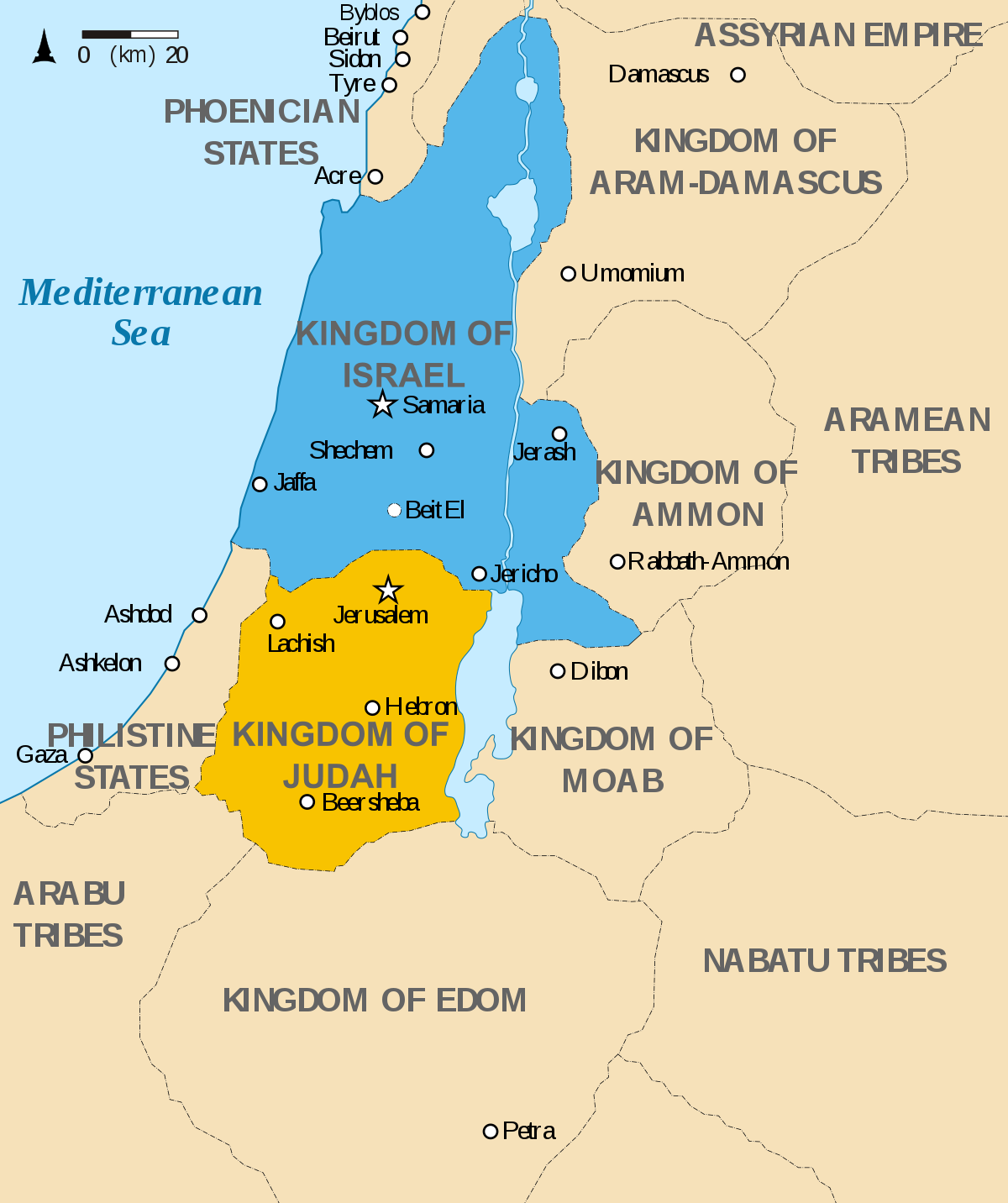

Ancient Israel
Israel began as a nation when Moses led them out of slavery in Egypt. While they were never perfect, the people of Israel started out well, but after a few centuries, began to drift away from God. This apostasy was slow at first, but in the northern kingdom of Israel, King Ahab and his wife Jezebel accelerated the move away from God towards Baal. Jezebel is seen as manipulating Ahab, especially in the practice of child sacrifice. Ahab and Jezebel got caught in a scandal killing a man named Naboth to steal his vineyard. Surprisingly, Ahab shows remorse when confronted by Elijah, so God postpones some of his punishment till after his death. Ahab has an enemy named Ben Hadad, a king to the east, who troubles Israel. Ahab manages to capture Ben Hadad, then inexplicably lets him go. Elijah tells Ahab that he should have killed Ben Hadad, but now has traded his life for Ben Hadad. Ahab dies in battle, but Jezebel maintains power as queen mother through her sons Ahaziah who only lasts two years and her son Joram who reigned for twelve years. Elijah's protoge Elisha anoints a military commander Jehu to take the throne from Ahab's son Joram. Jehu becomes king, teams up with a holy man Jehonadab, and destroys the temple of Baal and kills many of the prophets of Baal. But Jehu doesn't go far enough in reforming Israel.

A Brief History of Bill And Hillary Clinton's Reign


America began as a nation when the Founding Fathers broke away from England. While they were never perfect, the people of America started out well, but after a few centuries, began to drift away from God. This apostasy was slow at first, but Bill Clinton and his wife Hillary accelerated the move away from God towards paganism. Hillary is seen as manipulating Bill, especially in the practice of abortion. Bill and Hillary got caught in two scandals, one involving a real estate deal called Whitewater, some suggest killing a man named Vince Foster to hide evidence; and two, Bill's affair with Monica Lewinsky. Surprisingly, Bill Clinton shows remorse when confronted, some of the penalties are postponed till after he is out of office. Bill Clinton has an enemy named Bin Laden, a terrorist leader to the east, who troubles America. Clinton had nine separate chances to take out Bin Laden, but inexplicably lets him go. He traded American lives for Bin Laden. Bill Clinton's term ends, but Hillary gains power as a US Senator for eight years then Secretary of state for four years. While Hillary was the heir apparent to become President in 2008, Barack Obama won the nomination and was elected. A political outsider Donald Trump took the Presidency after Obama, taking it away from Hillary. Trump teams up with a religious man Mike Pence, and reverses abortion policies of Clinton and Obama. Does Trump go far enough in reforming America?

Regardless of how one might feel about any of the current players in American politics, one has to admit the parallels with ancient Israel. Why was this paradigm recorded? Why is it playing out now?

THE KING


Let's look in more detail at the parallels between King Ahab and Bill Clinton. They both rule over nations slipping into apostasy, and instead of reversing the trend, accelerate it due to the influence of their wives. They both sanction the killing of children, both are dogged by scandals, and both have an enemy from the east.


Ahab vs Bill Clinton
Ahab Clinton Chap
Accelerates apostasy Epitomizes apostasy
4
Morally weak Morally weak
4
Adept commander Talented leader
4
Conflict between culture of heritage and new ethos Conflict between culture of heritage and new ethos
    struck down ban on using aborted tissue
    vetoed partail birth abortion
Normalized and endorsed homosexuality
    issued proclamation to honor gay pride
4,6
Pagan practices went from secret to public
Pagan morality supplants Biblical morality
State sponsored paganism - built a temple to Baal
4
Israel became materialistic, sensual, vulgar USA became materialistic, sensual, vulgar
4
Promoted child sacrifice Championed abortion
4
Reigned 22 years -1Kings 16:29 In office 22 years
    AG, Gov Arkanas 77-81, 83-93, Pres USA 93-2001
8
Nemesis: Ben Hadad. See NEMESIS chart Nemesis: Bin Laden. See NEMESIS chart
9
Scandal
    Kills Naboth and takes his vineyard
Scandal
    Affair with Monica Lewinsky
10

THE QUEEN


What about the parallels between Ahab's wife Jezebel and Bill's wife Hillary? Both of them acted as co-regents, one could argue they were the power behind the throne. They both waged war on the nations's traditional morals, that is a war on religion. Jezebel was a priestess of Baal, Hillary dabbled in the occult. Both women had their own power base after their husbands were out of power, and in each case, were the first women to do so. And just like Ahab and Bill Clinton, they were in power the same amount of time.


It may be hard to believe that there is a war on religion, on Christians, in America. That sounds like something that happens elsewhere. Christians may be beheaded "over there", but not here. Yes there is a war on Christianity being waged by the liberal left. Author David Horowitz has written about it, DARK AGENDA: The War to Destroy Christian America [3].


Jezebel vs Hillary Clinton
Jezebel Hillary Chap
Elite of cosmopolitan cultureBorn and raised in Chicago, worked on east coast
5
Proponent of child sacrificeChief advocate for abortion
    Hillarycare compelled govt funded abortion
5
Political marriage to AhabPolitical consideration in marriage to Bill
5
Contempt for Israel's faithWage war on traditional and biblical values
5
Sought to change IsraelAgent for social and cultural change of USA
5
Distrusted by manyDistrusted by many
5
Coregent Co-president
    Bill "two for the price of one"
    Office in West Wing known as Hillaryland
6
Caused Ahab to
    Build temple to Baal
    Waged war on Biblical faith and morality
    Champion religion that sacrificed children
Convinced Bill to advance abortion
2015 NYC "deep seated cultural codes, religious beliefs and structural biases have to change"
2016 DNC open about abortion
2016 platform sought to strike down Helm and Hyde amendments
6,19
Priestess daughter of Phoenician King Ithobaal, High priest of Astarte
    Brought 400 pagan priests from Phoenicia
    Astarte goddess of fertility, sex, war, Destruction
    Astarte aka Queen of Heaven
Invited non Christian advisors to Camp David 1994
    Jean Houston, Marianne Williamson
Jean Houston
    Pantheism, all is God
    Very high priestess
    Actively dialogue with neters, gods and goddesses
    Promotes Isis aka Queen of Heaven
HRC held seances at the White House*
    Channeled Eleanor Roosevelt
5,7
Dwelt in capital city Samaria after Ahab's death Dwelt in capital city Washington DC after Bill's term
13
First queen of Israel to exercise power after king dies First First Lady to seek office after presidential term
13
As queen mother, held sway over sons Ahaziah and Joram US Senator, then Secretary of State under Obama
    back in White House, counselor to Obama
17
In power 36 years
    22 years with Ahab
    2 years with Ahaziah
    12 years Joram
In power 36 years
    22 years with Bill
    2 years presidential campaign
    12 years Senator + Secretary of State
26

* Biography Reveals Hillary Clinton Séance, Religious Devotion to Abortion [4]

THE NEMESIS


Let's examine the parallels between Ahab's archenemy Ben Hadad, and Clinton's archenemy Bin Laden. Beyond the similarity of their names, they both threatened and harassed Israel or America, both attacking capital cities, both killed in their bedrooms, betrayed wittingly or not by their couriers. And they both died 10 years after their big attack.


Ben Hadad vs Bin Laden
Ahab NemesisClinton NemesisChap
Ben HadadOsama Bin Laden
9
Ahab captures Ben-Hadad, lets him goClinton had 9 chances to eliminate Bin Laden
9
Semite, from the eastSemite, from the east
9
Threats against ancient IsraelThreats against America
9
Became active when Ahab became kingBecame active Dec 1992
9
Ben = "son" + 5 letter nameBin = "son" + 5 letter name
9
Hadad = thunderMeaning of name unknown
Attacked capital city SamariaAttacked capital city Washington DC
12
Assassinated by Hazael, his courierCIA locates him by tracking his courier
18
Killed in his bedroomKilled in his bedroom
18
Killed 10 years after AhabKilled 10 tears after 9/11
18

THE HEIR


The heirs refer to the successors to Ahab and Bill Clinton, the one who would continue the apostasy. Ahab's heir was his second son Joram. Clinton's heir was President Barack Obama. Here we see the similarities between the two. It's interesting that Ahab's successor skipped an intermediate king, Ahaziah. Clinton's successor skipped an intermediate President George Bush. Once in power, Joram and Obama followed the aspostasy of the paradigm, more war on religion, more child sacrifice and abortion. Curiously, they both reigned 12 years.


Joram vs Obama
Joram Barack Obama Chap
Heir is third king
    Ahab -> Ahaziah -> Joram
Heir is third president
    Clinton -> Bush -> Obama
15
outward display of piety
    removed Baal's pillar
outward display of piety
    campaigned against gay marriage (later reversed)
15
continued apostasy of Ahab and Jezebel continued apostasy of Clintons
    champions redefining marriage
15
Baal worship continues
    child sacrifice continues
As Illinois senator, Obama fought bill against infanticide
15
War on religion
    makes Elisha focus of his anger
    wants to execute Elisha
War on religion
    calls people of faith problems, obstacles, enemies
religious liberty is a code word for discrimination, intolerance,
     sexism, homophobia, Islamophobia, Christian supremacy
16
reigned 12 years 12 years on national stage
    2004 DNC Convention speech
    2016 DNC Convention speech to the day
12 years in power
    2005 US Senator
    2009 - 2017 President
24

THE WARRIOR


The paradigm does not stop with Ahab's successor. Another figure named Jehu came on the scene suddenly, killed Joram and became king in his stead. Likewise Donald Trump, though well known in America, entered politics as an outsider, and in a wild and crazy campaign became president. Both Jehu and Trump contend with the Heir (Joram and Obama) and the Queen (Jezebel and Hillary). Both stop the slide into apostasy and the child sacrfice. Other parallels listed below.


Jehu vs Donald Trump
JehuDonald TrumpChap
Elisha anoints Jehu at Ramoth-Gilead during Joram's reignMost prayed over and prophesied over candidate in history
21
Takes vengeance on Ahab
    cut off his descendants
    1K 19:16-17, 2K 9:1, 2K 10:11
20
Contend with former queen and her agenda - 2K 9:22Contend with HRC for Presidency
20
Outsider
    Military commander
Outsider
    Trump went to NY Military Academy
20
Character
    Confrontational, combative, contentious
    Boastful, self-promoting, not godly
    Zeal for God, follow godly counsel
    Man of action, decisiveness, and resolve
Character
    Confrontational, combative, contentious
    Boastful, self-promoting, not godly
    Zeal for God, follow godly counsel
    Man of action, decisiveness, and resolve
20
Appears when apostasy on the verge of being sealedAppears when apostasy on the verge of being sealed
20
Rise of the Warrior
    Attacks the Heir - Joram
    Race to the throne appears crazy - 2K 9:20
    Kills Joram, body thrown in Naboth's vineyard - 2K 9:24
    Kills Jezebel - 2K 9:33
Rise of the Warrior
    Attacks the Heir - Obama
    Race to the Presidency appears crazy
    Confronts HRC about abortion during debates
    Defeats HRC for President 2016
20,21,23
Jehu knew Ahab - 2K 9:24Trump was a friend of Clintons
22
Before rise to power, Jehu served AhabBefore rise to power, DT pro-abortion
22
Capital city Samaria hostile to JehuTrump inauguration had crowds of supporter and protestors
    Witches curse Trump every crescent moon*
27
Ahab built temple and altar for Baal
    Jehu tore them down, made it a refuse dump
Bill enacted government support and funding of abortion
    Trump reversed it
28
Apostasy slowed but not reversed
    Jehu not careful to keep the whole law of God
    Did not turn from sins of Jeroboam
Apostasy slowed but not reversed
    Reform is partial and selective
    Nationalism competes with reform
29

*BBC News [5]

THE HOLY MAN


And each Warrior had a religious man by his side, Jehu had Jehonadab, who as a descendant of Rechab, lived by a strict code of behavior, as does Mike Pence. Jehonadab and Pence brought credibility to Jehu and Trump respectively.


Jehonadab vs Mike Pence
JehonadabMike PenceChap
Meets Jehu on the way to depose AhabJoined Trump after nomination
25
Jehonadab interested in Jehu's desire to purge the nation of heathenismReligious leaders will have concerns about the ways of Trump
25
A Rechabite, a religiously conservative groupStrict code of behavior
25
Jehu assures Jehonadab
"See my zeal for the Lord" - 2K 10:19
DT assures Christian leaders, "I'm on your side"
25
Jehu needed Jehonadab to look credibleReligious conservative support crucial to Trump's campaign
25

THE PROPHESIES


One character from the Paradigm is missing, that is, has no modern day counterpart, that is the role of Elijah (and Elisha). And by this, I mean prophesies as we normally understand the word, prediction then fulfillment. As far as I know, no one prophesied to Bill Clinton about the consequences of not taking out Bin Laden, or warning him about the rush into paganism. It does seem that people prophesied over Trump, but I have no specifics. Was there a modern day prophet speaking to all the players like in ancient Israel? Nonetheless, we have some of Elijah and Elisha's words.


Elijah's Prophesies
Ahab Clinton Chapter
Dogs will lick Ahab's blood 1K 21:21, 2K 9:24
11
Cut off his posterity 1K 21:21, 2K 10:1-11
11
Dogs will lick Jezebel's blood 1K 21:23, 2K 9:33-35
23
Judgments to come after Ahab's death
Bring the evil upon his house in his son's days 1K 21:29
Repercussions AFTER reign ended because Bill:
    Overturned Glass Steagall 
    Deregulated derevatives
    Directed Fannie Mae to sub prime mortgages
11
Exposure of personal sin
    Naboth killed for his vineyard
Exposure of personal sin
    Affair with Monica Lewinsky
    Dec 1998 Impeached, perjury, obstruction of  justice
11
Sorrow and repentance
    Tore his clothes when confronted
    Sackcloth and fasting
Sorrow and repentance
    9/11/1998 9AM Admited at prayer breakfast
    9/11/2001 9AM Twin tower attack
    Admitted his false witness
    Surrendered his law license
12,13
Exposed in 19th year
    Died 3 years later - 1K 22:1-2
1/20/1998 - Exposed in 19th year
1/20/2001 - End of second term
11,12
Tied to tribe of Levi
    Ahab died in battle of Ramoth-Gilead, a Levite city
Tied to tribe of Levi
    Levi -> Levin -> Levinsky -> Lewinsky
11

Why Is This Paradigm Playing Out In Modern America?


Again, regardless of how one might feel about any of the current players in American politics, one has to admit the parallels with ancient Israel. One point of this article is to demonstrate that it is just beyond coincidence that the Paradigm of Ahab's reign is mirrored in modern America. One can argue that some of the parallels don't fit all that well. One could also argue that many events in Ahab and Jezebel's life have no parallel today. But there are too many uncanny fulfillments of the the ancient type. It is not coincidence. Why was this Paradigm recorded? Why is it playing out now?

The simple answer to why it was recorded is because Ahab was a king in Israel. The reigns and deeds of all the kings are recorded. But his reign carries profound significance for America today. Israel was at a crossroads, where the slide into apostasy was becoming irreversible, they were turning away from God. And God would no longer protect and bless a nation that went after other gods. He sent them a warning, and also sent them someone to stop the slide into godlessness. Eventually Israel was conquered and sent into exile. Likewise, God has sent warnings to America to turn back from godlessness lest He remove His blessings and protections, and lest we too are conquered. Did we learn from Sept 11? Are we learning from COVID 19? "Nearly half of the country believes that the sweeping and deadly coronavirus is a wake-up call from God" - Washington Examiner [6]. Today is a good day to repent.

I am in awe of Jonathan Cahn's amazing ability to tie prophesies and types to the modern world. I wrote a previous article based on his writings, see Sycamore of Ground Zero [7]. One question he raises in the Paradigm without answering is why America parallels ancient Israel. I think it is because America is descended from Israel. I know that is controversial, Cahn doesn't believe it himself, but the theory has been out there for about 200 years. It has been well documented by Steve Collins - Lost Ten Tribes Found [8], Yair Davidiy The Tribes: The Israelite Origins of Western People [9], and others The United States and Britain in Bible Prophecy [10]. America parallels Israel because we ARE Israel, not the tiny country of Israel in the Middle East, but the actual descendants of ancient Israel. And of course, I am in awe of God Who foresaw this 3000 years ago and recorded it for our caution now.

I see no predictive value in the Paradigm. As I peek ahead in the Bible, Jehu reigns for 28 years. Presidents can serve a maximum of two terms. Furthermore, Trump is already 73 years old. The northern kingdom of Israel continued more than 100 years after Jehu - Wiki(Kings_of_Israel) [11], then Assyria conquered and exiled northern Israel. Many people, including me, believe we are already in the end time, meaning we don't have 100 years. The value of the Paradigm is not in guessing dates, but realizing that America is at the same fork in the road as Israel, the choice is to turn back to God or slide further into apostasy, which won't end well.

As Elijah said to Israel then (1K 18:21)

How long will you hesitate between two opinions? 
If the Lord is God, follow Him; but if Baal, follow him.


References
1. https://www.amazon.com/dp/1629994766
2. https://conservativefiringline.com/review-the-paradigm-by-jonathan-cahn/
3. https://www.amazon.com/dp/163006114X
4. https://www.lifesitenews.com/news/biography-reveals-hillary-clinton-seance-religious-devotion-to-abortion
5. https://www.bbc.com/news/world-us-canada-39090334
6. https://www.washingtonexaminer.com/washington-secrets/poll-29-see-biblical-last-days-44-say-virus-is-gods-wake-up-call
7. http://jlfreeman-1.blogspot.com/2014/06/sycamore-of-ground-zero.html
8. https://stevenmcollins.com/
9. https://www.amazon.com/Tribes-Israelite-Origins-Western-People/dp/965902553X
10. https://www.ucg.org/bible-study-tools/booklets/the-united-states-and-britain-in-bible-prophecy
11. https://en.wikipedia.org/wiki/Kings_of_Israel_and_Judah

Monday, March 9, 2020

Well Well Well

The Power of Companion Stories


What do you call three holes in the ground?

Well Well Well

Favorite joke of a (former) second grader.


The Bible tells lots of stories, beginning in the Old Testament with creation, Adam and Eve, Abraham, Isaac, Jacob, etc. In the New Testament, we read of many events from Jesus' life, and the other apostles. Each story can be read and understood as a standalone description of events, but the stories can sometimes tell us more if read in pairs.

For example, Noah's ark is translated from the Hebrew word tevah, and the only other place tevah occurs is in the story of the baby Moses. The basket that Moses' mother put him in was called a tevah, for more detail, see The Ark Of Moses [1]. It's like the Bible is telling us to read these two passages together. There are other pairs of stories that share an unusual word or phrase. They comment on each other. By the way, the word for the Ark of the Covenant is aron, not tevah.

Or perhaps two stories might have the same themes.  Consider how dreams are a constant theme in the lives of Joseph and Daniel. In music, we would call these themes motifs, they keep recurring. One theme that I want to look at here is what happens when men meet women at wells.  We first see this motif in Gen 24 when Abraham's servant goes to find a wife for Isaac and he meets Rebecca at a well. We see it again with Jacob and Rachel in Gen 29, and again with Moses and Zipporah in Ex 2. And this motif makes an appearance in the New Testament in the story of Jesus meeting the Samaritan woman at the well. I'm saying that all the stories should be considered together.

Hebrew Scroll
Another literary device that links two stories is simple proximity, aka juxtaposition. For example, the banishment of Ishmael and the near sacrifice of Isaac are Gen 21 and Gen 22. Read together, one gets a picture of the Day of Atonement - one sent away, and one sacrificed.

We see juxtaposition in the account of the Samaritan woman at the well as well... Preceding it is Jesus' encounter with Nicodemus. As if the conversation between Jesus and the Samaritan isn't interesting enough all by itself, we can gain more from the story by considering the similarities and contrasts with other stories, both OT and NT.  The story of the Samaritan woman is an example of both kinds of companion stories. It is the intersection of two Biblical literary devices - patterns and juxtaposition.  We will be using the Bible to dig deeper into the Bible.


If you like this (or not), check out my other articles at the
Between The Ears BLOG INDEX, with titles and summaries.


I will quote the Samaritan woman story, give a little historical background, then compare Samaritan woman story to Nicodemus and then OT stories. If you skip the reading, just note the highlighted words and phrases.


JOHN 4 Therefore when the Lord knew that the Pharisees had heard that Jesus was making and baptizing more disciples than John 2 (although Jesus Himself was not baptizing, but His disciples were), 3 He left Judea and went away again into Galilee. 4 And He had to pass through Samaria. 5 So He came to a city of Samaria called Sychar, near the parcel of ground that Jacob gave to his son Joseph; 6 and Jacob's well was there. So Jesus, being wearied from His journey, was sitting thus by the well. It was about the sixth hour.

7 There came a woman of Samaria to draw water. Jesus said to her, "Give Me a drink." 8 For His disciples had gone away into the city to buy food. 9 Therefore the Samaritan woman said to Him, "How is it that You, being a Jew, ask me for a drink since I am a Samaritan woman?" (For Jews have no dealings with Samaritans.) 10 Jesus answered and said to her, "If you knew the gift of God, and who it is who says to you, 'Give Me a drink,' you would have asked Him, and He would have given you living water." 11 She said to Him, "Sir, You have nothing to draw with and the well is deep; where then do You get that living water? 12 You are not greater than our father Jacob, are You, who gave us the well, and drank of it himself and his sons and his cattle?" 13 Jesus answered and said to her, "Everyone who drinks of this water will thirst again; 14 but whoever drinks of the water that I will give him shall never thirst; but the water that I will give him will become in him a well of water springing up to eternal life." 15 The woman said to Him, "Sir, give me this water, so I will not be thirsty nor come all the way here to draw." 16 He said to her, "Go, call your husband and come here." 17 The woman answered and said, "I have no husband." Jesus said to her, "You have correctly said, 'I have no husband'; 18 for you have had five husbands, and the one whom you now have is not your husband; this you have said truly." 19 The woman said to Him, "Sir, I perceive that You are a prophet. 20 Our fathers worshiped in this mountain, and you people say that in Jerusalem is the place where men ought to worship." 21 Jesus said to her, "Woman, believe Me, an hour is coming when neither in this mountain nor in Jerusalem will you worship the Father. 22 You worship what you do not know; we worship what we know, for salvation is from the Jews. 23 But an hour is coming, and now is, when the true worshipers will worship the Father in spirit and truth; for such people the Father seeks to be His worshipers. 24 God is spirit, and those who worship Him must worship in spirit and truth." 25 The woman said to Him, "I know that Messiah is coming (He who is called Christ); when that One comes, He will declare all things to us." 26 Jesus said to her, "I who speak to you am He."
27 At this point His disciples came, and they were amazed that He had been speaking with a woman, yet no one said, "What do You seek?" or, "Why do You speak with her?" 28 So the woman left her waterpot, and went into the city and said to the men, 29 "Come, see a man who told me all the things that I have done; this is not the Christ, is it?" 30 They went out of the city, and were coming to Him. 
31 Meanwhile the disciples were urging Him, saying, "Rabbi, eat." 32 But He said to them, "I have food to eat that you do not know about." 33 So the disciples were saying to one another, "No one brought Him anything to eat, did he?" 34 Jesus said to them, "My food is to do the will of Him who sent Me and to accomplish His work. 35 Do you not say, 'There are yet four months, and then comes the harvest'? Behold, I say to you, lift up your eyes and look on the fields, that they are white for harvest. 36 Already he who reaps is receiving wages and is gathering fruit for life eternal; so that he who sows and he who reaps may rejoice together. 37 For in this case the saying is true, 'One sows and another reaps.' 38 I sent you to reap that for which you have not labored; others have labored and you have entered into their labor." 
39 From that city many of the Samaritans believed in Him because of the word of the woman who testified, "He told me all the things that I have done." 40 So when the Samaritans came to Jesus, they were asking Him to stay with them; and He stayed there two days. 41 Many more believed because of His word; 42 and they were saying to the woman, "It is no longer because of what you said that we believe, for we have heard for ourselves and know that this One is indeed the Savior of the world."
43 After the two days He went forth from there into Galilee. 44 For Jesus Himself testified that a prophet has no honor in his own country. 45 So when He came to Galilee, the Galileans received Him, having seen all the things that He did in Jerusalem at the feast; for they themselves also went to the feast.

History and Cultural Background


Who were the Samaritans? I had always thought the Samaritans were Gentiles. We do know from this and other references in the Bible and in history that many Jews did not like the Samaritans. To the point where Jews traveling to Galilee would avoid traveling through Samaria, taking instead a 3 day detour to go across the Jordan, north, and then back. Jesus apparently wasn't in a hurry to get to Galilee because He spent two extra days with the Samaritans.


Some Jews regarded the Samaritans as foreigners and their attitude was often hostile, although they shared most beliefs, while many other Jews accepted Samaritans as either fellow Jews or as Samaritan Israelites. - Wikipedia(Samaritan_woman)  [2]

But that's not how the Samaritans viewed themselves. They believed they were descendants of northern tribes of Israel. Note that the woman referred to the well being given by "our father Jacob". They didn't think they were Gentiles. They also thought they were the keepers of the true religion of Israel. In fact, Samaritan is from the Hebrew Shomrim, which means keeper. But they only accepted the five books of Moses. And as the story records, they thought Mt Gerazim was the holy mountain. There were Gentiles living in Samaria as well - the history of Samaria after the Assyrian deportation is messy, with lots of foreigners coming and going. And according to Britannica(Samaritan) [3], a small group of about 500 Samaritans exists to this day. For more history of Samaria, read the note below.


Standard Interpretation


The standard interpretation of the Samaritan woman is that she was an immoral woman because she had five husbands. And because of this she was going to the well at midday to avoid contact with others. The Bible doesn't say either of those things. She went to the well at the same time Jacob and Rachel met at the well. The idea that she was an immoral woman dates to the Protestant Reformation - Ethics Daily [4].

Here are a couple counterarguments to her being an immoral woman. If she were an immoral woman, is it likely she would have been willing to go into town and tell everyone she met the Christ? And would they have listened to her? - (Reconsidering the Woman at the Well [5], Reconsidering The Samaritan Woman [6]) And looking at her conversation with Jesus, one can see that she knew the Torah, not the kind of thing you would expect from an immoral woman.

Dt 27:11 When you cross the Jordan,
 these shall stand on Mount Gerizim
to bless the people
When she perceives that Jesus is a prophet, she asks about Mt Gerizim vs Jerusalem. We might think she is deflecting after He just told her about her five husbands, but actually she got straight to one of the core theological differences between Samaritans and Jews. It is a matter pretty unimportant to 21st century readers, but important to the Samaritan/Jew conflict. 'When it came to the Samaritan/Jew conflict, Jesus clearly sided with the Jews. He says plainly "Salvation is from the Jews"' - The Jewish Gospel of John p 55  [7].


And when she mentions the Messiah who will teach us all things, Jesus makes another incredible statement, "I who speak to you am He". Who else does He speak so plainly to? Certainly not Nicodemus.

Juxtapostion


It's time to compare this conversation with the conversation that Jesus had with Nicodemus in John chapter 3 quoted below, where Nicodemus gets hung up on the meaning of "born again". Remember, comparing adjacent stories is the literary technique of juxtaposition.


These are two lengthy conversations that Jesus has with individuals, next to each other in John's Gospel. When we compare the two stories, we find lots of contrast. Highlighting the contrast, Nicodemus is contrasted with a woman who is not even named in the account. If  a first century audience considered her immoral, it would heighten the contrast between her and Nicodemus even more. In the Eastern orthodox tradition, she was later christened Photina, and she is celebrated as a saint of renown - Wikipedia(Samaritan Woman)[8].


Table Taken From Three Narrative Parallels [9]
Nicodemus Samaritan Woman
Man Woman
Ruler of the Jews Unnamed Samaritan Woman
Jerusalem Sychar
Comes at night Comes at midday
Knows who Jesus is Does not know who Jesus is
Misunderstands ambiguous words "born again" Misunderstands ambiguous words "living water"
Asks about spiritual; fixates on physical Asks about natural; receives spiritual
Says little Says much
Wonders if Jesus is Messiah Learns directly that Jesus is Messiah
Rebuked by Jesus; no response given Favorable response; proclaims Jesus as Messiah


Nicodemus and Photina reacted to Jesus in quite different ways. On the one hand, they were both believers, Torah observant as they understood it. On the other, she was somehow free to begin proclaiming that she had met the Messiah.  Whereas Nicodemus seemed unable at that time to see Jesus as the Messiah. The scribes and Pharisees knew from the prophecies of Daniel that the Messiah was due. They expected him to be one of them, where Jesus came from outside their authority. Nicodemus believed Jesus was at least a prophet, but maybe his position as a member of the Sanhedrin prevented him from seeing Jesus as more than a prophet, or from acting on what he knew. He was bound by his peers. When Nicodemus tried to defend Jesus (Jn 7:50), his peers rebuked him. But after Jesus was crucified, Nicodemus was there helping Joseph of Arimathea prepare the body for burial. A Pharisee believer had to be a secret believer, so maybe he did all he could.

A first century reader would expect a different outcome though. The contrast between a Pharisee and an unnamed Samaritan woman couldn't be missed. So when the Samaritan woman "gets it", but the Pharisee doesn't, it would have been a shocking story to them, much like the good Samaritan story would have shocked them.

The unnamed, troubled woman from Samaria is not only more engaged and more receptive to Jesus's words than the esteemed teacher of the Jews, but she also becomes Jesus's emissary leading the way for the disciples in the evangelization of the Samaritans, while Nicodemus lies silent under Jesus's criticism for being spiritually dull - Three Narrative Parallels [9]

Note that the Samaritan women left her waterpot at the well. This is symbolic that she went for the living water over the physical water.

Woman/Well Motif


Every reader of John's Gospel in the first century, whether from Judea or Samaria would have been VERY familiar with the three stories in Genesis and Exodus where men meet women at wells. The Torah was read in the synagogues every Sabbath, such that the whole Torah was read aloud in a year's time.

Let's look at some common threads in the three stories, Isaac and Rebecca, Jacob and Rachel, Moses and Tsipporah.

1. The future bridegroom (or surrogate) journeys to a foreign land. Jacob and Moses had to "get out of town", as did Jesus.
2. There he meets a girl at a well.
3. Someone, the man or maiden, draws water from the well. The Samaritan woman does not immediately comply. She left her waterpot, so it's not clear if anyone drew water.
4. The maiden rushes home to bring news of the stranger, Photina goes and tells the village.
5. A betrothal is arranged, usually after the prospective groom has been invited to a betrothal meal. Jesus meets the town's folk and stays two days, but no betrothal.

List taken from When Men Meet Women By Wells [10]


The big expectation of a first century reader is that this encounter will lead to a wedding. John likens Jesus to a bridegroom in the verses before this story - (Jn 3:25-30), maybe to make sure the reader doesn't miss the pattern coming up in chapter 4. "It's clear though that John wants his readers to see Jesus encounter with the Samaritan woman like an engagement." - [10]. It's like setting up a joke where a pattern is established two or three times, and then the punch line takes the story in a different direction.


Jesus Christ IS a bridegroom. And the church IS the bride. He is not proposing a physical marriage here between Himself and the Samaritan woman, but a spiritual union between Himself and the church. Many Samaritans became part of the early church, part of the bride. That's the punch line, taking the pattern from the physical to the spiritual.


Summary


The Bible is deeper than its individual stories. Overlaying companion stories is one technique for digging deeper into a story, using the Bible to interpret the Bible. We have used two different methods of finding companion stories - looking for patterns, and juxtaposed stories to bring more meaning out of the encounter between Jesus and the Samaritan woman at the well.

The meeting appeared like previous meetings at wells, but took a different turn,  a beginning of the Gospel going into the world, a spiritual marriage proposal by Christ to His church.

And we saw the contrast between Nicodemus and "Photina". The Establishment refused to accept Jesus, and even though Nicodemus believed, there was little he could do. Photina was free of Establishment constraints and became a valuable evangelist in Samaria.

Parting thoughts


Other companion stories are hinted at in the text. Here are some to be explored.

Consider how Joseph suffered (mostly) unjustly. How is the Samaritan woman like Joseph?

She believed herself to be descended from Jacob. Trace the history of the northern kingdom through the deportation and return.

Sychar is near Shechem, the site of Dinah's woes, Joshua made a covenant with Israel at Shechem, and it is also a sanctuary city of Israel. Does any of Shechem's history help us understand this story better?

The Samaritan woman seems to parallel Rebecca more than Rachel or Tsipporah. What can be learned by focusing on comparing just those two?

Final thought: If you met Jesus at your favorite watering hole, what question would you ask?


References
1. http://jlfreeman-1.blogspot.com/2017/06/the-ark-of-moses.html
2. https://www.blogger.com/wiki.%20https://en.wikipedia.org/wiki/Samaritan_woman_at_the_well
3. https://www.britannica.com/topic/Samaritan
4. https://ethicsdaily.com/blaming-the-victim-rethinking-the-samaritan-woman-cms-23049/
5. https://loveroars.com/2017/08/03/reconsidering-the-woman-at-the-well/
6. https://blog.israelbiblicalstudies.com/jewish-studies/john-4-reconsidering-the-samaritan-woman/
7. https://www.amazon.com/Jewish-Gospel-John-Discovering-Israel-ebook/dp/B013II9OES
8. https://en.wikipedia.org/wiki/Samaritan_woman_at_the_well
9. https://www.cbeinternational.org/resources/article/priscilla-papers/significance-three-narrative-parallels-men-and-women-luke-1-john
10. http://logosmadeflesh.com/2012/06/26/the-thing-that-happens-when-men-meet-women-by-wells/


A Brief History of Samaria


Israel left Egypt, wandered in the desert for forty years, then took possession of the promised land. The region known as Samaria was assigned it to the Tribe of Joseph. After the death of King Solomon (c. 931 BC), the northern tribes, known collectively as Israel or Ephraim, separated from the southern tribes known as Judah. King Omri (c.884 BC) made the city of Shomron his capital.

Israel lived there for centuries, but was eventually taken captive by the king of Assyria, 2Kings 17:6. Assyria then moved five Gentile tribes in to live in Samaria (17:24). God sent lions to attack the Gentile tribes (17:25) . So the Assyrian king sent an Israelite priest to the five tribes to teach them about the customs of the "god of the land" (17:27-28).

But some of the original Israelites manged to stay in Samaria. During a revival led by King Hezekiah of the kingdom of Judah, Hezekiah sent a letter to all Israel inviting them to celebrate the Passover in Jerusalem. The letter went out from "Beersheba to Dan", which included Samaria. Note the last phrase, that some had escaped the kings of Assyria. They no doubt intermarried with the Gentile tribes.

2 Chr 30: 6 So the posts went with the letters from the king and his princes throughout all Israel and Judah, and according to the commandment of the king, saying, Ye children of Israel, turn again unto the Lord God of Abraham, Isaac, and Israel, and he will return to the remnant of you, that are escaped out of the hand of the kings of Assyria.
And to make their lineage more confusing, when the Temple was rebuilt, Israel expelled the foreigners from the land. But what about the ones that intermarried Israelites?  Maybe the Samaritans kept themselves racially pure, maybe they were part Gentile.

Neh 13:1 On that day they read aloud from the book of Moses in the hearing of the people; and there was found written in it that no Ammonite or Moabite should ever enter the assembly of God, 2 because they did not meet the sons of Israel with bread and water, but hired Balaam against them to curse them. However, our God turned the curse into a blessing. 3 So when they heard the law, they excluded all foreigners from Israel.

Here are some selected quotes on Samaria and Samaritans.

Jews vs Samaritans: The Origin of Conflict

So, when the Assyrians conquered Samaria in 724 B.C., the inhabitants of Judah were not sympathetic. The Assyrians took their captives home and sent their own pagan people to occupy the land of Samaria. Still, some Samaritans remained in their homeland and continued to practice the faith of Moses while intermarrying with the pagan settlers.

Britannica(Samaritan)

Samaritan, member of a community of Jews, now nearly extinct, that claims to be related by blood to those Jews of ancient Samaria who were not deported by the Assyrian conquerors of the kingdom of Israel in 722 BCE. The Samaritans call themselves Bene-Yisrael ("Children of Israel"), or Shamerim ("Observant Ones")

The Jewish Gospel of John (p. 64).

The Samaritan Israelites defined their own existence in exclusively Israelite terms. The Samaritans called themselves - "the sons of Israel" and "the keepers" (shomrim).

The Samaritan Israelites were the faithful remnant of the Northern tribes - the keepers of the ancient faith.

Clueless Preaching About Samaritan Woman Misses Point

While Jesus at first affirms the woman's reply that she has no husband, he then enigmatically implies that she does have one. But before branding her as a harlot or adulteress, we would be wise to remember that Roman marriage laws stipulated only the freeborn could marry, and then only to another freeborn person. This excluded from legal marriage the millions of freed persons (former slaves) who populated the empire. Living as a concubine could have been the Samaritan woman's only option if she and her "husband" were both freed persons, or if one was freeborn and the other freed.


Text of Nicodemus's encounter with Jesus, John 3:1-21


3:1 Now there was a man of the Pharisees, named Nicodemus, a ruler of the Jews; 2 this man came to Jesus by night and said to Him, "Rabbi, we know that You have come from God as a teacher; for no one can do these signs that You do unless God is with him." 3 Jesus answered and said to him, "Truly, truly, I say to you, unless one is born again he cannot see the kingdom of God."

4 Nicodemus said to Him, "How can a man be born when he is old? He cannot enter a second time into his mother's womb and be born, can he?" 5 Jesus answered, "Truly, truly, I say to you, unless one is born of water and the Spirit he cannot enter into the kingdom of God. 6 That which is born of the flesh is flesh, and that which is born of the Spirit is spirit. 7 Do not be amazed that I said to you, 'You must be born again.' 8 The wind blows where it wishes and you hear the sound of it, but do not know where it comes from and where it is going; so is everyone who is born of the Spirit."

9 Nicodemus said to Him, "How can these things be?" 10 Jesus answered and said to him, "Are you the teacher of Israel and do not understand these things? 11 Truly, truly, I say to you, we speak of what we know and testify of what we have seen, and you do not accept our testimony. 12 If I told you earthly things and you do not believe, how will you believe if I tell you heavenly things? 13 No one has ascended into heaven, but He who descended from heaven: the Son of Man. 14 As Moses lifted up the serpent in the wilderness, even so must the Son of Man be lifted up; 15 so that whoever believes will in Him have eternal life.

16 "For God so loved the world, that He gave His only begotten Son, that whoever believes in Him shall not perish, but have eternal life. 17 For God did not send the Son into the world to judge the world, but that the world might be saved through Him. 18 He who believes in Him is not judged; he who does not believe has been judged already, because he has not believed in the name of the only begotten Son of God. 19 This is the judgment, that the Light has come into the world, and men loved the darkness rather than the Light, for their deeds were evil. 20 For everyone who does evil hates the Light, and does not come to the Light for fear that his deeds will be exposed. 21 But he who practices the truth comes to the Light, so that his deeds may be manifested as having been wrought in God."

Tuesday, December 3, 2019

To Breed Or Not To Breed

I learned a new word from the Internet: anti-natalism, also spelled without the hyphen: antinatalism. Spell check doesn't like it either way. Here's one definition.


Antinatalism concludes through philosophical reasoning that it is better for human beings not to be born - Wikihow(Antinatalism) [1]

I don't think that anti-natalism deserves a Wikihow page.

The term anti-natalism was coined by David Benatar, philosopher and author of the book "Better Never to Have Been: The Harm of Coming into Existence" [2].


If you like this (or not), check out my other articles at the
Between The Ears BLOG INDEX, with titles and summaries.


Another variation of anti-natalism is "I didn't ask to be born". A 27 year old man in India named Raphael Samuel has sued his parents because he didn't ask to be born, therefore he claims that they are obligated to take care of him. His mother wisely responded with this:

If Raphael could come up with a rational explanation as to how we could have sought his consent to be born, I will accept my fault - Fox News [3].

The stated goal of anti-natalism is to end suffering, not just for humans, but for animals too. Using human reasoning, Benatar and others conclude that the best way to do that is to stop having children. Fewer people means less demand for earth's resources, and especially fewer animals killed for food (less suffering). Taken to its conclusion means the end of human life. A woman who calls herself the Friendly Anti-Natalist wishes that humans could “walk hand-in-hand together into extinction” - Daily Citizen [4]. Mankind has apparently been using the wrong approach up till now by trying to kill other people or other nations, to have a bigger slice of the pie for themselves. All you need to do is convince everyone to stop having babies. Apparently it's OK to leave all the animals, just eliminate the humans. This overlooks the suffering already present in the animal kingdom.

Benatar believes that "abortion is not only permissible, but a moral obligation" - Daily Citizen [4]. So a child that didn't ask to be born is also not asked if it wants to be killed.

Take A Step Back


Some of the tenets of anti-natalism have been around a long time. I imagine that many people have felt so awful at some point in their lives that they echoed Benatar's words "I wish I'd never been born". Which is slightly different from "I want to die". And some like poet John Milton have expressed the idea eloquently


Did I request thee, Maker, from my clay
To mould me man? Did I solicit thee
From darkness to promote me? Goodreads(Antinatalism) [5]

That's just a fancy way of saying I didn't ask to be born.


And we even find the idea expressed this way in the Bible. King Solomon wrote

Eccl 4:3 But better off than both of them is the one who has never existed, who has never seen the evil activity that is done under the sun.

The Bible also talks about how children are a blessing. Indeed, in ancient times, it was a shame to a person not to have children. Several of the matriarchs were barren for long periods of time, and the Bible records their agony. Today in Western culture it is not looked at the same way. Men and women are not shamed for childlessness, some even choose it voluntarily - and not because they are anti-natalists. Anti-natalism is the opposite of "be fruitful and multiply".

Foundation


There is certainly suffering in the world; no one gets through life without some suffering. Solomon said something similar.

Eccl 12:1 Remember now your Creator in the days of your youth, Before the difficult days come, And the years draw near when you say, “I have no pleasure in them”

But anti-natalists go from the observation that there is suffering to offering a solution that we should all die. How did they draw that conclusion? By philosophical argument, aka human reasoning. The problem I see is that if you start from a faulty premise, you can conclude anything. Anti-natalists reject God, consequently reject what He might have to say, statements like "Choose life" (admittedly in a different context). Here is the whole verse.

Deuteronomy 30:19 I call heaven and earth to witness against you today, that I have set before you life and death, the blessing and the curse. So choose life in order that you may live, you and your descendants,


The faulty premise is that life has no meaning, that the suffering has no meaning, that the suffering can't be stopped. And these things are true without God. What vanity it takes to think that God can't or won't end the suffering. Here's what Declan Leary said about the lack of meaning in an anti-natalist's life.


A life actively and monomaniacally devoted to the notion that life has no meaning might feel meaningless. National Review(Against Antinatalism) [6]

If there is too much suffering in life, maybe it comes from rejecting God and violating His laws. God's law actually brings peace and blessings, and reduces suffering. You can't expect God's blessings if you disregard His rules. If you have to invent your own solution to suffering, you miss the comfort in a statement like this.

Romans 8:18 For I consider that the sufferings of this present time are not worthy to be compared with the glory that is to be revealed to us.

In HIS Time


God's plan for dealing with suffering is simple - eliminate suffering and death altogether, but in His time. Like everyone else, I've had days where I suffered, but on balance, I am glad I was born, and I look forward to this day.

Revelation 21:4 and He will wipe away every tear from their eyes; and there will no longer be any death; there will no longer be any mourning, or crying, or pain; the first things have passed away.”


References

1. https://www.wikihow.com/Live-As-an-Antinatalist
2. https://www.amazon.com/Better-Never-Have-Been-Existence/dp/0199549265
3. https://www.foxnews.com/world/indian-man-to-sue-his-parents-for-giving-birth-to-him-without-his-consent-wants-to-be-paid-for-his-life
4. https://dailycitizen.focusonthefamily.com/anti-natalists-the-people-who-believe-that-the-cure-for-human-suffering-is-not-being-born-at-all/
5. https://www.goodreads.com/quotes/tag/antinatalism
6. https://www.nationalreview.com/2019/05/anti-natalism-argument-david-benatar-wrong

Tuesday, November 19, 2019

Epispasm

I used to joke that I spent my life learning things I didn't want to know. Epispasm may just be one of those things. I learned of it while reading "Unlocking the Scriptures" [1] by Julia Blum . The book is filled with tidbits of information about the Bible that are not apparent in most translations. But I was surprised when she mentioned 'epispasm— a surgical procedure that "reversed" circumcision'. What??? I had never considered that circumcision might be reversed. How can this be?

When I read how it was done, I realized I was thinking too literally. I pictured trying to sew flesh back on. That's not how it's done. Epispasm gives the appearance that circumcision has been reversed. You can read lots more detail for yourself at BIBLE REVIEW [2] and at Wikipedia [3].

After getting over the what and the how, one wonders why. A little history lesson is in order.


If you like this (or not), check out my other articles at the
Between The Ears BLOG INDEX, with titles and summaries.


A Brief History Of Hellenism


During the Hellenistic Period of ancient Greece, Greek culture reached its peak influence. This was the time beginning with Alexander the Great and ending with the rise of the Roman Empire, 323 BC to 31 BC. 
Territory of Alexander the Great 
That Greek culture gave the world many things, including Democracy and the Olympics. Sports were popular then as now. They built gymnasiums in every city they conquered - Judaism vs Hellenism - [4]. Ancient Greek Gymnasiums were more than places to get physical exercise, they were places for education, social gathering, and making business connections. "Participation in athletics was often a prerequisite for social advancement." - [2].

The Bath-Gymnasium Complex at Sardis
The gymnasium in Ancient Greece functioned as a training facility for competitors in public game(s). It was also a place for socializing and engaging in intellectual pursuits. The name comes from the Ancient Greek term gymnós meaning "naked". Only adult males were allowed to use the gymnasia.

Athletes competed nude, a practice which was said to encourage aesthetic appreciation of the male body, and to be a tribute to the gods.
In our culture, athletes may be naked in the locker room, but I suspect most athletes would be uncomfortable with the idea of competing in the nude. "Aesthetic appreciation of the male body" did not include circumcision however, so Jewish men missed out on the socializing, intellectual pursuits, and business opportunities of the gymnasiums. So, some Jews sought to undo circumcision through epispasm. Around 168BC, Antiochus Epiphanes, whose name means God Manifest, passed a law against circumcision, making it punishable by death. Then it became a life or death decision.

Understanding the meaning of epispasm makes this verse make a lot more sense.

1 Cor 7:18 Was any man called when he was already circumcised? He is not to become uncircumcised.

I always thought that Paul was writing an absurdity here to make a point. But apparently not. Epispasm "reached its peak of popularity in the first century C.E."  [2]. The word used in this verse is epispastho - Biblehub [5], so  Paul was familiar with epispasm, and here he is referring to the surgery by name.

But this isn't the earliest reference to epispasm. It can be found in the book of Maccabees, which many don't consider part of the Bible - GotQuestions [6], but is valuable history nonetheless. Consider this.
1 Mac1:11 In those days certain renegades came out from Israel and misled many, saying, “Let us go and make a covenant with the Gentiles around us, for since we separated from them many disasters have come upon us.” 12 This proposal pleased them, 13 and some of the people eagerly went to the king, who authorized them to observe the ordinances of the Gentiles. 14 So they built a gymnasium in Jerusalem, according to Gentile custom, 15 and removed the marks of circumcision, and abandoned the holy covenant. They joined with the Gentiles and sold themselves to do evil.

More History


Antiochus did more than just make circumcision illegal, he enforced the death penalty on mothers who circumcised their babies, and killed the babies too. He also made the Jews follow Greek law, he desecrated the Temple in Jerusalem, he forbade burnt offerings, sacrifices, and the Sabbath. This sparked a revolt by a priest named Matthias who refused to let a Hellenized Jew offer an unclean sacrifice on the altar. He killed that Jew, and a Greek official as well. Matthias and his five sons hid in the hills, the oldest son Judah organized a guerrilla army. Judah was nicknamed Maccabee, which means hammer. The revolt was successful, defeating the Greek army which was larger and well trained and even had elephants. After three years of fighting, the Maccabees recaptured Jerusalem and cleansed the Temple which Antiochus had defiled. This the origin of Hanukkah, a remembrance of the time when the Temple was dedicated by the Maccabees. Hanukkah means dedication. And we find Jesus apparently keeping Hanukkah in the New Testament, though scholars disagree on whether He kept it or not - Did Jesus Keep Hanukkah? [7], Jesus and Hanukkah [8].

John 10:22 At that time the Feast of the Dedication (Hanukkah) took place at Jerusalem;  23 it was winter, and Jesus was walking in the temple in the portico of Solomon.

Even More History


The  revolt of the Maccabees was the beginning of the Hasmonean dynasty. So for a time, the Jews had peace and could practice their religion, including circumcision. Kind of. The Hasmonean dynasty started off well, but the descendants of the original Maccabees were not as noble, many of them were Hellenized (embraced the Greek culture). The Hasmoneans set themselves up as kings, though they called themselves princes instead of kings because a king had to come from the line of King David, and Matthias was a  priest. Priests were of the tribe of Levi, whereas King David was of the tribe of Judah. They were corrupted by power, and the dynasty suffered a moral decline. Matthias' grandson Yochanan conquered more lands and forced the conquered people to leave or convert. Forced conversion is a very anti-Jewish thing to do. One of the lands conquered was Idumea (Edom), and one of the descendants of forced conversion was King Herod, who was both good and bad for the Jewish people. Eventually the dynasty collapsed when the last two Hasmonean rulers, brothers Hyrcanus and Aristobolus, were vying for the throne and asked Rome to intercede - Revolt Of the Maccabees [9].

Modern History


Epispasm became practiced again during Nazi persecution of the Jews. Just being circumcised could be life threatening, as in the day of Antiochus Epiphanes. Jewish men had to either hide their genitals or seek epispasm. "Aryan doctors" charged a lot of money for epispasm surgery - Uncircumcision [10].

Circumcision of newborns used to be very common in the United States, but has been steadily declining, to the point it has gone from 60% of boys in the 1990's to 32% in 2009 - United States Circumcision Incidence [11]. One of the big reasons for the decline is a change in guidelines from the medical community, reclassifying circumcision from routine to elective - History of Circumcision [12]. Today there is a growing movement of men who wish to be restored from circumcision. Tens of thousands of men have undertaken it - CIRP [13]. The National Organization of Restoring Men (NORM) [14] is dedicated to that purpose.

The Swedish Center Party has proposed a ban on infant circumcision. This has caused anger in the Jewish and Muslim communities of Sweden. Some Jews see it as a request for Jews to leave Sweden, because it would be impossible to live as a Jew (or Muslim) in Sweden. The proposal would be a violation of religious freedoms and civil rights - Breaking Israel News [15]. It is a proposal, not a law, but if it were to pass, maybe some will be tempted to undergo epispasm.

The things one can learn even if they don't want to...


References
1. https://www.amazon.com/Unlocking-Scriptures-Julia-Blum/dp/1798290928
2. http://www.cirp.org/library/restoration/hall1/
3. https://en.wikipedia.org/wiki/Foreskin_restoration
4. https://njop.org/resources/holidays/complete-guide-to-holidays/chanukah/judaism-vs-hellenism
5. https://biblehub.com/1_corinthians/7-18.htm
6. https://www.gotquestions.org/first-second-Maccabees.html
7. https://christianity.stackexchange.com/questions/60986/did-jesus-celebrate-hanukkah
8. https://thinkhebrew.wordpress.com/2009/12/17/jesus-and-hanukkah
9. https://www.simpletoremember.com/articles/a/the_revolt_of_the_maccabees/
10. http://www.cirp.org/library/restoration/schultheiss/
11. http://www.cirp.org/library/statistics/USA/
12. http://www.cirp.org/library/history/
13. http://www.cirp.org/pages/restore.html
14. http://www.norm.org/

15. https://www.breakingisraelnews.com/138099/major-swedish-party-calls-for-banning-world-saving-biblical-circumcision-covenant/

Saturday, November 2, 2019

Cover It With Covering

When you think of the Day of Atonement, you don't normally think of Noah’s ark. It doesn’t seem like the ceremonial sacrifice involving two goats has anything to do with Noah’s ark. But there is symbolism in Noah’s ark that has parallels with Atonement, so let’s explore what Noah’s ark has to do with The Day of Atonement. And while we're at it, why it's important for Christians.

Gen 6:14 "Make for yourself an ark of gopher wood; you shall make the ark with rooms, and shall cover it inside and out with pitch.”

There are variations in different translations that say “cover/coat it with pitch/tar inside and out” - BibleHub(Gen 6:14) [1]. The King James Version and a few other translations say “pitch it with pitch”

But isn't the wording in Gen 6:14 unusual? The Pulpit Commentary [1] explains that the Hebrew says “literally, shalt cover it with a covering.” Cover it with a covering? Pitch it with pitch?


If you like this (or not), check out my other articles at the
Between The Ears BLOG INDEX, with titles and summaries.


The word translated as cover is the word kaphar, and some sources say that it is the origin of the English word cover - Edenics [2],  Karaite Insights [3], meaning Hebrew kaphar became English cover. However, in 71 out of 102 occurrences, kaphar is translated as Atonement, It is also translated as reconcile, forgive, purge, pacify, cleanse, appease, or pardon - Hebrew Dictionary [4]. The word translated as pitch or tar is kopher, which is from the same root word kaphar. In English we would say like the Pulpit Commentary “cover it with covering”. Gen 6:14 is the only place kopher is translated as pitch  [4].

Kapporet


Two other words are derived from kaphar: Kapporet and Kippur.  Kapporet is translated as mercy seat, which was the gold lid that covered the Ark of the Covenant, that is, kapporet is a noun form of cover. It is the cover of the Ark of the Covenant.


By the way, the Ark of the Covenant and Noah’s Ark are two different words. The word used for Noah’s ark is the same word used for the basket that the baby Moses was placed in to float down the Nile River. The ark of baby Moses was only covered outside with pitch (different word for pitch). These are the only two places that particular word for ark  (tevah) is used in the Bible. There are any fascinating parallels between the ark of Noah and this ark of Moses - The Ark Of Moses.

And kippur should be familiar as the Hebrew name of the Day of Atonement, Yom Kippur. And kippur is always translated as Atonement.

The point to remember is that the root meaning of all these words (Pitch, Mercy seat, Atonement) is COVER. And we can use Noah’s ark as a memory aid “Cover it with covering”

The word Atonement is a made up English word - Ministry Magazine [5], Etymology Online [6], Theopedia [7].William Tyndale coined several new words for his translation of the Bible 1526-1536, which made their way into nearly all later translations - David Rolphh Seely [8].

Tyndale was the first to use the terms Jehovah, Passover, atonement, scapegoat, and mercy seat in his translation of the Old Testament. The King James Bible and the Restoration, David Rolph Seely  [8]

While we certainly owe a great debt to Tyndale for his pioneering effort in translating the scriptures into English, his choice of words has shaped theological thinking for 500 years. You can read scholarly articles about Atonement by men who have never actually kept Atonement.

Let’s explore the Atonement symbolism of Noah’s ark as simply the word cover. I’m not saying we don’t want to be “at one” with God, but maybe we lose sight of the symbolism involved in the simple word cover [5]. With the caution that like most things, kaphar is more complicated than I'm showing here -Abarim(k-p-r) [9]. Often the symbols in the Bible point to Jesus in some way. For example, both the High Priest and the sacrifices point to Jesus. Likewise, many elements of Noah’s ark can be viewed as symbols pointing to Jesus. Consider this picture – inside the ark, you are safe from the water, outside the ark, you perish. Inside Jesus you are safe, outside, you perish. Normally water is associated with life, but here water means death. Noah entered the ark from one world, and exited to a new world, much like ancient Israel left one world (Egypt), passed through the water and entered another world (eventually the Promised Land of Canaan). And like us, at baptism, we enter the water as slaves to sin, and exit as slaves to God, which is freedom. We all pass through the waters of death to a new life. The ultimate fulfillment of this will be in the resurrection, we will truly enter a new world. The ark then symbolizes the deliverance through Christ, and transport to a new world.

Let’s assume that the covering of the ark was actually pitch (pitch was made from wood until recent times - Creation.com [10]). Commentators say that the pitch represents the blood of Jesus - Good News Mission [11]. Our sins are covered by the blood of Jesus. Note the similarity to the Passover Lamb's blood on the doorposts. Pitch was smeared on the ark, lamb's blood was smeared on the posts and lintel of the door frame, and Jesus' blood was smeared on the cross – ark, doorpost, cross, all three made of wood. The covering of the Ark (probably pitch) pictures Jesus’ blood, covering our sin.

Some commentators see this as God covering His eyes to our sin. When we ask God for forgiveness, in a sense we are asking Him to cover His eyes to our transgressions [3]. In our culture we would say, “look the other way”.

The ark was covered with pitch inside and out, that is, there are two coverings. The Day of Atonement in the Bible is actually plural. The phrase "Day of Atonement" occurs three times, and it is always plural, as in the Day of Atonements or the Day of the Coverings - Day of Coverings. We also see multiple coverings or Atonements in Lev 16 where the High Priest carries out the sacrifices of the Day.

Lev 16:33 And he shall make an atonement (covering) for the holy sanctuary, and he shall make an atonement (covering) for the tabernacle of the congregation, and for the altar, and he shall make an atonement (covering) for the priests, and for all the people of the congregation.


There are different ways to look at that symbolism. One way is that no matter which direction you’re looking, you see the shed blood of Christ. That is, God the Father looks from the outside, He sees the outer covering, the blood of Jesus, instead of our sin. 'Hab 1:13 "Your eyes are too pure to look on evil” hence sin must be covered - covered by blood' - Gleanings In Genesis [12]. We look from the inside, and we also see the blood of Christ, protecting us.

One commentary said that the first covering is to make us right before the LORD, as it says in Lev 16:30. The second covering is to make us right with our fellow man - Day of Atonements[13].

MythBusters testing truck bed liner material
Another way we might look at “cover it with covering, inside and out” comes from an unlikely source, testing truck bed liner material [10]. The TV show MythBusters ran a segment in 2012 where they tested whether coating a wall inside and out made it blastproof. And contrary to their expectations, it did. An ordinary wood or concrete wall was badly damaged by a blast. But when the same wall was coated inside and out with bed liner, it withstood the blast. You can watch the video on Youtube yourself - MythBusters [14].  Another show called SmashLab showed that the coating has to be applied to both sides - SmashLab [15]. It suggests that the pitch made Noah’s ark not only waterproof, but impact resistant. When the fountains of the deep broke forth (Gen 7:11), or when the waters receded, the ark could have crashed on rocks, cliffs, or  even mountains. The ark had no propulsion and no rudder. It went wherever the water took it. Likewise, sometimes we can’t steer clear of trials. It is possible that the two coverings may have made the ark impact resistant. I realize that comparing truck bed liner with pitch is somewhat unfair.

What about the life of a Christian? The analogy is that being pitched inside and out makes us able to withstand crashing on the rocks of life. God doesn’t always spare us from the crashes, but makes us impact resistant.

How are we covered with covering inside and out? When the Old Covenant was ratified, Moses literally sprinkled the people with blood, that is, they were covered outside.


Ex 24:8 So Moses took the blood and sprinkled it on the people, and said, “Behold the blood of the covenant, which the Lord has made with you in accordance with all these words.”


When the New Covenant was ratified, the disciples took the wine, which represented taking Jesus’ blood inside.

Luke 22:20 And in the same way He took the cup after they had eaten, saying, “This cup which is poured out for you is the new covenant in My blood.


The pitch on the outside and the pitch on the inside are both parts of the same ark. Two covenants, same law, same blood. One interpretation is this: keep the letter AND the spirit of the law.

There maybe other interpretations of the two coverings, I would like to hear your thoughts on this.

References
1. https://biblehub.com/genesis/6-14.htm
2. https://www.ancient-hebrew.org/edenics/hebrew-words-found-in-english-words.htm
3. https://karaiteinsights.com/article/kippurim.html
4. http://lexiconcordance.com/hebrew/3722.html.
5. https://www.ministrymagazine.org/archive/1962/03/atonement-kaphar
 Tyndale and those who followed him failed to see this symbolism clearly enough to translate kipper as "cover." Instead, they chose or made up a word that expressed the result of the process—at-one-ment with God.
6. https://www.etymonline.com/word/atonement
atonement (n.) - 1510s, "condition of being at one (with others)," a sense now obsolete, from atone + -ment. Theological meaning "reconciliation" (of man with God through the life, passion, and death of Christ) is from 1520s; that of "satisfaction or reparation for wrong or injury, propitiation of an offended party" is from 1610s.
7. https://www.theopedia.com/atonement
The word atonement, is almost the only theological term of English origin. It was likely first used in Tyndale's English translation as derived from the adv. phrase atonen, meaning "in accord," literally, at one. In the English Bible, it is mainly used to translate the Hebrew word kipur, although it is used once in the King James New Testament to translate the Greek word katallage (see Romans 5:11).
8.https://rsc.byu.edu/archived/king-james-bible-and-restoration/3-william-tyndale-and-language-one-ment
 In the process of translating the Bible from Hebrew and Greek into English, Tyndale coined several new English words—transforming older English words or in some cases inventing unique and striking new English words—that have since become central terms in religious discourse
9. http://www.abarim-publications.com/Dictionary/k/k-p-r.html#.XVokkvk3nIU
There are four different roots that are all spelled כפר (kpr) There doesn't seem to be an etymological relationship between these four, but their similarities may have prompted the poetic writers of the Bible to engage in word play.
10. https://creation.com/noahs-ark-pitch
pitch can be extracted by distilling or heating wood. In fact, prior to the rise of the petroleum and coal industries, this was exactly how pitch was made.
11. http://goodnewsmission.net/12-pitch-it-within-and-without-with-pitch/
12. https://www.biblebelievers.com/Pink/Gleanings_Genesis/genesis_13.htm
13. http://www.betemunah.org/kippur.html
Yom HaKippurim is the actual scriptural name for this festival, which means the Day of the Atonements. The meaning has two connotations to it: One, that a person repents for his sins that he has committed against HaShem and asks HaShem for His forgiveness, and the other is to ask for repentance from your fellow man for the sins that you have committed against him.
14. youtube.com/watch?v=3JOXrpCLCJg
15. youtube.com/watch?v=VSvVy6oiMZI