Showing posts with label translation. Show all posts

Friday, November 20, 2020

On Vultures' Wings

Exodus 19:4 is a familiar verse. It is also the subject of the devotional Hymn "On Eagles' Wings" composed by Michael Joncas - Wikipedia(On Eagle's Wings) [1].

You have seen what I did to the Egyptians, and how I bore you on eagles’ wings and brought you to Myself.

Griffon Vulture in Flight
Some translations say "carried you on eagles' wings", I like that image. Note that Ex 19:4 reads eagles plural, not one giant eagle. Being an American, I always pictured the Bald Eagle in this verse. Commentaries, written by Americans or Europeans, probably imagined some majestic eagle as well. And they write many lessons about how eagles care for their young, how they teach them to fly and so forth. But Bible scholars no longer think this verse refers to the eagle, but really refers to the vulture.


If you like this (or not), check out my other articles at the
Between The Ears BLOG INDEX, with titles and summaries.


According to HaAretz [2], this is a problem in translation. "The first translators of the Bible from Hebrew and Aramaic, the Greek translators that created the Septuagint, got it wrong and wrote a’etos, which is the Greek word for eagle." That error has continued to this day. All of the 28 translations on BibleHub(Ex 19:4) [3] translate this as eagle, so why do scholars say it means vulture?

Again from HaAretz [2].

It all began when the Reverend Henry Tristram, a Bible scholar and ornithologist, traveled to the Holy Land in the 1860s. In a book he published in 1867, Tristram wrote that the biblical nesher was not an eagle but a vulture. This was picked up by the Israel Aharoni, a highly influential zoologist working in Palestine in the early 20th century. In his 1923 book Torat Hachai (“Zoology”) he announced the flip and suggested that the word nesher be reinstated to its biblical use, and used to refer to the vulture.

Bible scholar AND ornithologist? Apparently, this caused quite an argument in the Academy of the Hebrew Language, which eventually accepted the ornithology argument over linguistic or poetic ones.

Let's look at some of the technical details, then explore what we can learn from this.

"Bald" Griffon Vulture

Eagle is translated from the Hebrew word nesher - Cambridge Commentary [4], and is used 26 times in the Old Testament - Strong's(H5404) [5]. One reference to note is Micah 1:16 which mentions "baldness as an eagle", which must refer to the Griffon Vulture. It is not actually bald, but has a white downy covering on its head and neck. American Bald Eagles aren't bald either, they have white head feathers.


As an American, I view the eagle as majestic, but not the vulture. It turns out that this is a cultural thing. In the ancient world of the Middle East, the Griffon Vulture was seen as the king of birds. Indeed, it was seen as a symbol of royalty - Biblical Natural History [6]. The Griffon Vulture is actually an amazing bird. 


Griffon Vultures 

  • have remarkable eyesight
  • can spot its prey from three kilometres away
  • have binocular vision
  • are the highest flying bird (37,000 feet! [6])
  • have a wing span of 9 feet or more


So if the word vulture bothers you, think of them as raptors or birds of prey.

Text and Context

One lesson that I see from this change in translating nesher is that we can't entirely escape our own biases or the translator's biases when reading the Bible. It was written thousands of years ago by and for a people who spoke a different language, and had a different history and culture. I don't think that translating nesher as eagle instead of vulture is going to cause a problem for anyone, but learning that fact reminded me I still view parts of the Bible through my modern American lens. Just like the way I misunderstood the symbolism of the Crimson Grub Worm [7]. So, in addition to historical, linguistic, and cultural context, I have to add zoological context. 

A better question to explore is why did God use this image to describe deliverance from Egypt? Because the eagle (vulture) is unclean to eat and a bird of prey. J Vernon McGee [8] says it is not a symbol of God. Sue Nelson (womanofnoblecharacter) [9] says the opposite "The image of God as an eagle (vulture) is found throughout the Bible". The Bible appears to agree with Sue Nelson.

Deu 32:11 Like an eagle (vulture) that stirs up its nest, That hovers over its young, He spread His wings and caught them, He carried them on His pinions.
12 The LORD alone guided him, And there was no foreign god with him.


Symbolism Of Vultures


"Venue" of vultures
EnglishGrammarHere [10]


What lessons can we see in the symbolism of a vulture picturing God? We can see the vulture as a sign of strength, embodied in the opening quote where God carried Israel on vultures' wings. I have to point out that despite the word picture of being carried on the wings of a vulture, Israel walked out of Egypt. So the word "carried" isn't literal here. Many commentaries speak of God caring for Israel the way that eagles care for their young (and I assume Griffon Vultures as well), emphasizing supremacy, strength and protection [9]. They build nests where no other birds can reach them. They fiercely protect their chicks. They provide all their food. And teach them to fly.


When they teach them to fly, both parents are involved in the training program. As the little one takes off from that dizzy height and attempts to follow its parent in flight, the eagle (vulture) swoops beneath it and bears the little fellow on its wings when he seems exhausted. [8]


Photographer/Artist Zvi Suchet [11] wrote
"I can imagine the vulture’s expansive outstretched
wings lovingly sheltering the children of God."

One other trait of vultures that has symbolic meaning is that vultures feed on carrion, that is feed on the dead. That doesn't normally sound like a characteristic of God, but the picture symbolizes that He brings life from death - Beth Tikkun(2Tim 2) [12]. And this is the hope of our resurrection, that God will bring us from death to life. The Bible records that believers will be strong, swift, and tireless like the nesher. "Yet those who wait for the LORD will gain new strength; They will mount up with wings like eagles (vultures), They will run and not get tired, They will walk and not become weary" - Is 40:31. This analogy does break down however, for example, we don't expect God to actually eat carcasses. "Now He is not the God of the dead but of the living; for all live to Him" - Luke 20:38.

Conclusion


We see many lessons when we consider the vulture in Scripture. Whether nesher is translated as vulture, eagle, or raptor doesn't really make a lot of difference. But it does alert us that we approach the Bible from our own background, and sometimes we need to strive to see it through the eyes of the authors as much as we can. We also see the symbolism that so many parts of creation point us to some aspect of God, the vulture in this case teaching us of the supremacy, strength, and protection of our God.


More trivia from English Grammar Here [9].
  • Cast of vultures. "The corpse was inspected by a cast of vultures."
  • Kettle of vultures. If you see a group of vultures that flying in the sky. You should call them a kettle of vultures.
  • Committee of vultures. To describe a group of vultures as a committee, they should be landed.
  • Wake of vultures. When you see a group of vultures that are feeding you call them a wake of vultures.
  • Venue of vultures.  Unlike the word, “kettle”, “venue” is used when a group of vultures not flying.

 References

1. https://en.wikipedia.org/wiki/On_Eagle%27s_Wings
2. https://www.haaretz.com/.premium-word-of-the-day-nesher-1.5247567
3. https://biblehub.com/exodus/19-4.htm
4. https://biblehub.com/commentaries/cambridge/exodus/19.htm
5. http://lexiconcordance.com/hebrew/5404.html
6. https://www.biblicalnaturalhistory.org/nesher/
7. https://jlfreeman-1.blogspot.com/2016/04/i-am-worm-gospel-in-grub.html
8. https://www.blueletterbible.org/Comm/mcgee_j_vernon/eBooks/on-eagles-wings.cfm
9. https://www.womanofnoblecharacter.com/eagles-ravens-unclean-birds-bible
10. https://englishgrammarhere.com/collective-nouns/collective-noun-for-vultures-collective-nouns-list-vultures/
11. https://www.zvisuchet.com
12. https://bethtikkun.com/2-timothy-2a/
13. https://annamiticus.com/2012/08/27/16-things-you-might-not-know-about-vultures/

Monday, December 31, 2018

Church of God Legacy

A Brief History of the Church of God and the New Testament


Ten Commandments Given at
Mount Sinai
I heard a Jewish rabbi say that the Ten Commandments shaped the course of world civilization - AlephBeta [1]. I agree with that statement, but the Jews don’t get much credit for “spreading the word” of the Ten Commandments. Ancient Israel was not an evangelical nation even though they were meant to be a kingdom of priests to the world – Ex 19:6. And to this day, the Jews are not evangelical, “In general, Jews do not try to convert non-Jews to Judaism” jewfaq.org [2]. The Hebrew Old Testament was not even translated into any other language for a thousand years [3][11][12], and then only because of the deportation of the Jews to Babylon, where they came to speak Aramaic. So the Jews can’t take much credit for “shaping the course of world civilization”.

That all changed with Jesus. He said “I will build My church and the gates of hell will not prevail against it.” - Mt 16:18. And He told His church “Go ye into all the world, and preach the gospel” - Mark 16:15. Jesus started His Church with 12 disciples and 120 members, and in a few years “turned the world upside down” – Acts 17:6.


If you like this (or not), check out my other articles at the
Between The Ears BLOG INDEX, with titles and summaries.


And what about now? We can’t imagine the Western World without a Christian church on almost every corner. There may be pockets of Christianity in places like the Middle East or Asia - Wikipedia(Christianity_by_country) [14], but here in the West, it is part of the fabric of our society . The Book That Made Your World [15] details the many ways the Bible has influenced the world we live in: philosophy, science, literature, education, law, liberty, etc. My goal is not to show all the ways the Bible influenced our world (it takes a whole book), but rather to show that the Church of God was the force behind the scenes. The Church that Jesus started has made a difference to the whole world. There are 2.4 billion Catholics and Protestants, that is, people who profess the name of Jesus Christ - Pew Research Center [16]. 2.4 BILLION – that’s a third of the world’s population, a far cry from 120.

The New Testament itself is intertwined with that world-changing commission to preach the gospel. So let’s ask: Who wrote the New Testament? When? Who canonized it? When? Who translated it? When? Those are the questions I’ll be addressing here.  The history of the New Testament is the history of the Church of God [6], and it is not what I thought, or what one finds in encyclopedias or on Wikipedia. 

Authorship


Everyone agrees that the Apostles wrote the New Testament, but most sources date the earliest writings decades after Christ’s death. However, the Gospel of Matthew was most likely written by 35 AD, just a few years after His crucifixion. The Book of James, considered to be the first epistle, was most likely written 40-41 AD - When Was the New Testament Written? [17].

Papyrus 46
2 Cor 11:33-12:9
Why a gospel so early? The traditional view is that the Apostles thought Christ’s second coming was imminent, and only after they realized it might be a while, then they wrote it down. Why then do some sources say Matthew wrote his gospel so soon? At first, right after the crucifixion, all new converts were from Jerusalem, and they were eyewitnesses to the events of Christ’s ministry and crucifixion, and everyone there was EXPECTING the Messiah. Convincing them that Jesus was the Messiah they were expecting was (relatively) easy. But as evangelists moved out into the rest of Judea and beyond, they needed an eyewitness record, they needed a written gospel. In Judea outside Jerusalem, they would have heard the OT in synagogue all their lives, but still, this was new. The Apostles devoted themselves to writing it all down VERY early on. It seems that is what is meant in Acts 6:4. “But we will devote ourselves to prayer and to the ministry of the word.” And the early church made copies everywhere they went. Granted, not as methodical and as meticulous as the Levites and scribes that maintained the Hebrew Scriptures, but they made lots of copies. Today, there are over 5000 copies of the NT, ranging from small fragments to the complete NT, making it the most represented ancient document in the world [18].

Canon


Who canonized the NT? In other words, who selected which books that made up the New Testament? The Catholic Church tries to take credit for canonization near the end of the 4th century - [20][21][22]. 

It is sometimes thought that because the New Testament has come down to us in Greek, that the Gentiles from Greek speaking areas were the ones who had authority to preserve the new canon - CBCG(Who Is Jesus?) [24].

We know the responsibility for the Old Testament canon belonged to the Jews – Rom 3:2, and there is very little controversy over the text [4].

BUT

Do you think that Jesus was going to leave the New Testament to the Jews who crucified Him?

Do you think that Jesus was going to leave it to the Catholic Church hundreds of years after the Apostles? Or leave it to non believers?

The responsibility for the New Testament canon passed from the Jews to the Apostles, specifically Paul (some say James), Peter, and John (actually still Jews), and preserving that text then passed to the Church. It was John who finalized the canon [25][27]. There is internal evidence in the NT, as well as historical evidence that it was complete by the end of the first century. [17]

Translation


Who is responsible for translating the Bible? The Catholic Church again claims credit with the Latin Vulgate, that is Greek New Testament to Latin around 400 AD [7][26]. (Vulgate means language of the people, aka vernacular).  But the Catholic Church was actually playing catch up.
“The Reformers held that the Waldensian Church was formed about 120 A. D., from which date on, they passed down from father to son the teachings they received from the apostles. The Latin Bible, the Italic, was translated from the Greek not later than 157 A. D.” [3].

Why these early translations in Italic (Old Italian)? The early Church evangelists needed a Bible in the vernacular of the people. The Catholic Church actually resisted translating the Bible into the language of the people.

Those of you who have studied church history will recognize the term Waldensian. The Waldensians got their name from their most famous evangelist, Peter Waldo [8]. Some argue that Waldo got his name from the people called Vaudois (people of the valley). But they were known throughout history by many names – Vaudois, Cathari, Toulousians, Albigenses, Transmontani, Lollards, Insabbatti, etc. Insabbatti is an interesting name because it means "without Sabbath" because they didn’t keep the Catholic Sabbath (meaning Sunday), they kept the seventh day Sabbath. The book “The Martyr’s Mirror” [28] lists over 25 names used for them depending on country and century. Historians have also applied the name Waldensian to groups before and after the Vaudois.

Waldensian symbol
Lux lucet in tenebris
Light glows in the darkness
The Waldensians are usually associated with the Thyatira church of Revelation 2:18-24. They resisted the Church of Rome for centuries. It is difficult to say when the Waldensian era began, but we know it basically ended in martyrdom in 1655, where the French Duke of Savoy tried to eliminate the people and their libraries [29].  The massacre was so brutal it aroused indignation throughout Europe, and in England, where Oliver Cromwell got involved [30]. He sent Samuel Morland to put pressure on the French to end the persecution, and Morland also aided the Waldensians. Morland returned with a copy of the Waldensian New Testament which now lies in the Cambridge University Library [9][10]. After this, the Waldensians were scattered, but not eliminated. Those that remained seemed to lose their way, some of them joined with different branches of the Reformation. However, there are still pockets of Waldenses, even one settlement in North Carolina -  Waldensian Trail of Faith [31].

This Bible in the Cambridge University Library was not the only one to survive, nor the only one to influence translators, and thereby influence the world. In fact, every major translation of the Middle Ages was based on Waldensian Bibles [5][32].

Martin Luther
Luther used the Tepl Bible, named from Tepl, Bohemia. This Tepl manuscript represented a translation of the Waldensian Bible into the German which was spoken before the days of the Reformation. History of the Bible [3]
It is therefore evident that the [KJV] translators of 1611 had before them four Bibles which had come under Waldensian influences: the Diodati in Italian, the Olivetan in French, the Lutheran in German, and the Genevan in English. We have every reason to believe that they had access to at least six Waldensian Bibles written in the old Waldensian vernacular. - Our Authorized Bible Vindicated [7]


The New Testament Scriptures were not entrusted to the Jews or Greeks, nor the Catholic Church, but to the Church of God, who carried that responsibility from the apostles to the printing press and beyond. The Church preserved the text, and the Church translated it into the languages of the people. Nowadays, the texts don’t need the same type of safekeeping, there are simply too many copies of the Greek manuscripts in too many places, and way too many copies of translations in many languages. Today, the attacks on the Bible are of a different nature. The point is that all our Bibles have the mark of the Church of God (especially the Waldensians) on them.

Reformation


What kind of influence did the Waldensians have on the world? Not only did the Waldensians resist Rome for centuries, evangelize throughout Europe, and influence Bible translation, they directly influenced the early leaders of the Reformation, two of the biggest names, Martin Luther and John Calvin.

I showed earlier that Luther used the Tepl Bible when doing his translation. Here’s the rest of the quote.

We have, therefore, an indication of how much the Reformation under Luther as well as Luther's Bible owed to the Waldenses. [3]

John Calvin


Many Christian Protestant denominations trace their roots to John Calvin and the Reformation movement, including The United Methodist Church. Calvin was influenced by four different Waldensian Bible translations – Greek, Romaunt (the common language of the Vaudois),  French, and Italic (old Italian) [32][33]. And Calvin was a cousin of the Vaudois pastor Pierre Robert, also known as Olivétan, who translated the Bible into French in 1535 - Olivetan [35].


Conclusion


We can see that the truth was passed from father to son for centuries, with the Waldensians being the most well known “torch-bearers”. The legacy of the Church of God is in preserving, translating, and teaching the Scriptures right from the time of the Apostles. The major Bible translations of the Middle Ages, even today, owe a debt to the Church of God. The Reformation owes its origin to the Church of God, though it did not go far enough in “reforming” the Catholic Church. They got some things wrong, but they got many things right too. Many want to claim the Waldensians in their church lineage, without actually living by the Scriptures the way the Waldensians did. The church of God is the rightful inheritor of that legacy.  While we may not be physical descendants of the Waldensians, we are their spiritual descendants. Think of the impact the Church of God has already had on the world in this age – our spiritual ancestors have shaped the course of civilization. And more to come in the next age.


Additional reading on the Waldensians.

Several authors quote from Jean Leger's book  "General History of the Vaudois Churches", but I have been unable to find it online. The Landmark Independent Baptist Church claims to have added Leger's book to their library.

http://www.reformedreader.org/history/wylie/toc.htm

The History Of The Waldenses By J. A. Wylie (1808-1890)

http://www.gutenberg.org/ebooks/38601

Authentic Details Of The Valdenses: Milner's Church History Of The Valdenses, In Piemont An  Other Countries. With Abridged Translations Of "L'Histoire Des Vaudois" by J. Bresse


A History Of The Vaudois Church From Its Origin, and Of The Vaudois Of Piedmont To The Present Day by Monastier, Antoine

https://newbooksinpolitics.com/political/israel-of-the-alps/

Israel of the Alps by Alexis Muston


References

[1] https://www.alephbeta.org/

[The Revelation of Mount Sinai]  defines our destiny, and shaped the course of world civilization. Without that event, where would we be? Rabbi David Fohrman

[2]  http://www.jewfaq.org/gentiles.htm

[3] http://www.giveshare.org/library/bible/waldensesandbible.html

This URL appears to be a compilation of three documents by Robert L. Webb, "History of the Bible", "True Bible and True Church Inseparable", and "Preservation of the Bible by the Waldenses". The last of these is a lengthy excerpt from "Our Authorized Bible Vindicated" by Benjamin G. Wilkinson, Ph. D. so quotes from the third part will be listed under "Our Authorized Bible Vindicated".

History of the Bible by Elder Robert L. Webb

It is worthy of consideration that the Old Testament books were not translated into other languages until very near the time of the Christian age.

[4] ibid. The Old Testament "oracles of God" were providentially committed to the Jewish, or Hebrew people (Romans 3: 1,2). The ancient Massoretes (students of Moses' law) devoted their lives to perfection in preserving and copying the Old Testament books. The story of their work is a marvelous testimony to God's preservation of His word to all generations. There is very little controversy regarding the Hebrew text.

[5] ibid. The Scriptures were translated into Latin, French, Dutch, German, and other languages where the Church of Jesus Christ existed through the centuries. 

[6] ibid. True Bible and True Church Inseparable, see [3]

A careful study of the history of the ancient Waldenses, and of Bible texts and translations, clearly reveals how inseparable the true Bible is from the true Church.

[7]  Preservation of the Bible by the Waldenses, excerpt from "Our Authorized Bible Vindicated", 1930, pp. 31-42 by Benjamin G. Wilkinson. see [3].

http://present-truth.org/6-Library/Authorized%20Bible-all.pdf
https://www.amazon.com/Our-Authorized-Bible-Benjamin-Wilkinson/dp/1572584017

It is not true, as the Roman Church claims, that she gave the Bible to the world. What she gave was an impure text, a text with thousands of verses so changed as to make way for her unscriptural doctrines. 

[8] ibid.  There are modern writers who attempt to fix the beginning of the Waldenses from Peter Waldo, who began his work about 1175. This is a mistake. The historical name of this people, as properly derived from the valleys where they lived, is Vaudois. Nevertheless the history of the Waldenses, or Vaudois, begins centuries before the days of Waldo.

[9] ibid. More importantly, Oliver Cromwell dispatched diplomat Samuel Morland to force the House of Savoy to lay off the persecution; in fact, he threatened to disrupt high statecraft between England and France unless the French twisted arms on behalf of the Waldensians. ] 

[10] ibid.. Sir Samuel Morland, under the protection of Oliver Cromwell, received from Leger the Waldensian New Testament which now lies in the Cambridge University Library. After the devastating massacre of the Waldenses in 1655, Leger felt that he should collect and give into the hands of Sir Samuel Morland as many pieces of the ancient Waldensian literature as were available.

[11] https://en.wikipedia.org/wiki/Septuagint

It is estimated that the first five books of the Old Testament, known as the Torah or Pentateuch, were translated in the mid-3rd century BCE and the remaining texts were translated in the 2nd century BCE. 

[12]  https://en.wikipedia.org/wiki/Bible_translations

Some of the first translations of the Torah began during the Babylonian exile, when Aramaic became the lingua franca of the Jews.

[13] https://en.wikipedia.org/wiki/Bible_translations

The Bible is the most translated book in the world. The United Bible Societies announced that as of 31 December 2007 the complete Bible was available in 438 languages. 

[14] https://en.wikipedia.org/wiki/Christianity_by_country

[15] https://www.amazon.com/Book-that-Made-Your-World/dp/1595555455

From a review:
These things we now take for granted, but they ALL had their taproots in the Bible, not with Greek philosophers, nor with Englightenment rationalists as we have been misled to believe.

[16] http://www.pewforum.org/2012/12/18/global-religious-landscape-exec/

[17] https://afaithfulversion.org/commentary-new-testament-written/

When Was the New Testament Written? - Fred R Coulter
"The evidence is overwhelming that the apostle James used the Gospel of Matthew as a basis for much of his Epistle. Thus, it can be concluded that Matthew was completed (perhaps with some later edits) and was in general use well before 40-41 AD. But it is also possible that Matthew had completed his Gospel as early as 33-35 AD. This theory would fully harmonize with the fact that the apostles gave themselves to “the ministry of the Word” in the first year after the crucifixion. As a Levite, Matthew undoubtedly was in charge of writing and compiling the teachings of Jesus, as described in Acts 6:4. That is why the Gospel of Matthew was the first Gospel account to be completed and why it is the first book of the New Testament."
The evidence is overwhelming that the apostle James used the Gospel of Matthew as a basis for much of his Epistle. Thus, it can be concluded that Matthew was completed (perhaps with some later edits) and was in general use well before 40-41 AD. But it is also possible that Matthew had completed his Gospel as early as 33-35 AD. This theory would fully harmonize with the fact that the apostles gave themselves to “the ministry of the Word” in the first year after the crucifixion. As a Levite, Matthew undoubtedly was in charge of writing and compiling the teachings of Jesus, as described in Acts 6:4. That is why the Gospel of Matthew was the first Gospel account to be completed and why it is the first book of the New Testament.
(A Faithful Version)

[18] https://en.wikipedia.org/wiki/Biblical_manuscript

[19] https://www.merriam-webster.com/dictionary/canon

[20] https://www.gotquestions.org/canon-Bible.html

[21] https://en.wikipedia.org/wiki/Biblical_canon

[22] https://bible.org/seriespage/7-bible-holy-canon-scripture

[23] https://christianheritagefellowship.com/canonization-of-the-bible/

[24] https://www.cbcg.org/series/who-is-jesus/who-is-jesus-7.html

[25] http://www.biblestudy.org/trivia/books-of-the-bible.html

The New Testament, as canonized by the Apostle John, contained 27 books. Jerome's late fourth century A.D. Latin Vulgate version, however, which became the standard for the Catholic Church, contained a total number of 41. This added set are known collectively as the Apocrypha, a set of books found in various translations such as the NAB and RSV.

[26] https://en.wikipedia.org/wiki/Bible_translations

Jerome's Vulgate Latin translation dates to between AD 382 and 420.

[27] http://www.askelm.com/restoring/res025.htm

The authority to perform such a task was essentially given to three apostles who had been with Christ on the Mount of Transfiguration: Peter and the Sons of Zebedee (James and John).

We will see shortly that it was actually the apostle John who had the commission from Christ to finalize and to complete the full canon of the New Testament.

It was recognized that John was the actual one in charge of authorizing the final scriptural books. This is why Peter emphasized the experience that he and John had witnessed on the Mount of Transfiguration with Christ (2 Peter 1:16–19).

[28] The Martyr’s Mirror by Thieleman J. Van Braght

https://it-book.org/pdf/the-bloody-theater-or-martyrs-mirror - epub or PDF download.
http://homecomers.org/mirror/ - online HTML.
See http://homecomers.org/mirror/martyrs037.htm for a full list of names that people called the Waldensians.

[29] http://revelationtimelinedecoded.com/the-seven-churches-of-revelation-2-and-3

On 24 April 1655, an estimated 1,700 Waldensians were slaughtered; the massacre was so brutal it aroused indignation throughout Europe. ]

[30] https://www.christianitytoday.com/history/issues/issue-22/friend-in-lord-protector.html

Oliver Cromwell became the ruler of England—the Lord Protector—in 1653, after the English Civil Wars. In 1655, when news came to England of the massacre of Waldensians by French troops, Cromwell, and all England, were gripped with horror and indignation at the reports of the brutal treatment of “those of like precious faith.” Accounts of the kidnapping, rape, and gruesome torture of women and children especially fueled the English fury. 

[31] http://www.waldensiantrailoffaith.org/

[32]  General History of the Vaudois Churches, p. 165. Leger

One must confess it was by means of the Vaudois of the Valleys that France today has the Bible in her own language.

[33] ibid. Four Bibles produced under Waldensian influence touched the history of Calvin: namely, a Greek, a Waldensian vernacular, a French, and an Italian. Calvin himself was led to his great work by Olivetan, a Waldensian. Thus was the Reformation brought to Calvin.

[34] ibid Olivetan, one of the most illustrious pastors of the Waldensian Valleys, a relative of Calvin.

[35] https://www.museeprotestant.org/en/notice/olivetan-1506-1538-2/

Thursday, January 7, 2016

Was Jesus Angry at the Leper?

In Mark 1:41, we read a story of Jesus healing a leper, simple enough on the surface, but with a puzzling aspect.

40 And a leper came to Jesus, beseeching Him and falling on his knees before Him, and saying, "If You are willing, You can make me clean." 41 Moved with compassion, Jesus stretched out His hand and touched him, and said to him, "I am willing; be  cleansed."

In some of the most reliable Greek manuscripts, verse 41 reads

Becoming angry, Jesus stretched out His hand and touched him, and said to him, "I am willing; be cleansed."

That's quite a difference, "moved with compassion" versus "becoming angry". One translation says "Jesus was indignant". It's not a simple copyist error, the  ancient version of a typo. Some manuscripts say SPLANGNISTHEIS, some say ORGISTHEIS Misquoting Jesus [1]. Typical copyist errors include misspelled words, missed or added letters, even a whole line could be skipped or duplicated. But it is too much to think SPLANGNISTHEIS was miscopied as ORGISTHEIS  or vice versa.  Is it even possible to know the intent?

Leprosy 101


What is leprosy anyway? The disease leprosy that we are familiar with in the modern world is called Hansen's disease, named after G. H. Armauer Hansen, who discovered the causative bacteria in Norway in 1873 Wikipedia [2]. Hansen's Disease is somewhat preventable with a vaccine and quite treatable with antibiotics.

But Biblical leprosy appears not to be Hansen's Disease, though some include Hansen's Disease under the Biblical definition of leprosy. Leprosy is translated from the Hebrew word tsara'ot. "The Hebrew word for leprosy is tzaraath which is derived from the word tsara, which means to be struck. To be struck, is to be affected by something overwhelming, in which a primitive root of "tsara" means to scourge, which to scourge means to whip or inflict punishment" Chaim Bentorah [3].

Biblical leprosy is a broader term than the leprosy (Hansen’s disease) that we know today. The Hebrew tsara’ath included a variety of ailments and is most frequently seen in Leviticus, where it referred primarily to uncleanness or imperfections according to biblical standards. A person with any scaly skin blemish was tsara’ath. The symbolism extended to rot or blemish on leather, the walls of a house, and woven cloth. Other Old Testament references to leprosy are associated with punishment or the consequences of sin.  
Others have suggested that the translation of tsara’ath includes “molds.” The recent discovery of a highly toxic mold (Stachybotrys sp.), which contaminates buildings and causes respiratory distress, memory loss, and rash, lends support to the translation of tsara’ath to include “mold.” As noted, tsara’ath incorporates a collection of contemporary terms, including Hansen’s disease, infectious skin diseases, and mold (or even mildew) diseases. Biblical Leprosy [4]


The fact that it can extend to leather or cloth or even houses suggests it is more than Hansens's Disease. Strong's simply defines tsara'ot as "perhaps some fungus or mould" Strong's [5].  And Wikipedia [6] argues "Tzaraath is sufficiently dissimilar from leprosy to be considered a different disease altogether"

Translators, Again


How did tsara'ot become associated with Hansen's Disease? It's not entirely clear, but part of the answer is that tsara'ot was translated as "lepra" in the Septuagint, a Hebrew to Greek translation of the Old Testament done before Christ was born. Hebrew to Greek, Greek to English, and tsara'ot became leprosy. Only problem is that lepra didn't mean leprosy as in Hansen's Disease Jewish Encyclopedia [7]. Nonetheless, nowadays Biblical tsara'ot is confused with leprosy.

Shun Me


Sufferers of tsara'ot were forced to live outside the camp, a sort of quarantine. They were diagnosed by the Levitical priests, and it was also the priests who allowed them back into the camp if they were cleansed. Being forced to live outside the camp gave rise to the other meaning of leper, that of outcast. But tsara'ot meant something more in that culture - punishment. "The Talmud, and the majority of historic Jewish literature in general, regards tzaraath as a punishment for sin" Wikipedia [6].  "Every leper mentioned in the Old Testament was afflicted because of some transgression" Jewish Encyclopedia [7].  In the eyes of the community, those with tsara'ot were being punished for sin, they deserved it. In modern parlance "you must have done something". In the church today, do we look at a person with health problems and think to ourselves, "he must have done something"? Do we shun that person? Treat them like a leper?

The Bible doesn't actually say that tsara'ot is always punishment for sin however.  According to the historic sources, tsara'ot is the result of certain sins, chief among them "an evil tongue" or gossip. But why would gossip have such a severe penalty? We understand that everyone sins, we should all have tsara'ot or worse. If someone you know is cast out of the camp for tsara'ot, do you look down on them because they must have done something, or feel compassion because you are guilty too?

WWJD


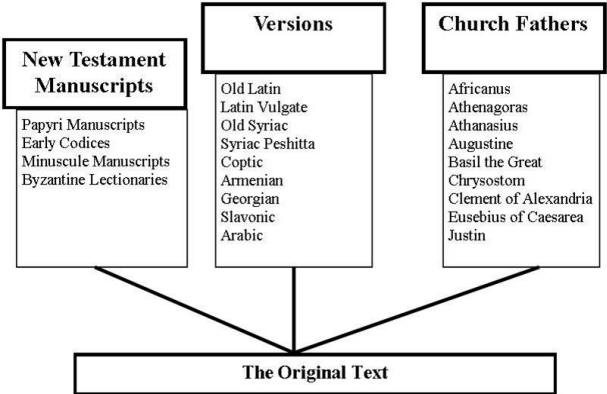
What would Jesus do? What did Jesus do? So far, we know he either felt compassion or was angry with the metsora, the one impure with tsara'ot. We saw that the New Testament manuscripts disagree on one word in Mark 1:41. How do we know which is right? The people who study the ancient manuscripts are called textual critics. Since the original letters penned by the authors don't exist anymore, all we have are copies of copies of copies (at best). The early copyists made mistakes as well as deliberate changes to "improve" the text, at least improve it according to their own thinking. We do have 5700 manuscripts of the New Testament, some are only fragments the size of a postcard, others are complete copies. We also have early church writers who quoted those original documents. Sadly, there are tens of thousands of discrepancies  among the manuscripts. Hence the job of textual critics is to seek out the words of the original authors.  In 85% of the cases, the correct reading is straightforward, a simple copyist error that got propagated by later copyists. Sometimes, like Mark 1:41, it isn't so easy to tell what did Mark actually write.


Critics look at lots of factors to make their educated guesses, age of manuscripts, reliability of manuscripts, etc. One factor is to ask which reading best explains the existence of the other. Bart Ehrman explains:

The question to be asked is this: which is more likely, that a scribe copying this text would change it to say that Jesus became wrathful instead of compassionate, or to say that Jesus became compassionate instead of wrathful? Which reading better explains the existence of the other? When seen from this perspective, the latter is obviously more likely. The reading that indicates Jesus became angry is the “more difficult” reading and therefore more likely to be “original.” Misquoting Jesus [8]

Mr. Ehrman has lots more to say about Mark 1:41, as well as other problematic texts. His book is well worth reading. It is easier for us to think of Jesus as feeling compassion to heal the metsora. It appears Matthew and Luke thought so too because in their accounts, they omit any mention of Jesus' emotional reaction (Mt 8:1-4, Lk 5:12-15). Critics believe that Matthew and Luke wrote their gospels from Mark's, that is, they had Mark's letter in hand and copied much of it word for word, making their own changes for their own reasons. If that is true, neither of them wanted to mention Jesus' anger, but didn't go so far as to change the text to say compassion. Some copyist centuries later probably did.

WWJD (Why Would Jesus Do That?)


Assuming Mr. Ehrman is correct, we now have two problems. 1) The wrong text was used  for centuries (not that it affects anything significant), and 2) we now have to ask what it means that Jesus was angry at the leper. Or in Ehrman's words, "At what, though, would Jesus be angry? This is where the relationship of text and interpretation becomes critical." Misquoting Jesus [9]. Some scholars think Jesus was angry at all the disease in the world, some think He was angry the metsora was outcast, some think He was angry at the law of Moses. These theories don't really hold water. Ehrman's explanation is that Jesus was angry at the inference in the question of the metsora, "If you are willing, You can make me clean." Jesus was willing and able. The times Mark records Jesus being angry, it is when someone questioned his willingness, ability, or authority.

Maybe we assert doubt by asking "If you're willing". Although it sounds to me like a valid question, maybe it is actually expressing doubt.  After all, we are to "come boldly to the throne of grace, that we may obtain mercy and find grace to help in time of need" Heb 4:16. On the other hand, Jesus Himself prayed "Father, if You are willing, remove this cup from Me; yet not My will, but Yours be done." Lk 22:42 On the third hand, SPLANGNISTHEIS may have meant something different to Mark than it did to the copyist centuries later, so he really did improve the text for later generations.

Was Jesus angry at the leper? Why? Do any of these theories ring true to you? I would invite your comments.

References

1. http://www.amazon.com/Misquoting-Jesus-Story-Behind-Changed/dp/0060859512, Kindle Location 2134
2. https://en.wikipedia.org/wiki/Leprosy
3. http://www.chaimbentorah.com/2013/02/word-study-leprosy/
4. https://answersingenesis.org/biology/disease/biblical-leprosy-shedding-light-on-the-disease-that-shuns/
5. http://biblehub.com/hebrew/6883.htm
6. https://en.wikipedia.org/wiki/Tzaraath
7. http://jewishencyclopedia.com/articles/9774-leprosy
8. http://www.amazon.ca/Misquoting-Jesus-Story-Behind-Changed/dp/0060859512, Kindle Locations 2162-2166

9. http://www.amazon.ca/Misquoting-Jesus-Story-Behind-Changed/dp/0060859512, Kindle Locations 2197-2198

Thursday, September 3, 2015

The Unpublished Bible

There are lots of Bible translations published these days. According to Wikipedia [1], the Bible has been translated fully into 531 languages and paritally into 2883. There are 450 versions in English alone (Wikipedia) [2]. And of course, the Old Testament is readily available in Hebrew, the New Testament available in Greek. But one combination does not exist.

What if you want the OT Hebrew and the NT Greek in one volume? Granted most people wouldn't be interested, perhaps only Biblical scholars, but as far as I know, this particular combination is not published*. And it would require NO translation, how easy is that? I suspect the reason this hasn't been done is political, not technical. The keepers of the Hebrew** (Masoretic) text would have to work with the keepers of the Greek (Stephens) text.

Having No Beginning and No End


Let's look at one technical problem to publishing Hebrew plus Greek -- where is the beginning? Hebrew reads right to left, and Greek read left to right. Pages are also numbered right to left in Hebrew and left to right in Greek. So no matter how one arranges the Testaments, you can't turn the page from the end of the OT to the beginning of the NT. We have two choices where each language would read in its native direction.

Begin at the outsides
Begin at the center

Imagine a Bible bound this way, where the Hebrew book of Genesis is on the right, and the Greek book of Matthew is on the left. The end of each Testament would be in the middle.


Now imagine a Bible bound this way, where the Hebrew book of Genesis and the Greek book of Matthew are next to each other in the middle of the Bible, but the end of each Testament would be at the outside of the volume.


Old Testament Hebrew [3]
New Testament Greek [4]


Each arrangement makes sense. Personally I prefer the first because when you look at either cover of the book, it is meaningful. That is, whichever way you pick the Bible up, it will be correct, each direction would begin with page 1.


There are 531 different languages you can get the whole Bible (Old plus New Testaments), but not in the original languages.That includes Greek Old Testament translations dating back to the Septuagint, and Hebrew New Testaments dating back to the 1300s (hebrewnewtestament.com) [10].  Why has no one published the Hebrew/Greek Bible? The Christian churches are anti-Semitic, thanks to Constantine, and the Jews deny Jesus as Messiah. That is changing, as shown by the Messianic movement among Jews and Christians. But for now, ironically, the best way to get the whole Bible is in a translation. Go figure.

Sunday, May 24, 2015

Mmmm... Fat

Americans have a love/hate relationship with fat. We have low fat diets and high fat diets. At the same time, we have an obesity epidemic (WebMD) [1]. Now "they" talk about good fats and bad fats (Mythbuster) [2]. Dietary fat is not the sole cause of obesity, but it plays a significant role (WebMD) [3]. I don't know nearly enough to offer dietary advice, I want to explore fats from a Biblical angle.


Is Fat OK?


I had always thought that the Bible forbade eating fat, so I trimmed my steaks, but I also believed "marbled fat is OK". Was this only kidding myself? What about sausages or hamburger? Even if the package says 90% lean, the other 10% is still fat (assuming that's bad of course). The problem is that fat is tasty, lots of flavors like spices are soluble in fat, making it even tastier.

The first thing to clear up is that I am talking about meat and fat from "clean" animals, that is cows, sheep, goats, deer, but not pigs, bear, or dogs. You can read What Does the Bible Teach About Clean and Unclean Meats [4] for a more thorough explanation.

Here is why I thought the Bible forbade eating fat, Lev 3:17 "It shall be a perpetual statute throughout your generations in all your dwellings, that ye shall eat neither fat nor blood."  But then in Neh 8:10 it seemingly says the opposite "Then he said unto them: 'Go your way, eat the fat'". Which is it? Eat it or don't eat it? Chew the fat or eschew the fat...

Fat is often used in a positive way in the Bible. See Is 25:6 And in this mountain will the LORD of hosts make unto all peoples a feast of fat things. Some argue that fat here and in Neh 8 is not literal fat, but fatness, or rich food. That just means it is the best part. The prodigal son's father brought out the fatted calf, the best.

A Closer Look


Beef suet
I was surprised to learn that fat is translated from two different words in these two verses. Lev 3:17 uses the Hebrew word chelev, while Neh 8:10 uses shamen. Shamen is often translated oil. Chelev is explained earlier in Lev 3, verse 9 "And he shall present of the sacrifice of peace-offerings an offering made by fire unto the LORD: the fat thereof, the fat tail entire, which he shall take away hard by the rump-bone; and the fat that covereth the inwards, and all the fat that is upon the inwards". This is more or less what we call suet in English. Again, it is the best part.


Lev 7:23-25 clarifies Lev 3:17 in that not all suet is forbidden, only that from animals that can be used in a temple sacrifice, specifically cows, sheep, and goats. "Only the chelev of animals that are of the sort from which offerings can be brought in the Tabernacle or Temple are prohibited"  Wikipedia Chelev [5] "For every person who eats of the fat of an animal of which a food offering may be made to the LORD shall be cut off from his people" Lev 7:23-25. Some interpret this verse to pertain only to animals actually used in offerings, not ordinary food.  I lean toward the view in the Wiki quote. So you can keep your jar of schmaltz (chicken fat). But all manner of blood is still forbidden (Lev 7:26).

Even from a clean animal, there are parts that are not food, like teeth, hide, fur, or feathers. The Bible adds chelev to this list. One of the things we learn from clean versus unclean is that this knowledge had to be revealed. We would not figure it out on our own. In recent times, humans have found health reasons for many of the Biblical dietary laws, including clean and unclean meats.
Bottom Feeding Carp
But Israel could not have figured it out 3500 years ago - it was revealed to them way ahead of modern science. And yet, bottom feeding carp is clean, go figure, so there are still mysteries to explain. [The Bible does not say it is because of health reasons however, it says to distinguish between clean and unclean, to be separate and holy.]* Following Biblical dietary laws is one way that believers separate themselves. Most everyone is aware of the Jewish people because of their observance of Kosher food. As someone who is not Jewish but avoids pork and shellfish, the most common unclean meats in America, I get noticed for it. But with so many vegans and vegetarians today, most people accept dietary restrictions. Sometimes it leads to a discussion of why. Read a discussion of it in the UCG article Clean and Unclean Meats [4].

For decades, I have avoided unclean meats, but never considered the other laws about meat. There is very thorough teaching demonstrating that the laws concerning clean and unclean meats are still applicable today, but no discussion of chelev versus shamen. There are other prohibitions in the Bible about meats to consider as well, like "the proper removal of blood, and the animal's manner of death" Let's Chew the Fat [6]. So let's talk about Kosher.

Biblically Kosher vs Rabbinic Kosher


Common Kosher Symbols
What is the difference between  Biblically kosher and Rabbinic Kosher? Certainly, the rabbinic notion of kosher is based on the Bible but takes into account more than just whether the animal is clean or not. "The Rabbinical tradition is far more intricate than just literally following what the Bible says in Leviticus 11 ... There are laws explaining how an animal should be slaughtered in the Bible" Biblical vs Rabbinical Kosher [7].


Is Halal the same as Kosher?


Halal Symbol
The Hebrew dietary laws are known as kosher, which simply means "fit", as in fit to eat. Halal is the Islamic dietary law,  where halal means "lawful". Although there are many similarities, like avoiding pork, there are differences. Halal requires that "the name of Allah is said before the slaughter". Having Allah's name on my steak feels like "meat sacrificed to idols" Acts 15:20, 1Cor 8:4. Read more at Are You Eating Meat Sacrificed to Idols? [8]. There is lots of debate on this. My understanding is "don't ask", but if you know the meat is sacrificed to idols, "don't eat". A blessing is usually said before a Kosher slaughter, but not required Islamic/Kosher Dietary Laws [9]. Here's the big difference in this context "Kosher prohibits the eating of chelev, but halal does not." Other similarities and differences are listed at at the Wikipedia link.

What To Do?


I don't butcher my own cattle, so I am at the mercy of the butcher. Will a non Kosher butcher trim the chelev? Or do they throw it in the generic ground beef? By regulation (in America), ground chuck or ground sirloin has to be just that, and it can't have scraps from other parts of the animal. But generic ground beef? Or sausages? Fast food burgers?

Does that mean I have to buy all my meat at a kosher butcher who  has had special training? According to Wikipedia [9], "Any sane adult Jew who knows the proper technique may perform the shechita (slaughter)" I would think this applies to anyone, not just Jews. After all, the laws were given to all Israel, Judah being only one of twelve tribes.  So if I did butcher my own animal and removed the chelev, the meat should be "fit". Assuming the animal was slaughtered properly, cuts of meat like steaks and roasts would be safe because there is no chelev there. And ground chuck/round/sirloin is OK for the same reason. The meats that make me uncomfortable are ground beef and sausage. Unless I trust the butcher to remove the chelev (I suppose I could ask him), these products may not be fit.

When I started to write this, I only thought to write about chelev versus shamen showing that certain fats were OK (yes, marbling is OK), but I didn't realize I would end up finding out meats that would not be fit, and that I would have to change. If you care about clean and unclean meats, you too may see a need for change.

* Added June 3, 2015

References

1. http://www.webmd.com/diet/obesity/obesity-epidemic-astronomical
2. http://www.blackinkwithcab.com/2011/05/16/mythbuster-monday-good-fat-bad-fat/
3. http://www.webmd.com/diet/obesity/skinny-fat-good-fats-bad-fats
4. http://www.ucg.org/bible-study-tools/booklets/what-does-the-bible-teach-about-clean-and-unclean-meats
5. http://en.wikipedia.org/wiki/Chelev
6. http://ffoz.org/blogs/2012/02/eating_biblically_lets_chew_th.html
7. http://jewishroots.net/library/food/biblical_verses_rabbinical_kosher.html
8. http://www.wnd.com/2011/01/255825
9. http://en.wikipedia.org/wiki/Comparison_of_Islamic_and_Jewish_dietary_laws

Wednesday, August 6, 2014

The Gospel In Six

A while back, I posted a challenge to our local church Facebook group:
Describe the gospel in 25 words or less. Can we explain it to someone without diving into too much detail? Suppose we all wore Tshirts that said "Ask me about the Gospel". You get on an elevator with someone, they say "I'll bite, tell me about the gospel". You have 7 seconds (25 words) to get them to say "Tell me more".
I didn’t get a lot of responses, but here is my attempt “You're gonna die, you're not going to heaven or hell. But God, through Jesus, has a plan to bring you back to life, forever. Interested?" I know, I used two contractions and “gonna” to keep it to 25 words. It’s the best I’ve come up with so far. Perhaps you can do better.

What if I told you that God managed to pack the gospel into one word of six letters? Yes we have to go back to Hebrew to see it. But it is the very first word in the Bible. In English, the Bible starts “In the beginning”, in Hebrew it starts “beresheet”, that is בראשית. The word Beresheet has also come to mean the first book of Moses, what we call Genesis in English.

This is Beresheet in an actual torah scroll (sefer torah) used in a synagogue. It’s crooked because it’s a photo of an uneven scroll.


Since Hebrew is written without vowels, this gives different ways to parse a word like beresheet. We will consider three ways – maybe there are more.

1. B’resheet
2. Bar’asheet
3. Bara’sheet

Number 1 (B’resheet ) is the usual meaning of the word – in the beginning, although it would be more accurate to translate it “in a beginning” - see Kehillat Israel (2).

Number 2 (Bar’asheet) I found comments from several sources.
The Amazing Word of God (3) - If you take the word for "son" in Hebrew (bar) and the word for "I make" (asheet) and put them together, you have the first word of the Scriptures: "in the beginning" (barasheet).

Bible Society in Israel (4) - The first word of the Bible, b’resheet, can be divided into two words, “bar asheet,” meaning “I will appoint a son.” This strengthens the parallel we have already noted in John 1. … So from the very first word of the creation story we get the hint that God will appoint a son through whom the redemption will come.


In case you remembered the Hebrew word for son is “ben”, as in Benjamin, Yahoo Answers (5) explains.
Q. In Hebrew bar and ben both mean 'son of' what is the difference that determines which you use?
A. This is an easy one: "ben" is Hebrew, "bar" is Aramaic. In Hebrew you always use "ben" except for imported phrases such as "bar mitzvah" or names like "Shim'on bar Yokhai".

Grant Luton of Beth Tikkun adds this in his article In The Beginning (6).
Now if we recombine the definitions of these two Hebrew words, we arrive at the phrase “A Son I shall put/place/appoint”. A better rendering might be, “A Son I shall establish.” The introduction of only a slight separation between the second and third letters of the Bible provides us with this insight

Let’s look at number 3 – (Bara’sheet) - Bara (ברא) is the second word of the bible and means “he created”. Sheet is a variant of shesh (שש) or “six”. The question is “six what?” We have to read through verse 3 to see it, but one answer is six alephs (א). There are six alephs in the first sentence of the Hebrew Bible (verses 1-3). And aleph sounds exactly like eleph (אלף), which means “thousand”. In other words, six alephs equals six thousand years. Two alephs during the darkness (verses 1-2) two alephs where God speaks (verse 3), and two alephs in “let there be light” (verse 3). In other words, 2000 years of darkness till Abraham, 2000 years after revealing his torah, and 2000 years in the light of Christ. Note the progression from darkness to speech to light. Luton gives much more detail about the derivation at In The Beginning (6) and also shows where this notion came from:
The Talmud also suggests allusions to Messiah in the opening words of Genesis. The Talmud (b.Avodah Zarah 9a) states the following:

The world is to exist for six thousand years; the first two thousand years are to be void; the next two thousand years are the period of the Torah, and the following two thousand years are the period of the Messiah. Through our many sins some of these have already passed [and the Messiah has not yet come].3
3 The words that appear in brackets were added by Rashi (R’ Shlomo ben Yitzchak, 1040-1105 C.E.)

The Talmud quote can be found in Avodah Zarah (7) at juchre.org. 

So if we put them all together [B’resheet, Bar’asheet, Bara’sheet], taking a little license, we have “In the beginning, God appointed a Son, and gave man six thousand years”.

Admittedly, you have to read through verse 3 plus other sources to get the interpretation of 6000 years, so technically it wasn’t one word. But still it is an incredible thing – the essence of the gospel in one six letter word.

These observations in the Talmud were made many hundreds of years ago, Wikipedia dates this tractate to about 100AD [wikipedia - Avodah Zarah (8)]. What we know as the “six thousand year plan” has been known for thousands of years already. It isn’t an idea discovered in these end times, but it is all the more urgent now to understand that time is up, and Jesus is returning soon. It was foretold from the first word of the Bible.