Showing posts with label leaven. Show all posts

Sunday, May 5, 2019

Lessons From UN-Leavened Bread

Unleavened Bread
I keep Passover and the Days Of Unleavened Bread, because they are commanded in the Bible, with references throughout the Old and New Testaments. Christ died on Passover, not Good Friday; and ascended on the day of the Wave Sheaf Offering during Unleavened Bread, not Easter. We are commanded to put leaven out of our houses by the First Day Of Unleavened Bread and then to eat unleavened bread for seven days, hence the name of the Feast. Many churches who observe the Days of Unleavened Bread teach that leaven symbolizes sin. Jewish rabbis also view leaven as symbolizing sin - Jews For Jesus [1], CBN [2]. Leaven pictures more than just sin, Christ told His disciples to beware the leaven of the Pharisees, which meant either doctrine or hypocrisy. He also told his disciples to beware the leaven of Herod, meaning politics - Is Leaven Sin? [3]. So leaven could symbolize sin or specific types of sin.


After one has removed leaven from the house, the focus has to shift from de-leavening. The leaven is already gone, are you going to look for it again? For seven days? Yes, we do stumble across overlooked leaven during the week, but that is the exception. If you find it, you get rid of it, but you don't spend seven days continuing to put leaven out. The command is to eat unleavened bread (Lev 23:6) which pictures putting Christ in - that's the new focus. We don't spend our lives looking for more sin to put out, we put in the "unleavened bread of sincerity and truth" - 1Cor 5:8. "Give us this day our daily bread" (Mt 6:11) doesn't mean just for these seven days, it means for a lifetime.


If you like this (or not), check out my other articles at the
Between The Ears BLOG INDEX, with titles and summaries.


When I retired, I began a tradition of making some kind of unleavened bread every day during the Days Of Unleavened Bread (except Sabbaths). I make some old favorites, and I make a point of trying some new recipes every year. What follows are some observations from doing this for four years - Your Mileage May Vary.


There are different kinds of unleavened bread


Not the only option


People may assume unleavened bread means the square crackers made by Manishewitz called matzohs, but these are a recent invention - The Evolution Of Matzoh [4] . The word matzoh is a Hebrew word which simply means unleavened bread. This may be stating the obvious, but unleavened bread comes in many forms from sweet to savory - pies, cookies, crackers, noodles, soft and hard flatbread, even unleavened cakes.


This reminds me of all the different ways one can "ingest" the Bible.
  • Simply read it. There are methods to read the Bible cover to cover in a year's time. You can listen to an audio Bible, about 75 hours. An average reader will take about 50 hours to read the whole Bible - Quora(How Many Hours) [5].
  • Study a single book. Some people like to read and reread a single book to glean more out of it.
  • Follow all the center references. Study Bibles will link scriptures to related scriptures.
  • Study a single word. A Concordance like Strong's [6] lists every occurrence of every word in the Bible.
  • Study a topic. Use Nave's Topical Bible [7] to research a topic.
  • Read church literature to know your doctrines, like UCG booklets [8].
  • Listen/read sermons.


It takes time


Not only does it take time to make the bread, cookies, pies, noodles, flatbread, etc. it takes time to do the recipe research. Churches that keep the Days Of Unleavened Bread often publish unleavened bread cookbooks, or have websites of recipes, for examples United Church Of God [9], Nazarene Israel [10], and a mysterious blogger named Sarah UB Recipes [11]. I like looking at cookbooks, so I don't consider this a hardship. I get lots of ideas, and make lists. Baking does take time, almost all of it standing on your feet, assembling something.

Simply reading the Bible takes time. Digging into it will take more time. At least you don't have to stand while studying. Consider an audio Bible or downloaded sermons to listen to while commuting. The point is to plan your study (like a recipe), and make time for it every day, it is our true daily bread, "Man does not live by bread alone, but by every word that comes from the mouth of God" - Dt 8:3, Mt 4:4. Looking for blog article topics helps me to do study.


It's easier to avoid leaven if you're making your own bread


You're more likely to encounter leaven when eating in restaurants than at home. Usually we want the complementary dinner rolls, bread sticks, and croutons, but for this one week... The grocery store can be a leaven hazard too, leaven is in so many foods. Be on guard.

Likewise, someone who is reading the Bible regularly is more likely to avoid problem situations.


I never get to all the recipes I want to try


By the time I make some necessities, and yes, lefse is a necessity, and make a few other old favorites, I don't always have time to make all the new things I want to try.

This reminds me of visiting with people after church services. I don't get around to all my old friends, much less new people. I see this as an area I could improve.


I don't like all the recipes I try


This too may be stating the obvious. Some recipes look good in pictures, or the description sounds good, but the end product doesn't meet expectations. 

Some forms of Bible study that work well for one person may not work well for another. And it's hard to find a Bible study "recipe" for the "begat" chapters.


Some recipes don't always work right.


Maybe it doesn't come out the same every time. I have spent a lot of time trying to diagnose why a recipe works well one time, but not another.

It's like reading scriptures that are tricky to understand. Maybe you just studied into a subject, but some time later you can't quite recall it any more. Sometimes you have to treat it like a musical instrument, practice till you get it right.


Sometimes you have to get personal with your bread


We use different tools and machines to make bread - mixers, measuring cups, rolling pins, cookie cutters, ovens, and so on. But some dough you just have to mix and knead by hand. 

Listening to sermons or reading articles about the Bible is a great way to learn. Other people think of things that I wouldn't. But that is not quite the same as actually reading and studying the Bible itself. You have to handle the Word yourself. "Study to show yourself approved to God, a workman that needs not to be ashamed, rightly dividing the word of truth" - 1Tim 2:15.


I end up with too much, so I have something to share


Baking every day for two people, there will be extra, no matter how tasty.

Putting Christ in is important for developing the fruits of the Spirit (love, joy, peace, etc. - Gal 5:22) which gives us something to share with others.  " Freely you have received, freely give." - Mt 10:8.


YMMV


It seems that every year I think of new lessons or new analogies, or I see the symbolism a new way. These few that I've listed are some that have occurred to me over the years. Like I said above, your mileage may vary. I would like to hear what lessons you may have realized by keeping the Days Of Unleavened Bread.


References

1. http://jewsforjesus.org/publications/newsletter/march-2007/02
2. http://www1.cbn.com/biblestudy/the-feast-of-unleavened-bread...-wait-isn%27t-it-passover%3F
3. https://jlfreeman-1.blogspot.com/2016/05/is-leaven-sin.html
4. https://jlfreeman-1.blogspot.com/2017/05/the-evolution-of-matzoh.html
5. https://www.quora.com/How-many-hours-on-average-does-it-take-to-read-the-whole-bible
6. https://www.biblestudytools.com/concordances/strongs-exhaustive-concordance/
7. https://www.naves-topical-bible.com/
8. https://www.ucg.org/bible-study-tools/booklets
9. https://www.ucg.org/members/recipes/unleavened-recipes
10. http://www.nazareneisrael.org/articles/calendar/unleavened-bread-recipes/
11. http://ubrecipes.blogspot.com/

Tuesday, March 14, 2017

Unleavened Beer?


Soon, many of us will be keeping the Days of Unleavened Bread, a week long feast which is marked by its name - unleavened bread. We remove leaven and leavened products from our homes, and during the festival we eat unleavened bread, taking in "the unleavened bread of sincerity and truth". The question always comes up, especially for newcomers, what is leaven? And at some point, what about beer? People ask because they know that bread and beer are both made with yeast. So it is a valid question. The instant reaction is "it's not the days of unleavened beer." But I think there is more to the answer than saying it's not the days of unleavened beer.

Credentials are in order for this discussion. I have made bread off and on for over 40 years. I have also made beer off and on for even longer. I am not a microbiologist nor do I play one on TV, for that I rely on "First Steps in Yeast Culturing" by Pierre Lajotte [1].

Leavened Versus Leavening


The Bible is clear that we should remove both leaven and leavened products, Ex 13:7 "Unleavened bread (matzoh meaning sweet) shall be eaten throughout the seven days; and nothing leavened (chametz meaning sour) shall be seen among you, nor shall any leaven (s'or meaning leaven)  be seen among you in all your borders." That would include bread crumbs not because they are leavenING (bread crumbs do not contain live yeast cells, they were killed in the baking process), but because they are leavenED (chametz). And it would include yeast because it is leavenING (s'or), not because it is leavenED (chametz). Note this is a New Testament command as well, 1 Cor 5:7 "Clean out the old leaven so that you may be a new lump, just as you are in fact unleavened. For Christ our Passover also has been sacrificed."

Give Us This Day Our Daily Beer


The Sediment Is Brewer's Yeast
The problem is that beer does contain live yeast cells. And the yeast cells in beer are exactly the same yeast used to make bread.   "Most yeasts used in baking are of the same species common in alcoholic fermentation." - Wikipedia Yeast [2]. The beer is not leavenED, but it does contain leavenING. One might argue that they are really different yeasts in beer versus bread. I have done the experiment of harvesting yeast from a batch of homebrewed beer (see picture) and using it to make bread. It made perfectly good bread. Remember it's the same yeast.

Sediment in a Bottle of Beer
One might argue that there isn't enough yeast in a bottle of beer to make a loaf of bread. But there are many websites that show how to culture the yeast from a single bottle of beer into a sufficient population for brewing or bread making, for example How To Brew []. It is simple enough, I've done it, maintaining sanitation is the biggest challenge. The best beers to culture from will have sediment on the bottom - that sediment is yeast, visible viable yeast. Note that the German beer hefeweizen means "yeast wheat". Filtered or pasteurized beer will not throw sediment. Only the larger commercial breweries filter or pasteurize their beer. And when "it's not the days of unleavened beer" was coined (the American dark ages of beer), nearly all beer was filtered if not pasteurized. Now the craft beer industry is producing lots of unfiltered beer with live yeast. Remember it's the same yeast.

Straining At Gnats?


Agar plate with yeast colonies
Well, how little is too little to worry about? Now we enter the gray area. Lajotte describes techniques for growing a single yeast cell into a culture, and eventually into a "pitchable" population. Technically, a single yeast cell is leavenING,  but without proper equipment and techniques, unlikely to leaven dough. Amy's Bread by Amy Scherber [3] describes a method for creating a sourdough bread starter beginning with nothing but flour and water. There are yeast cells on the grains (which get ground into flour) that reproduce and eventually ferment the flour and water into a viable population for bread making. For this reason, when making matzoh, Jews only allow flour and water to be mixed no more than 18 minutes before baking lest it begin to leaven spontaneously - Wiki Matzo [4]. Once the starter is viable, it is incorporated into bread dough and leavens it. A pinch of dough is saved as a starter for the next batch.   Yeast lives on the skins of grapes too, and there are yeast cells in the air.  So one can start with zero yeast cells and make leaven.

Ancient Israel would have only known the sourdough method. They did not have the option to buy a cake of yeast after Unleavened Bread was over. They would have started fresh with flour and water to grow a bread starter. This takes a few days.

Don't Read This Paragraph


Beer makers, in their quest to distinguish their brew from the competition, get creative in choosing sources of yeast for their "wild ales".  Rogue Brewing has created Beard Beer by culturing yeasts found in the master brewers beard - Mental Floss [5]. 7 Cent Brewery in Australia used the brewmaster's navel lint as a source for yeast, "the first beer in the world fermented from yeast captured from the brewer's belly button fluff." - CNET [6].


Back To Leaven


Sourdough Bread
One question newcomers don't ask is "what is bread?" Beer and bread are both made from grain, water, and yeast, but beer is not bread. Even though throughout history, beer has been known as liquid bread - Liquid Bread [7]. But is it "chametz" or "s'or"? At its simplest, bread is flour moistened with water and cooked, it is solid. Flour needs enzymes and yeast to rise without additional leavening, which narrows the field to a handful of grains. There is unfortunate complexity, confusion, and contradiction on the subject, among Jews and Christians and scientists, even among the Jews themselves. For example, the Jews say matzoh may only be made from five types of grain: wheat, barley, rice, oats and spelt, but this is from the Talmud, not the Bible - Wiki Chametz [8]. Science has concluded that the five grains are just different strains of wheat and barley  - The DAF []. What these five grains have in common is that they are self leavening, their flours plus water is enough to cause them to rise. Therefore, Jews argue they are the only grains that can make matzoh. And some Karaite Jews think "only the leavening of grains known to leaven are forbidden to eat as leavened" - Karaite Judaism [9]. Non gluten grains and non grain flours can be leavened with yeast (albeit poorly) or chemical leavening like baking powder, flours from oats, rice, lentils, coconut, or almond for examples. Scientists have even developed methods to make bread from cockroach flour - Neatorama [10]. Some don't think flours other than the Five count as "leavenable", some don't think chemical leavening is "chametz". As far as I understand it, over time the idea of leavening was merged with the the idea of self leavening grains. Most Jews would argue that since beer is made from barley (one of the Five) and fermented, it is chametz. I would argue that science has isolated the leavening agent yeast from the liquid beer, thanks to Anton van Leeuwenhoek, 1680 and Louis Pasteur, 1857 - Explore Yeast [11], and it is the leavening agent that's got to go, not the beer. One can separate yeast from beer, but one cannot separate yeast from a loaf of bread. Remember, it's the same yeast.

Don't Wine


Bread leavened with wine yeast 
Wine is commanded as the Passover service along with the unleavened bread. From this we see that fermented beverages are OK. But don't think it's because wine yeast is somehow different from beer yeast. It is still yeast (Saccharomyces). And yes, I did the experiment of making challah bread with wine yeast. It made perfectly good bread. According to Jeff Meyers [12], sourdough starters in ancient Israel were inoculated with the lees (sediment) from wine. Unlike beer, modern wine does not have yeast sediment in the bottle.

Back To the Future 


Something tells me no one has this leavening thing completely figured out. Like I said above, it is complex, confusing, and contradictory. Consider when the whole world keeps Unleavened Bread. Yes, they will. How is it possible to remove all the leaven from within your borders as a nation? or worldwide? This puts an undue hardship on bakeries. And breweries. Yeast is their livelihood. Many breweries jealously guard their particular strain of yeast, devoting laboratories and microbiologists to maintain it indefinitely. Chemicals and pharmaceuticals are routinely grown in Saccharomyces cerevisiae aka bread yeast Wiki Yeast[2]. I find it impossible that bakeries, breweries, and pharmaceuticals would have to start over every year. Is there a difference between home brewers and commercial breweries? Between the home baker and the commercial bakery? What about a brewer who wants to age a beer more than a year? Or a baker that needs to maintain his sourdough starter? Maybe I don't understand leaven completely.

Currently, people who keep Unleavened Bread rely on people who don't keep it. Some Jews will sell their leaven and beer and whiskey to a Gentile, then buy it back when the Days are done. Some of us keep our beer and whiskey, but throw out breads and leavening as we understand it. But still we rely on an outside source to replenish our bread supply the moment the Days are done.

Not My BEER


What to do in the meantime, till Christ comes back? Take the simplistic approach that it's not the days of unleavened beer and ignore the whole question? Or put out (as in drink up) all barley based beer because barley is one of the Five self leavening grains? Or put out beer where sediment is visible? Or search for a better answer? I guess each of us has to decide. But decide based on the Bible and facts, not just traditions.


References

1. http://www.homebrewing.org/First-Steps-in-Yeast-Culturing_p_2037.html
2. https://en.wikipedia.org/wiki/Yeast
3. https://www.amazon.com/Amys-Bread-Amy-Scherber/dp/0688124011
4. https://en.wikipedia.org/wiki/Matzo
5. http://mentalfloss.com/article/52658/beer-was-brewed-using-yeast-grown-beard
6. https://www.cnet.com/news/belly-button-beer-mines-yeast-from-navel-lint-totally-not-gross/
7. https://sha.org/bottle/pdffiles/LiquidBreadMunsey.pdf
8. https://en.wikipedia.org/wiki/Chametz
9. http://www.karaitejudaism.org/talks/Leaven_Leavened_and_Unleavened.htm
10. http://www.neatorama.com/2017/03/01/Scientists-Have-Come-Up-With-A-Way-To-Make-Bread-Out-Of-Cockroach-Flour/
11. http://www.exploreyeast.com/article/history-yeast
12. http://jeffreyjmeyers.blogspot.com/2012/12/on-leaven-yeast-and-lords-supper.html

Thursday, May 5, 2016

Is Leaven Sin?

Many churches who observe the Days of Unleavened Bread teach that leaven symbolizes sin. They base this on Jesus' words "beware the leaven of the Pharisees and Sadducees" in Matthew 16:6. The message was initially lost on the audience (the 12 disciples) because they thought He was talking about bread.

Even Jewish rabbis view leaven as symbolizing sin - Jews For Jesus [1]. Let's see how Jesus Himself interpreted leaven. In verse 12 of Matthew 16, Matthew says they (the disciples) understood Jesus was talking about the doctrine of the Pharisees and Sadducees. Well, which is it? Does leaven represent sin or does it represent doctrine? As Grant Luton of Beth Tikkun [2] says, "If a scripture can be taken two ways, do it". That doesn't mean that an interpretation can contradict other verses however. But in this case, it seems reasonable to interpret leaven as sin or doctrine depending on the context.

Doctrine of Pharisees and Sadducees


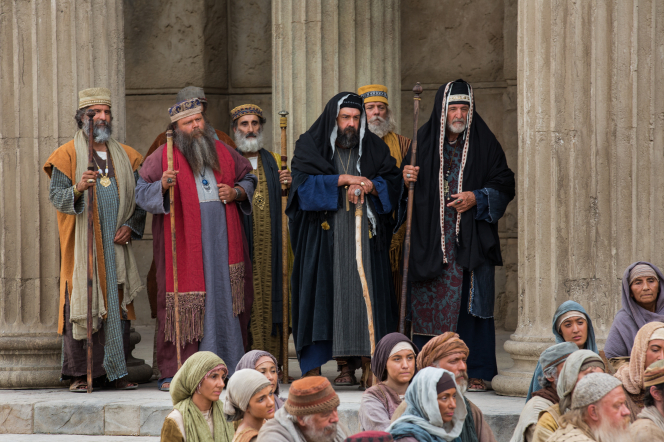
Pharisees and Sadducees
On its own, doctrine is a neutral word meaning teaching. However, improper doctrine can give people license to sin. For example, the Pharisees and Sadducees had many traditions that set aside the word of God - Mark 7:13. The New Testament authors spent time refuting Gnosticism, a belief system that crept into the first century church, teaching that salvation was a matter of secret knowledge or gnosis. Gnosticism also teaches the spirit is good and the body is evil, therefore "one must defile the body through immoral activity" - Wiki [3], again giving people the license to sin. Not that it takes much to convince people to do what they wanted to do anyway.

A person who teaches a false doctrine, aka heresy, knowingly or unknowingly, puts themselves above God and His word, the Bible.
  • Does your church teach that the Sabbath has been changed to Sunday? 
  • Does your church teach that the Ten Commandments are done away?
  • Does your church teach that their prophet's writings supersede the Bible? 
  • Does your church teach Christmas and Easter instead of God's holy days revealed in the Bible? 
  • Does your church put a priest between you and God?
  • Does your religion reject Jesus as Messiah?
  • Does your religion teach that it's OK to kill infidels?
  • Does your religion teach that it's OK to lie to unbelievers?

Leaven of Hypocrisy


Luke records the same event with different wording, "Beware of the leaven of the Pharisees, which is hypocrisy" - Luke 12:1. This puts a different twist on it. I doubt anyone would argue that the teaching of the Pharisees was hypocrisy, it just came out that way in their actions. A hypocrite is someone who is pretending, someone who has taken God's name but doesn't live a godly life, that is, someone who takes God's name in vain. Taking His name in vain means more than speaking His name casually or using His name in an idle curse. Consider how the example of the Pharisees (hypocrites) affected the people observing them.
Jesus likened the conduct of the Pharisees to actors–men pretending, playing a role. The Pharisees of Christ’s day were a powerful leadership body who claimed to be more zealous and more righteous than the rest of Jewish society. They set themselves up as models of what was right and godly, yet in Christ’s eyes their example was actually destructive. In Christ’s estimation the conduct of these men had a corrupting effect upon those who followed their example–a leavening effect, if you will. -  Howard Marchbanks [4]

Leaven of Herod


Mark records an interesting additional detail to Jesus statement, "beware of the leaven of the Pharisees, and of the leaven of Herod" - Mark 8:15. This takes it out of the church, sort of. Herod represents politics. One simple meaning of the leaven of Herod is to avoid politics in the church. The dirty little secret is that in Jesus' time, Herod appointed the high priest, and he was always a Sadducee, obtaining the position by bribery - High Priest Corruption [5]. Today, some Christians believe if they get their candidate elected, they can establish the kingdom of God on earth, then Jesus can return and take over, this is called Dominion Theology. In other words, create utopia by political machinations - Gayle Erwin [6].  "You can't solve spiritual problems with political means" - Fred Coulter  [7]. Getting involved politically goes beyond church politics, goes beyond making a deal with the government for your own benefit, it goes to becoming the government. It seems that church leaders get obsessed with establishing the perfect government (with them at the top of course), then everything will be OK. But God already had a perfect government long ago, and Satan still rebelled.

It's Not About the Bread


Over and over in John chapter 6, Jesus described Himself as the true bread from heaven. Some were offended when He said "He who eats My flesh and drinks My blood has eternal life, and I will raise him up on the last day." Once again, we can take that two ways. He was certainly talking about the Passover service where we take the unleavened bread and wine as symbols of His body and blood. But He could have also meant to refer back to "Man shall not live by bread alone, but by every word that proceeds out of the mouth of God" - Matthew 4:4. And Jesus, being the Word of God, was referring to Himself, but also the written word of God - in other words, His teaching, His doctrine. It's not really about the bread.

Which is it then? Does leaven represent sin or does it represent heresy/hypocrisy/politics? I'm comfortable with "all of the above", because heresy/hypocrisy/politics lead to sin. Let us not focus solely on "putting sin out" because of a narrow interpretation of what leavened bread pictures. Let us focus on taking in the bread from heaven every day, pictured by eating unleavened bread during the Feast of Unleavened Bread. 

References

1. http://jewsforjesus.org/publications/newsletter/march-2007/02
2. http://bethtikkun.com/
3. https://en.wikipedia.org/wiki/Gnosticism
4. http://www.ucg.org/sermons/the-spirit-of-leavened-hypocrisy-how-jesus-christ-used-the-symbolism-of-leaven
5. http://jewishroots.net/library/miscellaneous/high_priest_corruption.html
6. http://www.servant.org/writings/articles/p_loh.php
7. http://www.cbcg.org/