Showing posts with label Ruth. Show all posts

Wednesday, March 24, 2021

The Other Kinsman Redeemer

Goel of Ruth
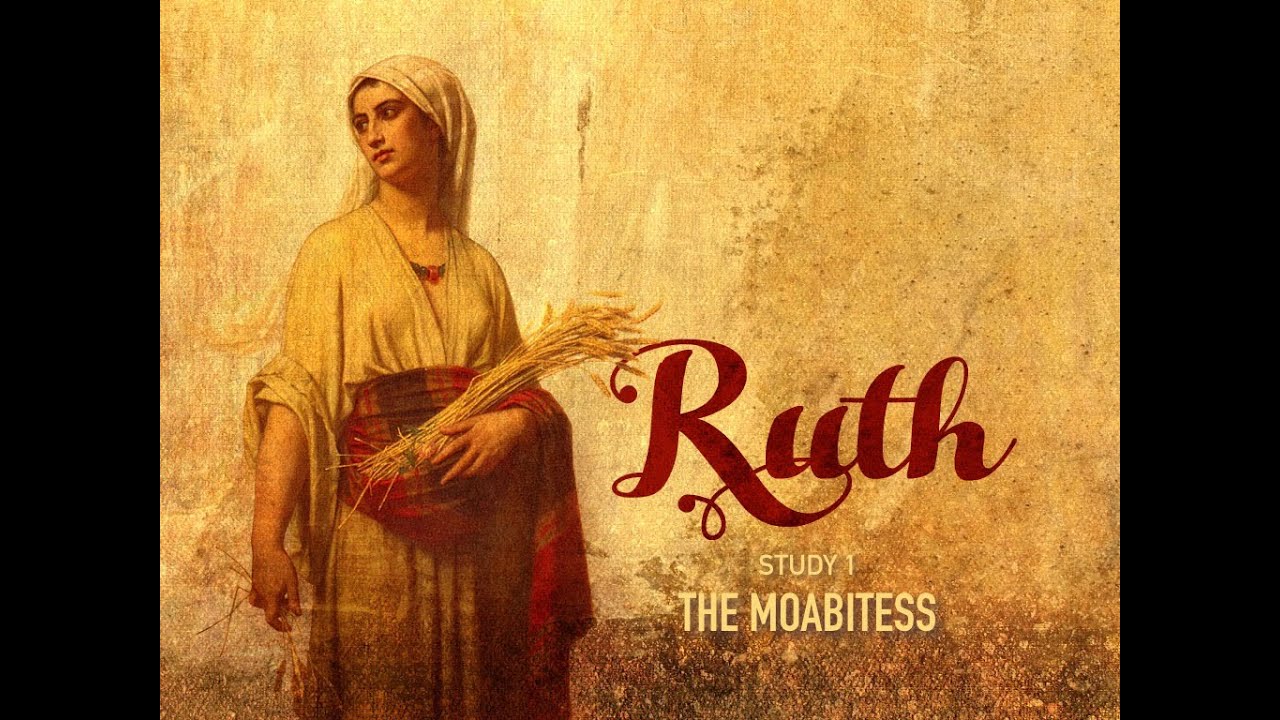
In the book of Ruth, we see an example of the kinsman redeemer, in this case Boaz redeemed Ruth, her mother in law Naomi, and their land. It is a love story complete with drama and a happy ending. And this short story also provides us with a picture (a type or foreshadowing) of Jesus Christ and the church. The phrase "kinsman redeemer" is translated from the Hebrew word "goel", but there is another use of the word goel which is obscured in English. Let's explore this other goel, and see what we can learn about it. 

First, let's review the more familiar goel, the kinsman redeemer that usually come to mind for Bible students. It is based on this verse from Leviticus.

Lev 25:23 The land, moreover, shall not be sold permanently, for the land is Mine; for you are but aliens and sojourners with Me. 24 Thus for every piece of your property, you are to provide for the redemption of the land. 25 'If a fellow countryman of yours becomes so poor he has to sell part of his property, then his nearest kinsman (goel) is to come and buy back what his relative has sold.

In this scheme of things, a person could never lose their land permanently. But a kinsman had to redeem the land if a man had to sell. Not just anyone could redeem the person in distress, it had to be family. This is a type of Jesus coming in the flesh to be a family member to all mankind. He is our Redeemer, AND a kinsman. See The Kinman Redeemer [1] for a deeper discussion.


If you like this (or not), check out my other articles at the
Between The Ears BLOG INDEX, with titles and summaries.


However, the kinsman redeemer, the goel, had another job but English translations don't show it. The goel is also known as the avenger. Same word, possibly the same person, two functions. In the verse above,  goel is translated redeemer. In this verse, goel is translated avenger.


Num 35:12 The cities shall serve you as a refuge from the avenger (goel), so that the one who commits manslaughter does not die until he stands before the congregation for trial.

The role of the avenger is explained in later verses of Num 35, adding the qualifier "blood" which  is in the Hebrew.

Num 35:19 The blood avenger (goel ha'dam) himself shall put the murderer to death; he himself shall put him to death when he meets him.

To understand the goel ha'dam, we need to consider the justice system of the time. Unlike our world, there was no police force. For protection, men made blood oaths to protect and defend each other. Such a "blood brother" had your back no matter what. He would fight along side you, and avenge your death - The Life Is InThe Blood [2]. Having no police force meant there was no one to investigate crimes. However there were judges who did hear criminal and civil cases.

Justice for murder and accidental killing is spelled out in Numbers 35 (listed below). One who was responsible for an accidental killing had to flee to a city of refuge before the goel ha'dam found him. The goel ha'dam could avenge a death even if it was accidental. If the slayer made it to the city of refuge, the city elders would protect him from the avenger until trial. If the slayer was found guilty of murder, the city elders handed him over to the goel, who became his executioner. If the slayer left the city of refuge, and the avenger caught him, he could kill him. And the accidental slayer had to live in the city of refuge till the current High Priest died. If he left the city after that, the avenger couldn't touch him.

The hunting down of a murderer is no longer the business of the avenger, but of the state; accordingly, whether there is any relative or not, whether the relative lodges complaint or not, the state must prosecute the murderer - Jewish Encyclopedia [3].

Notice that intent was a big factor in determining accidental killing versus murder, just as it is today. We use the term manslaughter for an accidental death. Notice also how seriously God treats killing. 

Num 35:33 So you shall not defile the land in which you live; for blood defiles the land, and no atonement can be made for the land for the blood that is shed on it, except by the blood of the one who shed it.

This warning is not just for ancient Israel. God, who changes not, is still in charge, and His rules are still in effect. Ancient Israel sacrificed babies to the false god Molech. America has murdered 60 million unborn babies in the last 50 years, which has defiled the land. The estimate of abortions worldwide is 1.6 BILLION - Number of Abortions [4]. The whole earth is greatly defiled. He will not restrain His wrath forever, a reckoning is coming, and probably soon.


Typology


We have the book of Ruth as an example of the kinsman redeemer, but we do not have such a story about the avenger, but remember the two are probably the same person (next of kin). In spite of not having a story about the avenger, we can learn more by 
examining the typology of the goel ha'dam, the slayer, and the victim.


It is widely recognized that Boaz, the kinsman redeemer of the book of Ruth is a type of Jesus Christ, and Ruth is the church. Since goel can be redeemer or avenger, the goel ha'dam then also pictures Jesus Christ. The typology doesn't fit with His first coming as the Lamb of God, but it is more fitting for His second coming as King of Kings, the Lion of the tribe of Judah. 


The city of refuge also pictures Jesus Christ, where the accidental slayer can go for safety. Where better to hide than in Jesus Himself?  "You are my hiding place and my shield; I hope in your word", Psalm 119:114. And the High Priest also pictures Jesus. Only He is a High Priest that never dies.


That leaves the slayer and victim. In a sense, they picture us as humans. It is perhaps easier to see ourselves as innocent victims, and indeed at some level we are; we need a rescuer. But sadly, we are also the slayers. We have all sinned and fall short of the glory of God - Rom 6:23. We need to flee to Jesus, the city of refuge, and hide ourselves in Him. We are responsible for killing Him, yet from the cross, He said "Father, forgive them for they know not what they do". And we are like the audience of Peter's first sermon, where he said "And now, brothers, I know that you acted in ignorance, just as your rulers also did" - Act 3:17. Because mankind has acted in ignorance, we are guilty of manslaughter, not murder. We can flee to the city of refuge, and abide forever, because our High Priest will never die.

Redeemer AND Avenger


We are more comfortable thinking of Jesus Christ as a loving, forgiving figure. It's much easier to think of the story of Boaz and Ruth picturing Christ and the church than it is to think of Christ as THE Avenger. But many verses speak of the role of Avenger. The most familiar verse would be "Vengeance is Mine, I will repay" - Deuteronomy 32:35, Romans 12:19. It is not just an Old Testament thing. 

The Jewish view of the Avenger is that he is God's representative, not just of the victim's family, but to the whole community Jewish Encyclopedia [3]. This is in part to execute justice. Remember the land is defiled by the blood of the innocent, and can only be set right by the blood of the slayer. 

When Jesus Christ returns, He will combine the two roles of the goel. He has been redeeming His people, the church, for 2000 years, and views them as innocent. When He returns, He will avenge them. Look at the blood spilled by Christian martyrs. In my lifetime, in America, Christianity in its many forms has been the dominant religion in the country. But in the rest of the world, and throughout history, Christians have been targets of persecution. One estimate is that since the time Christ walked the earth, 70 million Christians have been murdered simply because they were Christians - Christianity Today [5]. 

Of the millions of Christians martyred in the 2000 years of the church’s history over half were killed in the twentieth century, and 80 percent of the cases of religious persecution in the world today are against Christians—and it’s getting worse - Crisis Magazine [6].

However counter-intuitive it may seem in light of popular stereotypes of Christianity as a powerful and sometimes oppressive social force, Christians today indisputably form the most persecuted religious body on the planet, and too often its new martyrs suffer in silence - Global War On Christians [7]. 

The Christian Martyrs’ Last Prayer, 1883, oil on canvas.
Painting by Jean-Léon Gérôme


The number of martyrs will only increase at the end time. After the ride of the infamous Four Horsemen of the Apocalypse, which are the first of seven seals opened by Jesus Christ, the Fifth Seal warns of more martyrdom.

Rev 6:9 When the Lamb broke the fifth seal, I saw underneath the altar the souls of those who had been killed because of the word of God, and because of the testimony which they had maintained; 10 and they cried out with a loud voice, saying, “How long, O Lord, holy and true, will You refrain from judging and AVENGING our blood on those who live on the earth?” 11 And a white robe was given to each of them; and they were told that they were to rest for a little while longer, until the number of their fellow servants and their brothers and sisters who were to be killed even as they had been, was completed also.


Summary 

The Hebrew word goel is translated as redeemer or avenger, depending on context. Yet both of these roles of the goel picture roles of Jesus Christ - first as Redeemer of His church, and second as Avenger of those Redeemed, that is the innocent ones. Mankind is also pictured by the slayer, as one who has done manslaughter. As slayers, we must flee to the city of refuge to hide from vengeance. The whole earth is defiled with innocent blood. Jesus Christ the Goel has much redeeming and avenging to do. 

LORD, God of vengeance, God of vengeance, shine forth! - Psalm 94:1


References

1. https://jlfreeman-1.blogspot.com/2020/07/the-kinsman-redeemer.html
2. https://jlfreeman-1.blogspot.com/2017/01/the-life-is-inthe-blood.html
3. http://jewishencyclopedia.com/articles/2162-avenger-of-blood
4. http://www.numberofabortions.com/
5. https://www.christiantoday.com/article/70-million-christians-martyred-faith-since-jesus-walked-earth/38403.htm
6. https://www.crisismagazine.com/2013/the-global-war-on-christians
7. https://www.penguinrandomhouse.com/books/221008/the-global-war-on-christians-by-john-l-allen-jr/


The Law Of Manslaughter


Num 35:9 Then the Lord spoke to Moses, saying,
10 “Speak to the sons of Israel and say to them, ‘When you cross the Jordan into the land of Canaan,
11 then you shall select for yourselves cities to be your cities of refuge, so that the one who commits manslaughter by killing a person unintentionally may flee there.
12 The cities shall serve you as a refuge from the avenger, so that the one who commits manslaughter does not die until he stands before the congregation for trial.
13 So the cities which you are to provide shall be six cities of refuge for you.
14 You shall provide three cities across the Jordan, and three cities in the land of Canaan; they are to be cities of refuge.
15 These six cities shall be a refuge for the sons of Israel, for the stranger, and for the foreign resident among them; so that anyone who kills a person unintentionally may flee there.
16 ‘But if he struck him with an iron object, so that he died, he is a murderer; the murderer must be put to death.
17 And if he struck him with a stone in the hand, by which he would die, and as a result he did die, he is a murderer; the murderer must be put to death.
18 Or if he struck him with a wooden object in the hand, by which he would die, and as a result he did die, he is a murderer; the murderer must be put to death.
19 The blood avenger himself shall put the murderer to death; he himself shall put him to death when he meets him.
20 Now if he pushed him in hatred, or he threw something at him with malicious intent, and as a result he died,
21 or if he struck him with his hand with hostility, and as a result he died, the one who struck him must be put to death; he is a murderer. The blood avenger shall put the murderer to death when he meets him.
22 ‘But if he pushed him suddenly, without hostility, or threw any object at him without malicious intent,
23 or had any deadly stone, and without looking he dropped it on him so that he died, while he was not his enemy nor was he seeking to harm him,
24 then the congregation shall judge between the one who fatally struck the victim and the blood avenger in accordance with these ordinances.
25 And the congregation shall save the one who committed manslaughter from the hand of the blood avenger, and the congregation shall return him to his city of refuge to which he fled; and he shall live in it until the death of the high priest who was anointed with the holy oil.
26 But if at any time he goes beyond the border of his city of refuge to which he flees
27 and the blood avenger finds him outside the border of his city of refuge, and the blood avenger kills him, he will not be guilty of bloodshed,
28 because he should have remained in his city of refuge until the death of the high priest. But after the death of the high priest the one who committed manslaughter may return to the land of his property.
29 ‘These things shall be a statutory ordinance for you throughout your generations in all your dwelling places.
30 ‘If anyone kills a person, the murderer shall be put to death on the testimony of witnesses, but no person shall be put to death on the testimony of only one witness.
31 Moreover, you shall not accept a ransom for the life of a murderer who is condemned to death, but he must be put to death.
32 And you shall not accept a ransom for one who has fled to his city of refuge, so that he may return to live in the land before the death of the priest.
33 So you shall not defile the land in which you live; for blood defiles the land, and no atonement can be made for the land for the blood that is shed on it, except by the blood of the one who shed it.
34 So you shall not defile the land in which you live, in the midst of which I dwell; for I the Lord am dwelling in the midst of the sons of Israel.’”


Monday, July 13, 2020

The Kinsman Redeemer

The Jewish tradition is to read the book of Ruth at Pentecost. They give many good reasons for this, here are two, read more at Wiki(Shavuot)  [1].


  • The events of the book of Ruth take place during the barley and wheat harvest season, that is, basically covering the seven week period from Wave Sheaf Day to Pentecost (Firstfruits to Shavuot).


Rth 1:22 ... and they came to Bethlehem in the beginning of barley harvest.
Rth 2:23 So she stayed close by the maids of Boaz in order to glean until the end of the barley harvest and the wheat harvest. And she lived with her mother-in-law.
  • Ruth was recognized for her kindness in caring for her mother in law Naomi. Boaz noticed her for her kindness, and was eager to redeem her. Ruth wasn't out to save the world, she sought to look after ONE person, Naomi; and her story became part of God's word, and she became the mother of kings. She shaped history by her kindness.
Rth 3:11  Now, my daughter, do not fear. I will do for you whatever you ask, for all my people in the city know that you are a woman of excellence (virtue).

Christians have more reasons to study the book of Ruth. The events described are filled with prophetic meaning, some fulfilled, some still future.  Consider that Naomi pictures Israel, Ruth pictures the church, and Boaz the kinsman redeemer pictures Jesus Christ.


If you like this (or not), check out my other articles at the
Between The Ears BLOG INDEX, with titles and summaries.


To understand the story, we will have to refer to a few laws found in the books of Moses concerning gleaning, Levirate marriage, and redemption of land. I will summarize the book, comment on some interesting tidbits, and focus on a few verses of interest. I assume you are familiar with the story, if not, note that the Book of Ruth is only four chapters, 85 verses in all. You can read it in a few minutes. 

The Story Of Naomi, Ruth, and Boaz

A Jewish man named Elimelech falls on hard times (a famine), then takes his wife Naomi and his two sons Mahlon and Chilion to the land of Moab. Mahlon marries Ruth, (which we don't learn until Ruth chapter 4, chapter 1 only tells us that the sons married Ruth and Orpah). Elimelech and his sons die, so Naomi heads back to Israel. She tells her daughters in law to return to their parents, but Ruth clings to Naomi.

Elimelech - My God Is King
Naomi - Pleasant, Desire
Mahlon - Sickly
Chilion - Failing, Wasting
Ruth - Friend, Vision
Orpah - Neck, Drip, Cloud

Gleaning


So how do two widows support themselves? By gleaning the fields during harvest. Gleaning was ancient Israel's welfare system. The poor, especially widows and orphans and strangers or foreigners were allowed to do this. It wasn't a handout, they had to work in the fields.
Lev 23:22 When you reap the harvest of your land, moreover, you shall not reap to the very corners of your field nor gather the gleaning of your harvest; you are to leave them for the needy and the alien. I am the LORD your God

Did you notice that this verse on gleaning is in the middle of the chapter that describes all the Holy Days? And it falls immediately after describing Shavuot. One verse seemingly out of place in the listing of the Holy Days, as if to draw one's attention to the connection between Pentecost and Ruth.

Salador Dali "Familia Ruth Moabitidis"
Ruth goes to glean according to the law, and happens to end up in Boaz's field.  Then a love story unfolds between Boaz and Ruth. Naomi coaches Ruth on how to act with Boaz. In our culture, the threshing floor scene described in Ruth 3 is hard to understand. It might even sound inappropriate to us. But here's where we need to examine the laws of Levirate marriage and the kinsman redeemer to understand what's going on. The word Levirate comes from Latin levir meaning husband's brother. It has nothing to do with the Levitical priesthood.

Deu 25:5  When brothers live together and one of them dies and has no son, the wife of the deceased shall not be married outside the family to a strange man. Her husband's brother shall go in to her and take her to himself as wife and perform the duty of a husband's brother to her. 6 It shall be that the firstborn whom she bears shall assume the name of his dead brother, so that his name will not be blotted out from Israel.

In short, the widow of a man who dies without a son can marry his brother to produce an heir.

Lev 25:23 The land, moreover, shall not be sold permanently, for the land is Mine; for you are but aliens and sojourners with Me. 24 Thus for every piece of your property, you are to provide for the redemption of the land. 25 'If a fellow countryman of yours becomes so poor he has to sell part of his property, then his nearest kinsman is to come and buy back what his relative has sold.

The  problem is that Boaz is not a brother to Mahlon and is not obligated by Dt 25 to marry Ruth, and redeeming land as described in Lev 25 doesn't require marrying the kinsman's widow - Israel My Glory [2]. However, both Naomi and Boaz do refer to Levirate marriage to raise up a son for the deceased. And everyone in the story had the expectation that marrying Ruth was part of redeeming the land. So the word "brother" in Dt 25 may have been expanded to include nearest kinsman.

The Threshing Floor Scene

So with the law of the Kinsman Redeemer in mind, read the Threshing Floor Scene.

Rth 3:7  When Boaz had eaten and drunk and his heart was merry, he went to lie down at the end of the heap of grain; and she came secretly, and uncovered his feet and lay down. 8 It happened in the middle of the night that the man was startled and bent forward; and behold, a woman was lying at his feet. 9 He said, "Who are you?" And she answered, "I am Ruth your maid. So spread your covering over your maid, for you are a close relative  (near kinsman)." 10 Then he said, "May you be blessed of the LORD, my daughter. You have shown your last kindness to be better than the first by not going after young men, whether poor or rich. 11 Now, my daughter, do not fear. I will do for you whatever you ask, for all my people in the city know that you are a woman of excellence. 12 Now it is true I am a close relative (near kinsman); however, there is a relative closer (nearer kinsman ) than I.
Ruth asks Boaz to spread his skirt (wing, kanaph) over "your maid" because he is a near kinsman.The word "skirt" in the KJV is actually "wing", kanaph in Hebrew, and came to refer to the hem of a man's garment. Boaz reveals there is a nearer kinsman. Ruth asks for redemption, she does this by using the word amah, translated maid (3:9). This is not the same as the words she used in chapter 2. There, she referred to herself first  as a foreigner ger (2:10), then as lower than a servant shiphchah (2:13), here she means someone marriageable amah - The Handmaid's Deal [3]. She could have married a younger men and taken care of herself, but didn't - she pursues Boaz so Naomi can be redeemed.  (v 10)

The Redemption

Boaz seemed eager to settle the matter - he gave Ruth six measures of barley for Naomi. Six indicates that Ruth's labor is done, and Boaz won't rest till the matter is concluded - SuperiorWord [4].

Rth 4:5 Then Boaz said, "On the day you buy the field from the hand of Naomi, you must also acquire Ruth the Moabitess, the widow of the deceased, in order to raise up the name of the deceased on his inheritance." 6 The closest relative (nearer kinsman) said, "I cannot redeem it for myself, because I would jeopardize my own inheritance. Redeem it for yourself; you may have my right of redemption, for I cannot redeem it."
Rth 4:8  So the closest relative (nearer kinsman) said to Boaz, "Buy it for yourself." And he removed his sandal. 9 Then Boaz said to the elders and all the people, "You are witnesses today that I have bought from the hand of Naomi all that belonged to Elimelech and all that belonged to Chilion and Mahlon. 10 Moreover, I have acquired (purchased) Ruth the Moabitess, the widow of Mahlon, to be my wife in order to raise up the name of the deceased on his inheritance, so that the name of the deceased will not be cut off from his brothers or from the court of his birth place; you are witnesses today.
Boaz, The Kinsman Redeemer


Boaz redeems the land, Naomi, and Ruth. The phrase "kinsman redeemer" only occurs in some translations of the book of Ruth. Other translations use relative, or close relative, or simply kinsman or redeemer. Adding kinsman to redeemer conveys an important piece of information. Not just anyone could redeem the person in distress, it had to be family. This is a type of Jesus coming in the flesh to be a family member to all mankind. He is our Redeemer, AND a kinsman. It is not just used in the book of Ruth - the Lord repeatedly calls Himself the Redeemer of Jacob aka Israel, see Isaiah 41, 44, etc, but it's the same word as in Ruth (goel). The New Testament expands redemption beyond Israel to all mankind. The goel pictures the whole Gospel message. Multiple commentators list four requirements of a goel, see how Jesus fulfills every one - Abide In Christ [5].

  • He must be near of kin.
Hebrews 2:17 Therefore, He had to be made like His brethren in all things, so that He might become a merciful and faithful high priest in things pertaining to God, to make propitiation for the sins of the people.
  • He must be able to redeem, ie not need redemption himself.
Being the Son of God and living a sinless life qualified Jesus to redeem.
Rev_5:9  And they sung a new song, saying, Thou art worthy to take the book, and to open the seals thereof: for thou wast slain, and hast redeemed us to God by thy blood out of every kindred, and tongue, and people, and nation;
  • He must be willing to redeem.
John 10: 17 For this reason the Father loves Me, because I lay down My life so that I may take it again. 18 No one has taken it away from Me, but I lay it down on My own initiative. 
  • Redemption was completed when the price was completely paid.
He paid the penalty of our sins with His own blood. Note that some authors have a different fourth requirement, "He must accept all the obligations of Redeemer" - Chuck Missler [6], referring to the nearer kinsman being unwilling to take Ruth with the land.

Ruth, the Moabitess

Many writers say that  Ruth was a Gentile - Servant Of Messiah [7], Biblical Thoughts [8], they also believe that the church is (mostly) Gentile - Five Doves [9]. So they would naturally view Boaz marrying Ruth as a type of Christ marrying a Gentile church.  The Bible doesn't explicitly say either of those things.


Some scholars point out that during the Joshua period, the Israelites killed and displaced the occupants of the entire land of Moab, and then reoccupied the land of Moab for themselves for 300 years - Ruth Was Israelite  [10]. But it was still called the land of Moab. Reuben, Gad, and Manasseh were said to live in the "land of Moab". The displaced Moabites were enemies, so it doesn't make sense that Elimelech would go to live with them. According to Linda Watson [11], Ruth was a Moabite by geography, not by race. She was an Israelite living in Moab, though they probably worshipped other gods there. 

Ruth makes a speech when Naomi urges her to return, her response is well known.

Ruth 1:16 (KJV)  But Ruth said: “Entreat me not to leave you, Or to turn back from following after you; For wherever you go, I will go; And wherever you lodge, I will lodge; Your people shall be my people, And your God, my God.

See the words "shall be" in italics? That is a convention in the KJV to indicate those words are not in the original language. Most other translations don't let you know that. Usually it doesn't matter, but here it can change the meaning. In Hebrew, forms of "to be" (am, is, are) are left out in the present tense, so I could introduce myself by saying "I John", it is implied that it means "I am John". The phrase  "your people SHALL BE my people" is different from "your people ARE my people". A few translations also say "your God WILL BE my God", which again is different from "your God IS my God. It sounds to me like Ruth is telling Naomi they are both Israelites, worshiping the same God. On the other hand, the Jewish Publication Society translates this verse with future tense, and they know their language better than me, so do your research and make up your own mind. Young's Literal Translation is the only one that sticks to present tense.

Ruth 1:16 (YLT) And Ruth saith, 'Urge me not to leave thee -- to turn back from after thee; for whither thou goest I go, and where thou lodgest I lodge; thy people is my people, and thy God my God.

Ruth's identity is hidden from the world just like Israel's identity is hidden from the world today - The “Lost” Ten Tribes of Israel…Found [12]. There are certainly Gentiles in the church, but it is not accurate to say the church is mostly Gentile or that Christ is marrying a Gentile bride.

One last piece of internal evidence. Moabites (actual descendants of Lot) were not allowed into the congregation of Israel for ten generations. It seems the nearer kinsman would have been justified in refusing to marry Ruth if she were a Gentile. This may not apply to women however - Ellicot's Commentary [13].
Deu 23:3  An Ammonite or Moabite shall not enter into the congregation of the LORD; even to their tenth generation shall they not enter into the congregation of the LORD for ever.


The Nearer Kinsman

Nearer Kinsman gives his shoe
If Boaz pictures Christ, who is the nearer Kinsman that wants the land but not the girl? Some authors say that it is the Law. The law of God has a prior claim on the sinner, and that claim is to condemn, not redeem - livingtemples(Ruth) [14]. The unnamed nearer Kinsman says he cannot redeem it. Likewise, the Law can't redeem, only Jesus can. Taking it a step further, we know that the Lawgiver at Mt Sinai was the one who became Jesus. The way for Jesus the Lawgiver to relinquish His claim on Israel was to die. Then Jesus the Savior could take over. Jews today won't even say the name of God (YHVH) - He is the unnamed nearer Kinsman. Again, research and come to your own conclusions.


Observations

Knowing who pictures whom, consider these observations, courtesy of Chuck Missler - [6]. The observations are his, the commentary is mine. When you read Naomi, Ruth, Boaz; think Israel, Church, Jesus.

  • In order to bring Ruth to Boaz, Naomi had to be exiled from her land
The northern kingdom of Israel was conquered and deported in 722 BC. The southern kingdom AKA Judah (the Jews) lasted till 592 BC, but a remnant was restored to the land of Israel - Jewish Virtual Library. The Romans destroyed Jerusalem and the Temple in 70 AD. Israel and Judah have been in exile since then until 1948. This roughly corresponds to the Church era.
  • Ruth does not replace Naomi
Some teach that the Church has replaced Israel, that the promises to Israel have transferred to the Church. This doctrine, called Supersessionism or Replacement Theology, was developed before Israel became a country again, when those Biblical promises looked impossible. 

"The Bible is filled with prophecies promising peace and wealth to Israel, and a great many are still unfulfilled, including a promise detailing specific borders, a promise of a King from the line of David, and a promise that Israel would one day be wholly devoted to God. " - Compelling Truth [15]
  • Ruth learns of Boaz's ways through Naomi
The Old Testament has been faithfully preserved by the Hebrew people for 3500 years. The differences between the Masoretic text of Isaiah and the Dead Sea Scroll of Isaiah are incredibly minor even though they are 1000 years apart. Note too that the New Testament was written by Jewish authors (Luke excepted).  Christian faith is based on a book written and preserved by Jews.
  • Naomi meets Boaz through Ruth
Currently, the Jewish people do not accept Jesus as the Messiah or the New Testament as scripture (except for the Messianic Jews). But that NT says "And there is salvation in no one else; for there is no other name under heaven that has been given among men by which we must be saved."  - Acts 4:12. Missler's point is that the Church will introduce Israel (particularly the Jews) to Jesus. But given the arrogance and antisemitism of the collective Christian churches over the last 1900 years, it is hard to imagine a scenario where the Jews will listen to Christians about religion. For more info, see Wiki(Antisemitism_in_Christianity) [16]. I don't know how and when the Jews will be introduced to the Messiah, and indeed they do expect Him shortly, but maybe He will introduce Himself personally.
  • No matter how much Boaz loved Ruth, he had to wait for her move
God will not force salvation on anyone. Yes, there have been forced conversion through history, but do they really count? The point is, you have to ask. The Kingdom of God is voluntary.
  • Boaz, not Ruth, confronts the nearer kinsman
Deut 25:9 says the woman who requests Levirate marriage and is turned down is to remove the man's shoe and spit in his face. But Boaz confronts the nearer redeemer himself - he does get the shoe, no record of spitting in his face. This simply means that Jesus will do the heavy lifting for us, that is, doing for us what we can't do for ourselves. Sometimes we have to "stand still, and see the salvation of the LORD" - Ex 14:13.


Future Fulfillment

Some say you can't understand Rev 5 without understanding the book of Ruth, and the importance of the goel. The scroll with seven seals could be considered a title deed to the earth. John was weeping bitterly that no man was able to open the scroll. But Jesus Christ prevailed to open the scroll.
Rev 5:9  "Worthy are You to take the scroll and to break its seals; for You were slain, and redeemed us to God with Your blood men from every tribe and tongue and people and nation.
These are some of the reasons to study the book of Ruth, Pentecost or not. 

References

1. https://en.wikipedia.org/wiki/Shavuot
2. https://israelmyglory.org/article/ruth-and-boaz-the-story-of-the-kinsman-redeemer
3. https://ohr.edu/8234
4. http://superiorword.org/ruth-3-14-18-shesh-seorim-six-measures-of-barley/
5. http://www.abideinchrist.com/messages/lev25v25.html
6. https://www.youtube.com/watch?v=UkpV3tcENC8
7. https://servantofmessiah.org/hebraic-biblical-studies/ruth-type-gentile-bride/
8. http://www.biblicalthoughts.org/gentilebrides.htm
9. http://www.fivedoves.com/letters/may2011/elianeb530.htm
10. https://christogenea.org/podcasts/ruth-was-israelite-ruth-was-not-moabite-race
11. http://12tribehistory.com/was-ruth-a-moabite/
12. https://stevenmcollins.com/
13. https://biblehub.com/commentaries/ellicott/deuteronomy/23.htm
14. http://livingtemples.org/Ruth/ruth13.htm
15. https://www.compellingtruth.org/replacement-theology.html
16. https://en.wikipedia.org/wiki/Antisemitism_in_Christianity

Tuesday, June 23, 2020

A Tale of Two Prophecies

And Three Statutes

And Five Hidden Messages

And One Monarchy

First the prophecies.

Prophecy #1
Gen 49:10 The scepter shall not depart from Judah,
Nor the ruler’s staff from between his feet,
Until Shiloh comes,
And to him shall be the obedience of the peoples.
Prophecy #2
Ruth 4:12 Moreover, may your house be like the house of Perez whom Tamar bore to Judah, through the offspring which the Lord will give you by this young woman. 


Prophecy #2 sounds more like a wedding toast, which is the spirit in which it was delivered.  Someone said this to Boaz when he had just purchased (yes purchased) Ruth for his wife. Since Boaz was descended from Perez, it makes sense as a toast or a prophecy. If the speaker understood Prophecy #1, it could be interpreted as wishing Boaz and Ruth to have royal offspring, which they did in the dynasty of King David.


Judah, the fourth son of Jacob is mentioned in both verses. The scepter in Gen 49 refers to royalty  - Wikipedia(Sceptre) [1]. On the surface, it seems like the two prophecies are saying that Judah and Tamar's descendants will be kings (through Boaz) until you find out that Tamar was Judah's daughter in law, a scandal.


If you like this (or not), check out my other articles at the
Between The Ears BLOG INDEX, with titles and summaries.


Statutes


Why did Judah and Tamar have children? Enter the law of Levirate marriage (nothing to do with the Levitical priesthood). If a man dies childless, his brother marries the widow to father a child so the dead man's name is not forgotten.

Statute #1
Deut 25:5 When brothers live together and one of them dies and has no son, the wife of the deceased shall not be married outside the family to a strange man. Her husband’s brother shall go in to her and take her to himself as wife and perform the duty of a husband’s brother to her. 6 It shall be that the firstborn whom she bears shall assume the name of his dead brother, so that his name will not be blotted out from Israel.
This was written long after Judah, but it was already the custom in Judah's time. Tamar married Judah's first son Er, who died. Then she married the second son Onan, who wouldn't father a son because that son would inherit the double portion due to the eldest son instead of him, so God took his life. Judah had one more son named Shelah, but he was too young to marry yet, and Judah was afraid somehow Shelah would die too. When Shelah was grown, Tamar was not given to him as a wife. Sooo, she hatched her own plan. She posed as a harlot to entrap Judah and had twin boys, Perez and Zerah. There are lots more interesting details to the story which is told in Gen 38.

Which brings us back to the second prophesy spoken to Boaz. The book of Ruth is not just to give the genealogy of David, that only takes the last five short verses. One of the lessons is the example of a kinsman redeemer, which serves as a type for Jesus Christ. As Boaz redeemed Naomi and Ruth, and Naomi's land, So Christ has redeemed mankind.

Statute #2
Lev 25:23 The land, moreover, shall not be sold permanently, for the land is Mine; for you are but aliens and sojourners with Me. 24 Thus for every piece of your property, you are to provide for the redemption of the land.  25 If a fellow countryman of yours becomes so poor he has to sell part of his property, then his nearest kinsman is to come and buy back what his relative has sold.
With this statute (and the Jubilee year), you cannot permanently lose your land. EVER. There is a provision for redeeming it if one falls on hard times. Mankind has a bond with land, probably because we are made from the dust of the ground. The land is permanent, and most people have a desire to own a piece of it.

There is a technicality here. Boaz is not a brother to Mahlon and is not obligated by Dt 25 to marry Ruth, and redeeming land as described in Lev 25 doesn’t require marrying the kinsman’s widow - IsraelMyGlory [2]. However, both Naomi and Boaz do refer to Levirate marriage to raise up a son for the deceased. And everyone in the story had the expectation that marrying Ruth was part of redeeming the land. So the word “brother” in Dt 25 may have been expanded to include nearest kinsman.

The phrase "kinsman redeemer" only occurs in some translations of the book of Ruth. Some translations use relative, or close relative, or simply kinsman or redeemer. Adding kinsman to redeemer conveys an important piece of information. Not just anyone could redeem the person in distress, it had to be family. This is a type of Jesus coming in the flesh to be a family member to all mankind. He is our Redeemer, AND a kinsman. It is not just used in the book of Ruth - the Lord repeatedly calls Himself the Redeemer of Jacob aka Israel, see Isaiah 41, 44, etc, but it's the same word as in Ruth (goel). In fact, the word goel is used about 100 times in the Old Testament. The New Testament expands the redemption beyond Israel to all mankind. The goel pictures the whole Gospel message.

Tit_2:14  Who gave himself for us, that he might redeem us from all iniquity, and purify unto himself a peculiar people, zealous of good works.

AbideInChrist.com [3] lists four requirements of a goel, see how Jesus fulfills every one.

  • He must be near of kin.
Hebrews 2:17 Therefore, He had to be made like His brethren in all things, so that He might become a merciful and faithful high priest in things pertaining to God, to make propitiation for the sins of the people.
  • He must be able to redeem, ie not need redemption himself.
Being the Son of God and living a sinless life qualified Jesus to redeem.
Rev_5:9  And they sung a new song, saying, Thou art worthy to take the book, and to open the seals thereof: for thou wast slain, and hast redeemed us to God by thy blood out of every kindred, and tongue, and people, and nation;
  • He must be willing to redeem.
John 10: 17 For this reason the Father loves Me, because I lay down My life so that I may take it again. 18 No one has taken it away from Me, but I lay it down on My own initiative. 
  • Redemption was completed when the price was completely paid. 
He paid the penalty of our sins with His own blood.

Statute #3

Dt 23:2 No one of illegitimate birth shall enter the assembly of the LORD; none of his descendants, even to the tenth generation, shall enter the assembly of the LORD.

Again this was written well after Judah and Tamar lived, but apparently it applies. Certainly some commentators think it applies to Perez and Zerah, for example Superior Word [4]. The interesting thing is that King David IS the tenth generation from Judah. The word translated as "No one of illegitimate birth" is mamzer, and is male. Apparently females were exempt from this restriction. Aaron, the first High Priest, married Elisheba daughter of Amminadab, three generations from Perez.

Ruth 4:18 Now these are the generations of Perez: to Perez was born Hezron, 19 and to Hezron was born Ram, and to Ram, Amminadab, 20 and to Amminadab was born Nahshon, and to Nahshon, Salmon, 21 and to Salmon was born Boaz, and to Boaz, Obed, 22 and to Obed was born Jesse, and to Jesse, David.
Exo_6:23  And Aaron took him Elisheba, daughter of Amminadab, sister of Naashon, to wife; and she bare him Nadab, and Abihu, Eleazar, and Ithamar.

But Wait, There's Five Hidden Messages


There is the obvious link connecting the stories of Judah and Tamar (Gen 38) with Boaz and Ruth (Ruth 1-4) in that Boaz is a descendant of Judah through Tamar's son Perez. There is another non-obvious link in that the descendants from Boaz to David are encoded in five hidden messages in Gen 38 itself.

You may have heard of Bible codes - words, names, dates and places hidden in the text. Bible codes are interesting yet controversial. The books of Moses (Genesis included) were written at least three generations before Ruth - GotQuestions [5], Chronology Of Ruth [6], yet the names Boaz, Ruth, Obed, Jesse, and David are embedded in the text of Gen 38. All five of these names are short so one would expect one or even two to show up in a large enough text like a chapter, but not five in one chapter, and in the very chapter that speaks of Judah's descendants. Not only that, they appear in chronological order.

How do these Bible codes work? The technique used here is called Equidistant Letter Sequence (ELS). The text is examined by computer (or by hand) skipping letters by a fixed amount - spaces are always skipped. In this case, the spacing is 49 letters apart for all five names. ELS works best in a language like Hebrew written without vowels.

As I said, Bible Codes ARE controversial. An Internet search will turn up plenty of hits, both for and against them.  Bible codes gained attention in the 1994 with the publication of a paper called "Equidistant letter sequences in the Book of Genesis" [7] by Doron Witztum, Eliyahu Rips, and Yoav Rosenberg (WRR). Bible codes were then popularized by  Michael Drosnin's book "The Bible Code" [8] in 1998. However, the ELS idea did not originate with the computer age, though computers make it much easier to do the tedious work. Written references to hidden ELS messages date to the 13th century - Wikipedia(Bible_Codes) [9]. The claim is that these are not just coincidence, for a mathematical discussion of this, see ELS In Genesis [10]. Professor Barry Simon published a rebuttal of Witztum, Rips, & Rosenberg, "The Case Against the Codes" [11]. Do your own research, draw your own conclusions. If you don't believe God wrote the Bible, Bible codes won't convince you. If you do believe it, it will reinforce your faith. I think there are messages encoded, like the example of Gen 38, but the WRR paper and Drosnin's book (which I have not read) try to make too much out of Bible codes.

I find these points to be a more balanced view of ELS, from God On The Net [12].

Bible codes can not be used to tell the future*.
Bible codes do not contain new teachings.
Christian beliefs are not based on the bible codes.
There are no Bible Codes in the Apocrypha.
There are no Bible Codes in the New Testament**.
All Bible codes can be confirmed manually with an English-Hebrew Interlinear Bible, or the Internet.

* Ironically, Bible Codes appear to all be prophetic, but only make sense after the fact.
** A few codes have been found in the Greek, but not statistically significant. Researchers have shifted their focus to the Aramaic New Testament - Greek Bible Code [13].

The late evangelist Chuck Missler [14] was convinced of ELS, he wrote a book on it called Cosmic Codes [15], I'll give him the last word.
One of the reasons that the sordid tale of Judah and Tamar has been included in the Scriptures is because this incident is included in the family tree of the Messiah. It is interesting that hidden within the text of Genesis 38, at 49-letter intervals, are the names of Boaz, Ruth, Obed, Jesse, and David-in chronological order! [See figure] ; note that Hebrew goes from right to left, and the names are coded backwards.) - Koinonia House [16].


References


1. https://en.wikipedia.org/wiki/Sceptre
2. https://israelmyglory.org/article/ruth-and-boaz-the-story-of-the-kinsman-redeemer
3. http://www.abideinchrist.com/messages/lev25v25.html
4. http://superiorword.org/ruth-4-18-22-perez-to-david-from-the-breaker-to-the-beloved/
5. https://www.gotquestions.org/Book-of-Deuteronomy.html
6. https://www.bible.ca/archeology/bible-archeology-timeline-date-chronology-of-ruth-1300bc.htm
7. https://projecteuclid.org/euclid.ss/1177010393
8. https://www.amazon.com/Bible-Code-Michael-Drosnin/dp/0684849739
9. https://en.wikipedia.org/wiki/Bible_code
10. https://www.math.toronto.edu/drorbn/Codes/Nations/WRR2/index.html
11. http://torahcode.us/torah_codes/code_history/TheCase.htm
12. https://www.godonthe.net/evidence/codes.htm
13. http://ad2004.com/Biblecodes/Greekmatrix/Grkmatrix.html
14. http://www.chuckmissler.com/
15. https://store.khouse.org/products/cosmic-codes-book16. https://www.khouse.org/articles/2004/522/print